
Lieferung heute & morgen

Qualitätsgarantie

Willkommens-Angebote freischalten: KOSTENLOSE Lieferung | Bis zu 80 % RABATT | Kostenlose 30-Tage-JoyPlus-Testphase
App herunterladen
A body composition scale can display more than a conventional digital bathroom scale. Depending on the model, it can measure body fat, BMI, muscle mass, body water and bone mass, among other metrics. These additional readings are of interest to many health-conscious people, athletes and families, but they also come with typical purchasing and usage pitfalls.
The key factor is not the longest list of measurements, but the right combination of measurement method, ease of use, app connectivity, user profiles and weight capacity. The following criteria help you assess marketing claims objectively.
Depending on the product, a smart body fat scale may display 12, 13, 24, 25 or even 56 body metrics. These readings are generally based on bioelectrical impedance analysis, or BIA for short. This involves passing a very weak electrical current through the body via electrodes.
The results are estimates and can vary depending on hydration, skin contact, time of day or foot position. For tracking changes over time, it therefore makes sense to measure under similar conditions whenever possible. Individual variations should not be overinterpreted. A body composition scale is intended for personal guidance and does not replace a medical examination.
A Bluetooth body fat scale normally transfers measurement data to a paired smartphone within range. Depending on the model, the app may need to be open or at least actively connected. A Wi-Fi body composition scale can sometimes synchronise data automatically via your home 2.4 GHz network, even when your smartphone is not nearby.
Before buying, check the following:
An app with lots of charts is only practical if the setup, synchronisation and privacy arrangements suit your own habits.
Many models are designed as a body composition scale up to 180 kg. That is sufficient for some households. If you need a higher weight limit, look specifically for a body composition scale up to 200 kg. The maximum weight capacity must not be exceeded, as this could damage the sensors and affect stability.
For body fat measurements, your feet generally need to be bare, clean and dry and placed on the designated electrodes. Models with four foot electrodes mainly measure electrical resistance through the legs. A scale with a handle and additional electrodes can extend the measurement path and enable a full-body analysis.
For example, the medisana BS 850 Connect uses eight sensors, ITO glass electrodes and a retractable handle. According to the product details, it records more than 20 body metrics, including BMI, body fat, muscle mass, body water, bone mass and basal metabolic rate.
A graduation of 100 g is common for digital bathroom scales. Some models display 50 g under certain conditions. This describes the display resolution and does not automatically indicate the accuracy of the body analysis.
An easy-to-read LED or LCD display is particularly useful in the bathroom. The platform should also be placed on a hard, level and dry surface. Carpets, soft mats and uneven surfaces can affect the weight reading.
A scale with several user profiles is practical for families or shared households. However, automatic recognition should match the size of your household. Depending on the model, eight, ten or more user profiles may be available. It is also important to check whether data is stored locally on the scale, in the app or in the cloud.
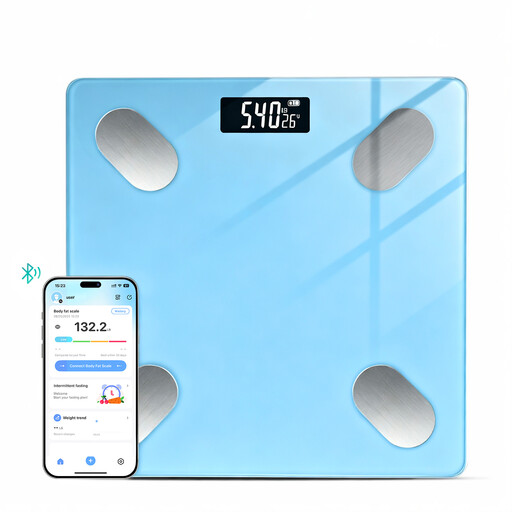
Why this product suits the profile: This model combines a digital bathroom scale with Bluetooth app tracking, making it suitable for users who want to measure body fat and record their progress without a complicated setup.
The product details clearly specify 13 body metrics, Bluetooth via the OKOK app and support for several user profiles. This makes the available functions more clearly defined than broad, general health claims.
13 measurements, Bluetooth app connectivity, automatic user recognition and a maximum weight capacity of 180 kg. Two AAA batteries are required and, according to the product details, are not included.

Why this product suits the profile: This scale is aimed at households looking for comprehensive body analysis with a handle, app-based progress tracking and several stored user profiles.
The retractable handle extends the measurement beyond the feet alone. The technical details also specify the 100 g resolution, Bluetooth, and VitaDock+ and VitaDock Online support.
More than 20 listed body metrics, eight sensors, a handle, Bluetooth and a weight capacity of up to 180 kg. According to the product details, the lithium battery offers up to 120 days of use.
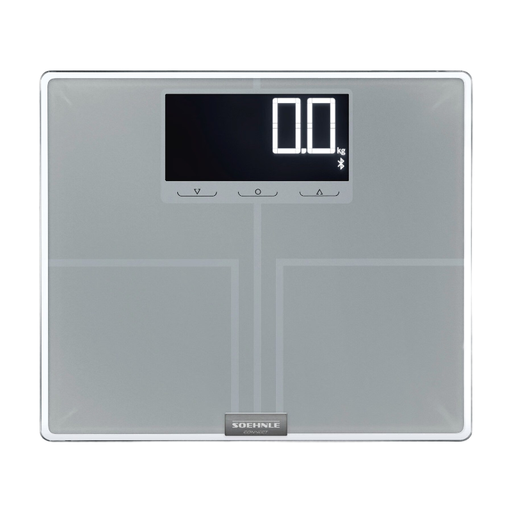
Why this product suits the profile: This model is appealing to users who want to combine a high weight capacity, Bluetooth connectivity, app-based progress tracking and a dedicated profile for physically active people.
The 200 kg weight capacity is explicitly stated. The product also clearly describes the 100 g resolution, automatic recognition of up to eight users and the MyScale app.
A weight capacity of up to 200 kg, Bluetooth data transfer, BIA measurement of body fat, body water and muscle mass, plus an athlete mode according to the product description.
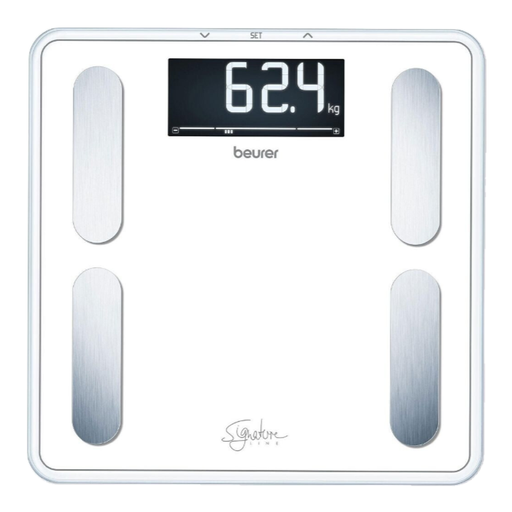
Why this product suits the profile: The scale offers local storage for up to ten people, making it suitable for larger households where several users want to track their readings separately.
The number of user profiles, maximum weight capacity and measurement functions are clearly stated in the product data. This makes it easier to choose a scale based on the actual size of your household.
Up to ten user profiles, a weight capacity of 200 kg, an XL LCD display, plus readings for weight, body fat, body water, muscle percentage, bone mass and BMI.
For more meaningful progress tracking, it is advisable to follow the same routine each time:
People with pacemakers, defibrillators or other implanted electronic devices should not use the body analysis function unless the manufacturer or a medical professional confirms that it is safe. Depending on the model, additional restrictions may apply to children, pregnant women and people with specific health conditions. These devices are not diagnostic systems.
We have put together a complete, regularly updated list of products that fully meet these strict selection criteria and the safety regulations applicable in the EU.
The weight reading can be highly consistent when the scale is positioned correctly. Body fat, muscle mass and body water, on the other hand, are estimated using BIA and are affected by measurement conditions. For personal progress tracking, measurements should be taken under comparable conditions. The readings should not be regarded as a medical diagnosis.
Battery life depends on the model, battery type, frequency of use and Bluetooth or Wi-Fi usage. Some scales use AAA batteries, while others use lithium rechargeable batteries. Before buying, check the contents, charging method and storage instructions. If the scale is not used for a long period, removing the batteries can reduce the risk of leakage.
Wi-Fi can be useful if you want measurement data to synchronise automatically. For occasional measurements, a Bluetooth connection is often sufficient. The key factors are a compatible app, a stable 2.4 GHz network and your willingness to store health data digitally.