
Lieferung heute & morgen

Qualitätsgarantie

Willkommens-Angebote freischalten: KOSTENLOSE Lieferung | Bis zu 80 % RABATT | Kostenlose 30-Tage-JoyPlus-Testphase
App herunterladen
A modern body fat scale offers much more than just displaying your weight. It provides insights into your body composition, such as body fat percentage, muscle mass, and Body Mass Index (BMI). However, the market is crowded, and many devices lure you in with features that, in practice, bring more frustration than utility. Before you make a purchase, it's crucial to understand the most common pitfalls to find a model that reliably meets your needs.
This guide will help you separate the wheat from the chaff and identify the key features of a high-quality body analysis scale.
Many buyers are disappointed with their new device after a short time. This is often due to exaggerated marketing claims or poorly designed product features. Two problems are particularly common:
To avoid these problems, you should carefully examine three technical aspects before buying. These largely determine the real-world usability and durability of your scale.
The accuracy of the body analysis depends directly on the quality of the built-in electrodes and sensors.
Regardless of the technology, measuring body fat correctly requires using the scale on a hard, level surface.
The method of data transmission significantly impacts user convenience.
Before buying, check the reviews of the corresponding app in the App Store or Google Play to get an idea of its usability and stability.
Stability and load capacity are important factors for safety and measurement accuracy.
Based on the criteria mentioned, we have identified a few models suitable for different user groups.
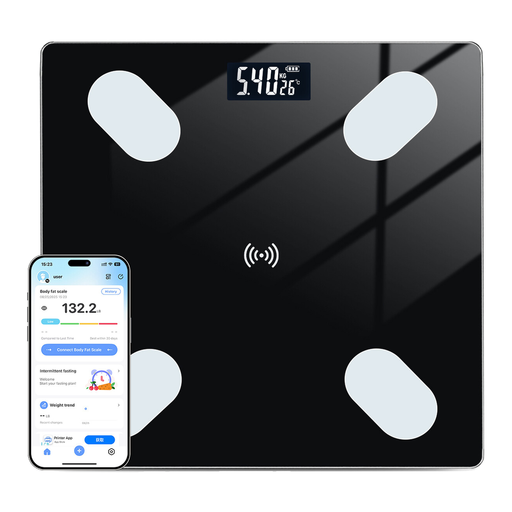
Why this model is a good fit: Ideal for users seeking a straightforward and functional smart scale for getting started. It tracks 13 essential body metrics and syncs them via Bluetooth to the OKOK app, without the confusion of unnecessary features.
The model focuses on essential functions and simple app connectivity. It avoids the trap of bloated and confusing software that leads to frustration with many other devices.
Supports multiple user profiles with automatic recognition. The tempered glass platform offers a weight capacity of up to 180 kg.
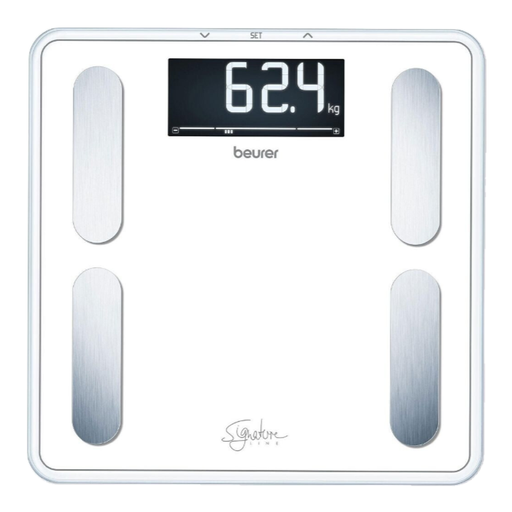
Why this model is a good fit: With 10 user memory slots and a high weight capacity of 200 kg, this scale is designed for the whole family. The large, illuminated XL display ensures excellent readability for all ages.
This model avoids the problem of unreliable measurements through a stable construction with a large safety glass platform and precise stainless steel electrodes. Beurer is also an established manufacturer in the health products sector.
High weight capacity up to 200 kg. Stores data for up to 10 people. Measures weight, body fat, body water, muscle percentage, bone mass, and BMI.
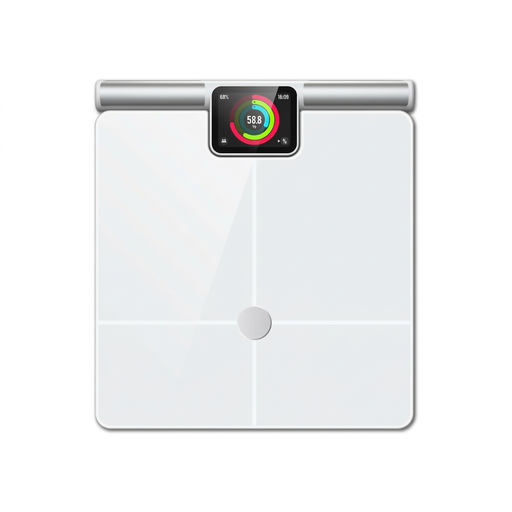
Why this model is a good fit: For athletes and health-conscious users who want an in-depth analysis of their body composition. The 8-electrode technology enables segmental measurement of arms, legs, and torso for more precise insights.
This model directly addresses the problem of inaccurate measurements by using advanced 8-electrode technology with dual-frequency BIA. This provides a significantly more differentiated dataset than conventional 4-electrode scales.
Tracks 56 different body metrics. TFT colour screen for direct data display. Dual connectivity via Wi-Fi and Bluetooth for automatic synchronisation.
We have compiled a complete, up-to-date list of products that fully meet these strict selection criteria.
Bioelectrical Impedance Analysis (BIA) in home devices is an estimation method. The absolute accuracy can differ from professional medical measurements (e.g., a DEXA scan). However, more important than the exact value is the consistency of the measurements, which allows you to reliably track trends and changes over time. For comparable results, you should always weigh yourself under the same conditions: in the morning, after using the restroom, and before breakfast.
Not necessarily. Most modern scales can store several measurements internally. However, to save the data in the app for the long term and analyse it graphically, regular synchronisation is required. A Bluetooth scale syncs when the app is opened on a nearby smartphone. A scale with Wi-Fi functionality transfers the data automatically as soon as it is within range of your home network.
Both are used to conduct the measurement current. Stainless steel electrodes are visible metal plates on the platform where you must place your feet. ITO glass (Indium Tin Oxide glass) has a transparent, conductive coating over the entire surface. This allows for a seamless, smooth design with no visible electrodes and makes foot placement more flexible. Functionally, both technologies serve the same purpose.