
Lieferung heute & morgen

Qualitätsgarantie

Willkommens-Angebote freischalten: KOSTENLOSE Lieferung | Bis zu 80 % RABATT | Kostenlose 30-Tage-JoyPlus-Testphase
App herunterladen
A modern body fat scale now offers much more than just a simple weight reading. It provides insights into your body composition, from fat percentage to muscle mass, making it a valuable tool for health-conscious individuals. However, the market is crowded and confusing, and many models promise more than they can deliver. Before you make a decision, it's crucial to understand the common pitfalls that can lead to a purchase you'll regret.
This guide will help you cut through the noise by focusing on the critical technical features and showing you what to look for.
The selection can be overwhelming, and marketing promises often obscure functional weaknesses. Pay close attention to these three points to avoid making a rash decision:
To make an informed choice, you should focus on the technical fundamentals rather than being dazzled by a long list of extra features.
Modern body fat scales use Bioelectrical Impedance Analysis (BIA). This method sends a very weak, imperceptible electrical current through the body. Because fat, muscle, and water conduct electricity differently, the scale can calculate the proportions of your body composition from the measured resistance.
App connectivity is the core feature of a scale with an app.
Two simple but important criteria should always be checked:
Instead of making a blanket recommendation, we have selected products that meet specific requirements.

Why This Fits Their Persona: Ideal for users who want a reliable, precise, and straightforward scale for pure weight tracking. With no app connectivity or body analysis features, it focuses on the essentials.
This model bypasses the pitfalls of exaggerated analysis features and unstable apps by deliberately omitting them. It delivers one clear function: precise weight measurement.
High precision with 0.05 kg increments; simple "Step-On" technology for instant measurement; clear, backlit LCD display.
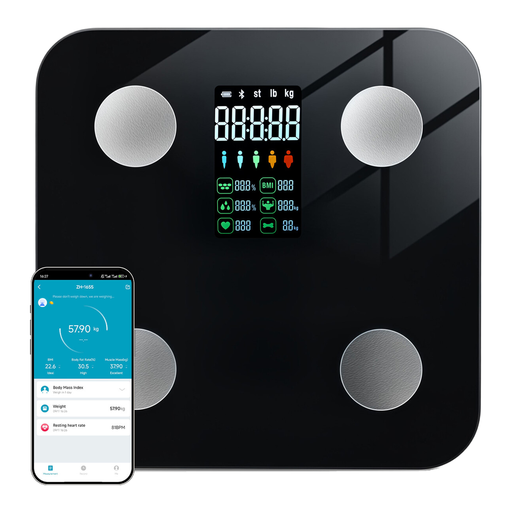
Why This Fits Their Persona: Perfect for users who want detailed insights into their body composition. The scale measures over 15 metrics, including heart rate, and syncs them via Bluetooth to an app for long-term analysis.
Connecting to the established Tuya app platform reduces the risk of unstable software. The colour display shows key metrics directly, so you don't have to rely on the app for every measurement.
Comprehensive BIA analysis with over 15 metrics; integrated heart rate measurement; bright colour LCD for instant feedback.
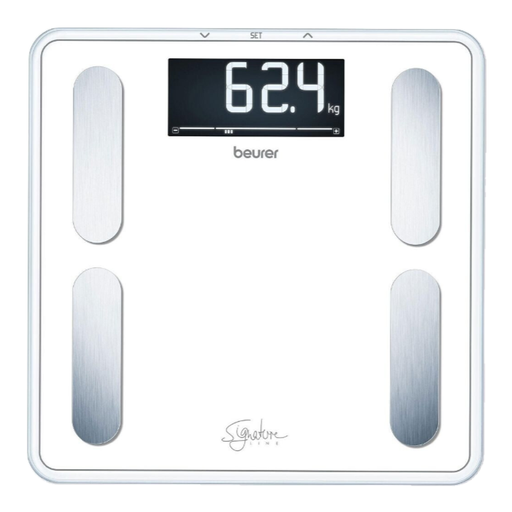
Why This Fits Their Persona: Designed for use by multiple people. The scale stores up to 10 user profiles and automatically recognises the person when they step on. The high weight capacity of 200 kg makes it versatile.
The automatic user recognition solves the problem of manual profile selection, which is cumbersome on many smart scales. Beurer is also an established brand in the health sector.
Automatic recognition for 10 users; high weight capacity up to 200 kg; large, illuminated XL display for excellent readability.

Why This Fits Their Persona: For anyone who prefers a purely mechanical, battery-free, retro-style scale. It completely forgoes digital technology and fits into the bathroom as a design object.
This model is the antithesis of digital pitfalls. No app, no batteries, no synchronisation problems. It is a purely functional and durable measuring tool.
Completely battery-free, mechanical operation; robust retro design with a non-slip weighing surface; no electronics that can fail.
We have compiled a complete, up-to-date list of products that fully meet these strict selection criteria and UK/EU safety regulations.
1. How accurate is the body fat measurement on a smart scale for home use? The BIA measurement on home devices provides estimates, and their absolute accuracy depends on many factors (e.g., hydration level, time of day). They are not comparable to medical procedures like a DEXA scan. Their strength lies in consistency: if you weigh yourself under consistent conditions (e.g., in the morning after getting up), you can reliably track trends and changes in your body composition over time.
2. Does the scale always have to be on the same surface? Yes, absolutely. For precise and comparable results, a digital bathroom scale must always be placed on a hard, flat surface (e.g., tiles, hardwood). Carpets or uneven floors lead to inaccurate weight measurements and significantly distort the BIA analysis. If you move the scale, most models will recalibrate automatically when you briefly step on and off until "0.0" is displayed.
3. What data is collected by a scale with an app, and how secure is it? A smart scale collects weight, BMI, body fat, muscle mass, water percentage, bone mass, and other metrics, depending on the model. This data is transferred via Bluetooth or Wi-Fi to an app on your smartphone and often to the manufacturer's servers. Look for manufacturers who are transparent about their data privacy policies and whose servers are preferably located in the EU/UK to be subject to GDPR. Always check the permissions an app requests during installation.