
Lieferung heute & morgen

Qualitätsgarantie

Willkommens-Angebote freischalten: KOSTENLOSE Lieferung | Bis zu 80 % RABATT | Kostenlose 30-Tage-JoyPlus-Testphase
App herunterladen
A modern body fat scale offers much more than just displaying your weight. It provides insights into your body composition, such as the percentage of fat, muscle, and water. However, the market is crowded, and many models advertise features of questionable value. Before you make a decision, it's crucial to understand the common pitfalls to find a device that truly supports your health goals, rather than one that just shines with marketing promises.
Many buyers focus on superficial features and overlook critical technical details. This often leads to inaccurate measurements and frustration during use.
To make an informed decision, you should focus on the technical fundamentals that ensure reliable and useful data.
The core function of a scale with body fat measurement is Bioelectrical Impedance Analysis (BIA). This process sends a weak, imperceptible electrical current through the body. Since fat, muscle, and water conduct electricity differently, the scale can calculate the proportions of your body composition from the measured resistance.
The seamless transfer of data to an app is crucial for long-term use. A good scale with an app should have the following features:
A digital bathroom scale should be stable and durable. Most models feature a platform made of tempered safety glass, which is robust and easy to clean. Also, pay attention to the maximum weight capacity, which typically ranges from 150 kg to 200 kg (330 lbs to 440 lbs), to ensure the scale is suitable for all users in the household.
Instead of presenting a confusing list, we have selected models that meet specific needs and avoid common purchasing pitfalls.
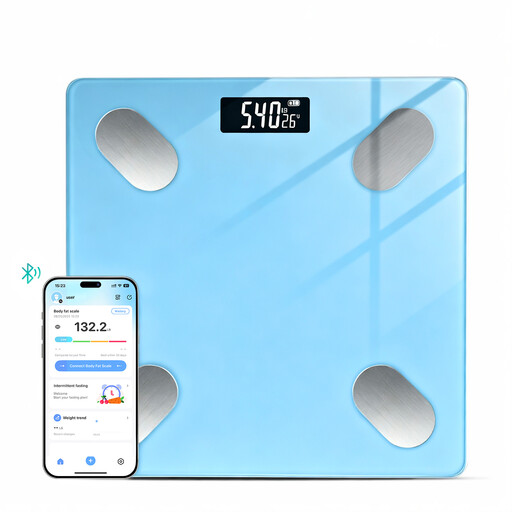
Why This Fits Their Persona: Ideal for users looking to get started with smart body analysis. This model offers essential features like the measurement of 13 body metrics and Bluetooth synchronization without breaking the bank.
This model focuses on the essential metrics and a stable Bluetooth connection. It avoids the trap of paying for an overwhelming number of calculated values or complex features that beginners rarely use.
Offers a multi-user mode suitable for couples or small shared apartments. The connection to the OKOK app allows for easy tracking of key health trends.
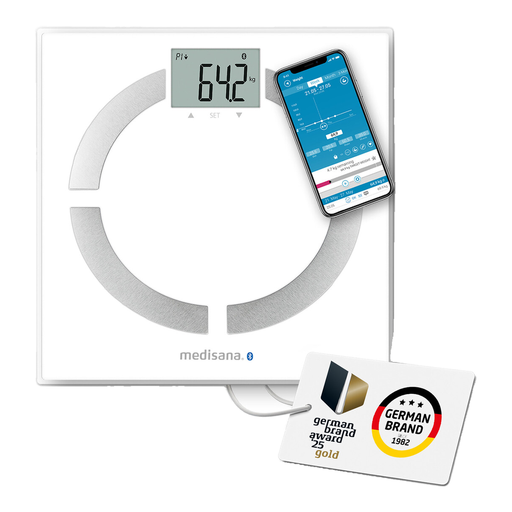
Why This Fits Their Persona: Perfect for families, as the scale automatically recognizes up to 8 different users. This allows each family member to effortlessly track their own progress without having to manually switch profiles.
Solves the problem of unreliable or cumbersome apps. The automatic user recognition prevents frustration and ensures that the whole family will enjoy using the scale in their daily routine.
Automatic recognition of up to 8 users. Data is transferred via Bluetooth to the well-established VitaDock+ app, which enables long-term analysis and evaluation of health data.
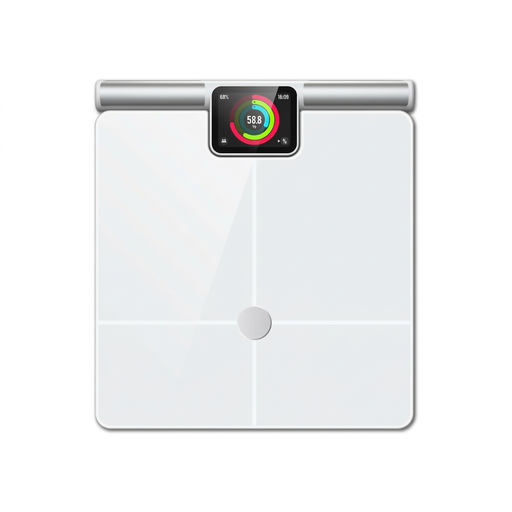
Why This Fits Their Persona: For fitness enthusiasts and athletes who require a detailed analysis. The 8-electrode technology enables segmental measurement of arms, legs, and torso for more precise insights into body composition.
Goes beyond the inaccuracies of simple 4-electrode scales. Instead of just measuring and estimating from the lower body, this model provides a well-founded, segmental analysis that is relevant for targeted training.
Professional 8-electrode measurement with dual-frequency BIA for 56 body metrics. Offers Wi-Fi and Bluetooth connectivity, as well as a clear TFT color display for direct viewing of results.
We have compiled a complete, up-to-date list of products that fully meet these strict selection criteria and safety regulations.
The accuracy of home-use body fat scales is sufficient for identifying long-term trends but is not comparable to medical-grade devices. The BIA method can be influenced by many factors. For consistent results, you should always weigh yourself at the same time of day, under similar conditions (e.g., in the morning after using the restroom, before breakfast), and barefoot. Consider the values as a guide for your progress, not as absolute, medically exact data.
Yes, absolutely. For precise measurements, the scale must be placed on a hard, flat surface like tile, parquet, or laminate flooring. Soft surfaces like carpets or uneven floors can interfere with the weight sensors and lead to significant measurement errors, rendering the body composition analysis useless.
A 4-electrode scale has four sensors on the standing platform and measures electrical resistance primarily in the lower body. The values for the upper body are extrapolated from this. An 8-electrode scale has an additional four sensors in a handle. This allows it to measure the resistance in the arms, legs, and torso separately (segmental analysis), leading to a more detailed and potentially more accurate overall analysis. This is particularly beneficial for athletes or very fitness-oriented individuals.