
Lieferung heute & morgen

Qualitätsgarantie

Willkommens-Angebote freischalten: KOSTENLOSE Lieferung | Bis zu 80 % RABATT | Kostenlose 30-Tage-JoyPlus-Testphase
App herunterladen
A modern body fat scale promises much more than just displaying your weight. It's designed to provide insights into your body composition—from body fat percentage and muscle mass to your body's water content. However, the market is flooded with devices whose marketing promises often outweigh their actual utility. Before you make a decision, it's crucial to understand the most common pitfalls that can lead to inaccurate measurements and frustration.
As your Joybuy Product Recommendation Officer, I'll help you define objective criteria for your selection and find a model that truly aligns with your goals.
Many scales advertise a long list of features, but not all are relevant or reliable for daily use. Pay attention to these three points to avoid a bad purchase:
To make an informed decision, you should examine three core technical aspects. These determine the accuracy and usefulness of your future smart scale.
Nearly every body composition scale uses Bioelectrical Impedance Analysis (BIA). This method sends a weak, imperceptible electrical current through the body. Because fat, muscle, and water conduct electricity differently, the scale can calculate the proportions of your body composition from the measured resistance.
The quality of this measurement depends directly on the electrodes:
For consistent results, it is crucial to step on the scale barefoot with dry feet and to perform the measurement at the same time of day.
A smart scale typically syncs your data to an app in one of two ways:
Consider which method fits better into your daily routine. A stable connection is essential for seamless tracking.
A good digital personal scale should be precise and robust. Pay attention to the following specifications:
Instead of presenting an overwhelming list, we have selected models that meet specific needs and avoid the pitfalls mentioned earlier.
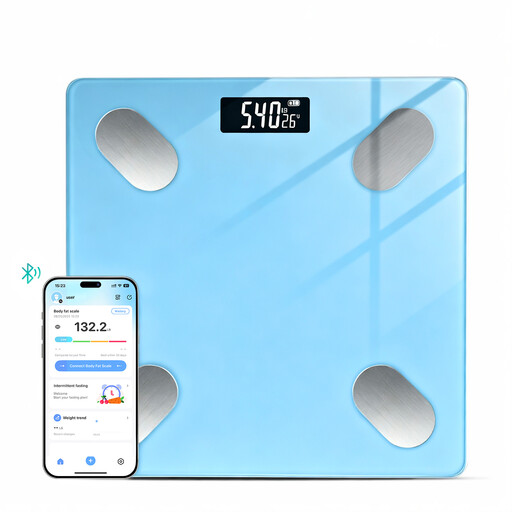
Why This Fits Their Persona: Ideal for users looking for a straightforward entry into body analysis. The scale captures the 13 most important metrics and syncs them via a simple Bluetooth connection to the OKOK app, without overwhelming users with superfluous features.
It focuses on essential BIA metrics and a stable app connection instead of advertising inaccurate, derived values. Setup is quick, and data collection is reliable.
Supports multiple user profiles with automatic recognition, making it practical for couples or small families. The 4 precision sensors deliver consistent results.
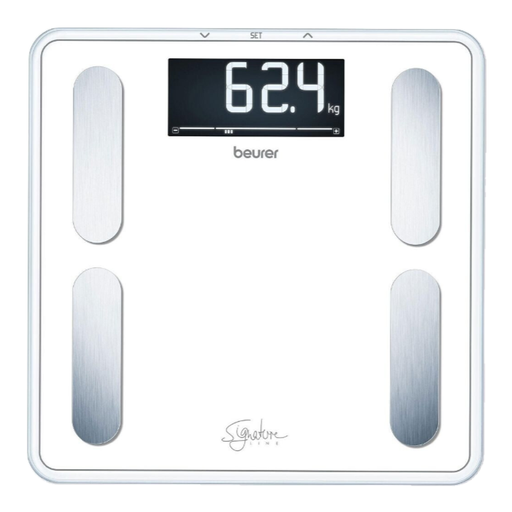
Why This Fits Their Persona: Perfect for families who need a robust and easy-to-use scale for multiple people. Its high weight capacity and large user memory make it a central health hub for the household.
Avoids the trap of unreliable hardware with a solid safety glass construction and a high weight capacity of 200 kg. The automatic user recognition prevents data mix-ups.
Offers memory for up to 10 user profiles and an extra-large, illuminated XL LCD display for excellent readability. The brushed stainless steel electrodes are durable.
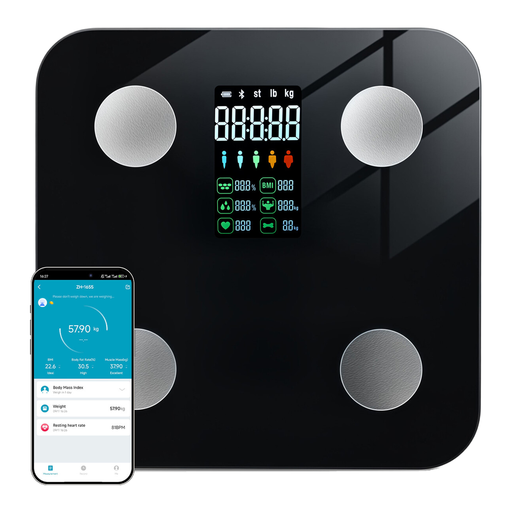
Why This Fits Their Persona: For users who want comprehensive health monitoring and value immediate feedback. The heart rate measurement and color display offer added value over standard models.
Instead of just delivering a long list of numbers in an app, the color display visually presents the most important data directly on the scale. This makes the many metrics more tangible and useful.
The integrated heart rate measurement provides an additional indicator of cardiovascular fitness. The high-contrast color LCD (VA display) shows weight, body fat, and heart rate directly.
We have compiled a complete, up-to-date list of products that fully meet these strict selection criteria and rigorous safety standards.
The BIA method provides good estimates for home use. Absolute accuracy can be influenced by factors like hydration level, time of day, or your last meal. More important than the exact percentage is the consistency of the measurements. A high-quality scale allows you to reliably track trends and changes over weeks and months, which is crucial for achieving your goals.
Yes, absolutely. For precise and repeatable measurements, the scale must be placed on a hard, flat surface like tile, parquet, or laminate. Carpets or uneven floors cause the pressure on the sensors to be distributed unevenly, which distorts the measurement results and leads to significant fluctuations.
A Bluetooth scale must be in close proximity to your smartphone with the corresponding app open to sync data. A Wi-Fi scale connects independently to your home network and automatically transmits the data to the manufacturer's cloud server. The data then appears in your app, even if you don't have your smartphone with you while weighing yourself. Wi-Fi models offer more convenience but are often in a higher price range.