
Lieferung heute & morgen

Qualitätsgarantie
App herunterladen
Kategorien
Health data tracking has evolved from simple weight measurement to a detailed analysis of body composition. A modern body fat scale, often called a smart scale, uses Bioelectrical Impedance Analysis (BIA) to determine a wide range of metrics beyond just weight. This process involves sending a weak, imperceptible electrical impulse through the body. Because different tissue types—such as fat, muscle, and water—offer varying levels of resistance to the current, the scale can calculate their respective percentages.
This guide focuses on the technical parameters and functional differences relevant to selecting a personal scale with body composition analysis for home use.
The functionality and precision of a scale depend on specific technical features. The following criteria provide a foundation for making an informed purchasing decision.
The accuracy of the BIA measurement is largely determined by the number and quality of the electrodes.
A BMI scale is standard today, but modern devices offer much more. Relevant metrics include:
Most smart scales are Bluetooth scales. Synchronisation with a smartphone app is a core feature.
Based on the technical criteria mentioned above, we present three models with different specialisations.
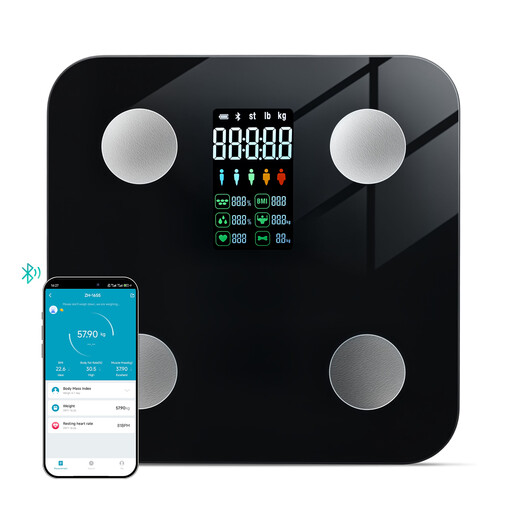
Product Feature Analysis The ZJ08 model stands out with its colour VA LCD display. Unlike monochrome screens, it displays weight, body fat percentage, and heart rate directly on the scale, using colour indicators to classify the values. The ability to measure heart rate directly on the scale is a convenient extra feature for users who want to monitor their cardiovascular fitness without a separate device. Connectivity is established via Bluetooth to the Tuya app, which supports long-term tracking and management of multiple users.
Advantages
Who It's For This model is designed for users who want a quick and clear overview of their key health data directly on the scale, without having to open the app every time. It is well-suited for families and health-conscious individuals.
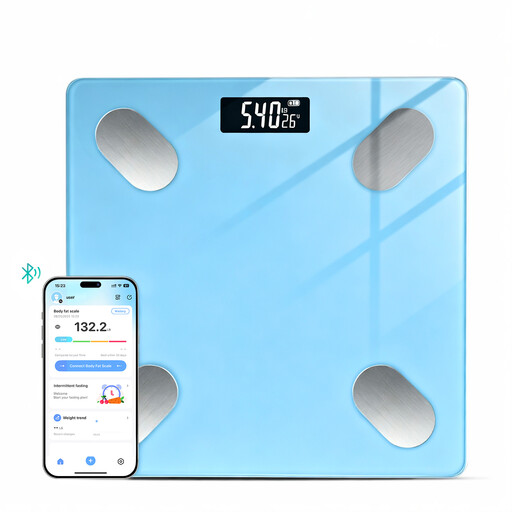
Product Feature Analysis The Sparoma ADL-26Blue is a functional digital bathroom scale that focuses on the essential aspects of body analysis. It captures 13 core metrics using BIA technology and syncs them via Bluetooth to the OKOK app. The design is minimalist, with an easy-to-read LCD display that primarily shows weight. The model's strength lies in its straightforward operation and reliable data collection for app-based analysis.
Advantages
Who It's For This device is aimed at users new to body fat measurement, as well as budget-conscious users and families looking for a reliable scale for digitally tracking basic health data, with a focus on analysis within the app.
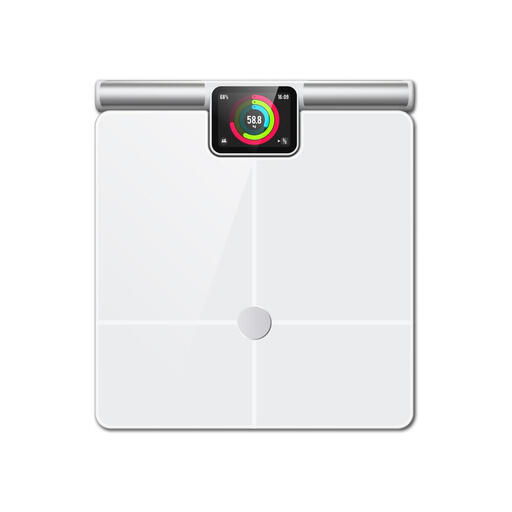
Product Feature Analysis This model is positioned in the high-end performance segment, utilising 8 electrodes and dual-frequency BIA technology. The additional handheld electrodes enable a segmental analysis of the body, which increases measurement accuracy. By capturing 56 metrics, it provides an exceptionally detailed data foundation. Dual connectivity via Bluetooth and Wi-Fi ensures seamless and automatic synchronisation. The 3.36-inch TFT colour display presents the data in an appealing format.
Advantages
Who It's For This body composition scale is designed for ambitious athletes, fitness professionals, and data-driven users who require maximum measurement accuracy and deep insights into their body composition to optimise training and nutrition.
The models presented here cover a broad spectrum of applications. However, the health monitoring market is diverse and includes fitness trackers, smartwatches, and other specialised devices in addition to scales. You can find an overview of various product types in our Tracker Devices category.
1. How accurate is body fat measurement on home scales? The accuracy of scales using Bioelectrical Impedance Analysis (BIA) is excellent for tracking trends and relative changes. Absolute values may differ from professional medical measurement methods (like DEXA scans). Consistency in measurement conditions is crucial for reliable trend analysis. Factors such as hydration level, time of day, and recent meals can influence the results.
2. When is the best time to take a measurement? For comparable results, it is recommended to always take measurements under the same conditions. The ideal time is in the morning, right after waking up, after using the restroom, and before eating or drinking. The measurement should be taken barefoot on a hard, flat surface.
3. Are there people who should not use a body fat scale? Yes. Individuals with electronic medical implants such as pacemakers, artificial lungs, or ECG devices should not use scales with BIA technology. The weak electrical current could potentially interfere with the function of these devices. Please always observe the safety instructions provided by the respective manufacturer.