
Lieferung heute & morgen

Qualitätsgarantie

Willkommens-Angebote freischalten: KOSTENLOSE Lieferung | Bis zu 80 % RABATT | Kostenlose 30-Tage-JoyPlus-Testphase
App herunterladen
A body fat scale can show you much more than just your weight. Depending on the model, you can track body fat percentage, body water, muscle mass or BMI, and save the data via an app. However, the number of advertised metrics alone shouldn't guide your purchase. What really matters are the measurement method, ease of use, weight capacity, and whether those extra features will actually be useful in your daily routine.
A body analysis scale typically uses bioelectrical impedance analysis, or BIA for short. A weak electrical current is sent through your body via sensors. The readings displayed are calculated from measurement data and stored parameters, so they should be treated as a guide for tracking trends rather than a medical diagnosis.
Measurements can vary depending on the time of day, your hydration levels, skin contact and foot placement. If you want to measure body fat, try to use the scale under consistent conditions: on the same hard surface, with dry feet, and at a similar time of day.
A Bluetooth body fat scale usually transfers data when your smartphone is nearby and the app is open or correctly set up. A Wi-Fi body fat scale can sync readings without needing your phone to be open, depending on the model. This typically requires an app account, a compatible Wi-Fi network and a 2.4 GHz connection.
Before buying, check whether the app works with your smartphone, how many user profiles you can create, and whether you can export data or sync it with health platforms.
A compact digital bathroom scale might look space-saving, but it can be less comfortable for larger feet or for households with multiple people. You should also avoid cutting it fine on maximum load capacity. Depending on your needs, a body fat scale up to 180 kg or a body fat scale up to 200 kg might be more suitable. Always place the scale on a hard, level, dry floor – never on carpet or a soft bath mat.
A digital personal scale that only shows weight is fine if you just want to keep an eye on your body weight. If you want to measure body water, track muscle mass or monitor your BMI, you'll need a scale with body fat measurement and the right sensors.
With foot sensors, the measurement is taken through the lower part of your body. Models with additional hand sensors can include more contact points. That doesn't automatically mean every reading will be more accurate in daily use. What's more important is consistent use, so that changes over time remain comparable.
A graduation of 100 g or 50 g refers to the display increments, not necessarily the accuracy of every body analysis. For weight tracking, a clear LED or LCD display is useful. A step-on function makes daily use easier, while automatic shut-off helps save battery life.
Also look out for:
With a body analysis scale that uses an app, the setup instructions should be clear and easy to follow. Check whether the connection is via Bluetooth, Wi-Fi or both. For households with several people, automatic user recognition and separate profiles are very handy. Battery-powered models need regular replacement; rechargeable or light-assisted systems reduce this hassle, but may require a specific charging environment.
A body analysis scale is a household appliance. If you have implanted electronic devices such as a pacemaker, only use the BIA function after following the manufacturer's instructions and, if necessary, consulting a medical professional. Depending on the model, it may be possible to use the scale for weighing only.
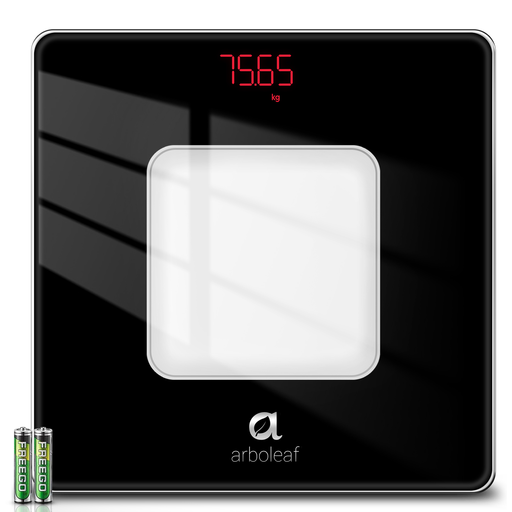
Why this product fits the profile: If you're after a straightforward digital personal scale for daily weight tracking, this model offers a hassle-free experience with no installation required.
The clear feature description focuses on weight measurement rather than a long list of hard-to-interpret body metrics.
LED display, kg unit, tempered glass platform and suitable for use on hard, level floors.
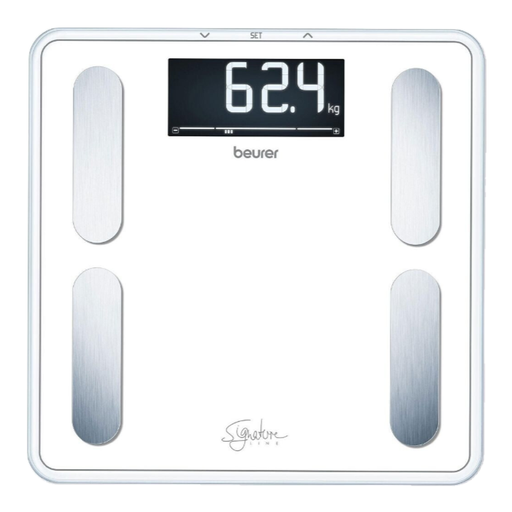
Why this product fits the profile: This model combines body analysis, a clear XL display and plenty of user profiles for regular household use.
The relevant features and maximum load capacity of 200 kg are clearly stated, rather than just vaguely advertising "smart" capabilities.
Measures weight, body fat, body water, muscle and bone mass, plus BMI; supports up to 10 user profiles.

Why this product fits the profile: Ideal for users who want to combine comprehensive metrics, Bluetooth and analysis via the VitaDock+ app.
The connectivity technology, app support and use with an extendable handle are all clearly specified, making it easier to match against your own needs.
Over 20 body metrics, Bluetooth, automatic user recognition and a weight capacity of up to 180 kg.

Why this product fits the profile: Perfect for those who want to regularly track measurements in an app and make use of both Wi-Fi and Bluetooth.
The app compatibility and automatic syncing are clearly described, so you can check in advance whether the digital analysis fits your routine.
13 body analysis metrics, automatic user recognition, Wi-Fi and Bluetooth connectivity, plus a rechargeable battery with light-assisted power according to product specifications.
We've put together a full, regularly updated list of products that fully meet these strict selection criteria and the safety regulations in force across the EU.
The readings from a body fat scale should be viewed as a trend. Occasional fluctuations don't automatically mean there's been a real change in your body composition.
Many models use BIA. Sensors measure the electrical resistance of your body; the scale then calculates body fat, body water or muscle mass, among other things. The results are for guidance only and do not replace a medical examination.
The lifespan depends on the sensors, glass platform, batteries, care and surface. It's impossible to give a fixed lifespan across the board. If you keep the scale dry, avoid overloading it and protect it from knocks, you'll reduce the typical risks of wear and damage.
Wi-Fi and app functions can increase energy consumption compared to a scale that only shows weight. Depending on the model, AAA batteries, a rechargeable battery or a light-assisted power supply may be used. Check before you buy which power source is included and how the manufacturer describes the syncing process.