
Lieferung heute & morgen

Qualitätsgarantie

Willkommens-Angebote freischalten: KOSTENLOSE Lieferung | Bis zu 80 % RABATT | Kostenlose 30-Tage-JoyPlus-Testphase
App herunterladen
A body fat scale can do more than display your body weight. Depending on the model, it can record body fat percentage, muscle mass, water percentage, bone mass, BMI and basal metabolic rate, among other measurements. For many users, the ability to document progress over time via an app is particularly appealing. However, an extensive list of features does not automatically mean meaningful results.
If you want to buy a smart body fat scale, you should therefore look beyond the number of measurements and modern glass design. The measuring conditions, weight capacity, app connectivity and realistic interpretation of the results are what really matter.
A body composition scale using BIA technology – bioelectrical impedance analysis – derives body metrics from a weak electrical signal and stored calculation models. Measurements such as “biological age”, “body shape” and “health assessment” are therefore indicative values, not medical diagnoses.
The time of day, hydration, skin contact and foot position can also affect body fat, muscle mass and water percentage readings. Tracking becomes more meaningful when measurements are taken under similar conditions as consistently as possible.
A Bluetooth body fat scale normally transfers data to a nearby smartphone. Bluetooth and, in most cases, the relevant app must be enabled for this to work. Depending on the model, a Wi-Fi body fat scale can synchronise data directly with your user account once it is connected to the 2.4 GHz network.
Before buying, check the following:
A body fat scale with an app is only practical if the set-up and data management fit into your daily routine.
A digital bathroom scale should be placed on a hard, level and dry floor. Carpets, soft surfaces and uneven tiles can affect weighing and BIA measurements. Wet feet or a damp surface also increase the risk of slipping.
Pay attention to the maximum weight capacity. A body fat scale with a capacity of up to 180 kg is suitable for many households. If you need additional headroom, you can also find body fat scales with a capacity of up to 200 kg. The stated maximum load must not be exceeded.
Many models use four electrodes that make contact through the feet. Devices with eight electrodes and a handle can also include the upper body in their measurements. However, this does not automatically mean that every individual reading will be more accurate or medically usable in everyday life.
Consistent use is more important: measure barefoot, with dry feet, on the same firm surface and at a similar time of day whenever possible. Above all, compare trends over several weeks rather than placing too much emphasis on individual readings.
A clear LCD or LED display is useful if you want to check your weight without using a smartphone. Models with a concealed display have a discreet appearance, but only show the readings when you step onto the scale.
Automatic user recognition and multiple profiles are important for families. Some models store eight to ten users locally, while others offer a larger or unlimited number of users within the app. Check whether each family member can create their own account or profile.
Many body fat scales use two or three AAA batteries. Some devices include batteries, while others do not. Smart models may also feature a built-in rechargeable battery or USB charging. If the scale will not be used for an extended period, removing the batteries is recommended to prevent damage caused by leakage.
Clean the surface with a soft, dry or slightly damp cloth. Avoid abrasive cleaning products, large amounts of water and immersing the scale in water.
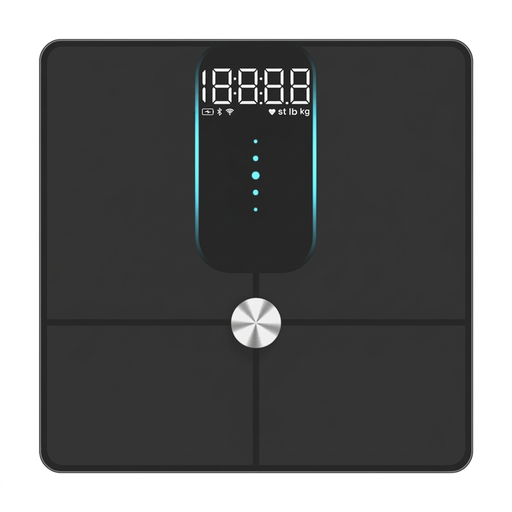
Why this product suits this profile: According to the product description, the scale records 25 body metrics and connects to the Lefu Health app via Bluetooth 5.0 and 2.4 GHz Wi-Fi. It has a weight capacity of 180 kg.
Dual connectivity reduces the need to open your smartphone next to the scale every time you take a measurement. However, app set-up is still required.
25 stated measurements, ITO-coated glass surface, 0.05 kg increments and AAA batteries included.
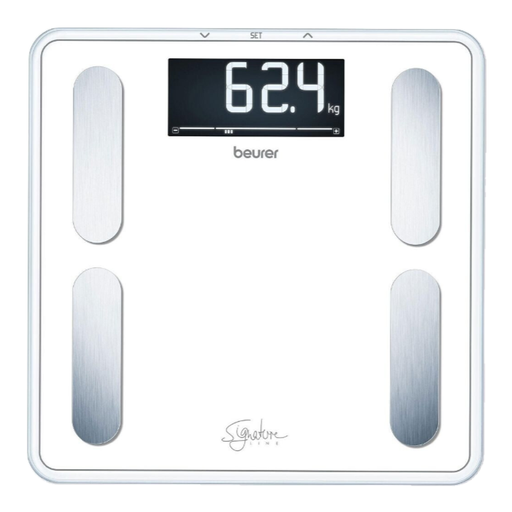
Why this product suits this profile: This body composition scale combines an illuminated XL LCD display with ten user profiles and a maximum weight capacity of 200 kg. It is suitable for households where readings need to be checked directly on the device.
The high weight capacity and ten memory slots mean you are not restricted by a low load limit or a single profile.
Maximum weight capacity of 200 kg, ten user profiles, BMI, body fat, water, muscle and bone measurements, plus 100 g increments.

Why this product suits this profile: This model features a retractable handle, eight sensors, Bluetooth and the VitaDock+ app. It is therefore appealing to users who prefer more comprehensive data collection in addition to foot-based measurements.
The design makes it clear that the handle must be used for a full-body measurement. Data is transferred via Bluetooth rather than an unspecified Wi-Fi function.
More than 20 stated body metrics, eight sensors, handle, multi-user function and a weight capacity of 180 kg.
We have put together a complete, regularly updated list of products that fully meet these strict selection criteria and the safety regulations applicable in the EU.
For the most consistent body analysis possible with an app, follow these steps:
A BMI scale displays the Body Mass Index as a calculated reference value. However, BMI takes neither individual muscle distribution nor body fat distribution into account. It should therefore be considered alongside weight, body measurements and your personal goal.
BIA functions are intended for personal health monitoring and do not replace a medical examination. People with an implanted pacemaker, defibrillator or other electronic or metal implants should not use the body analysis function in accordance with the manufacturer’s instructions and should only measure their weight if necessary.
Restrictions may also apply to pregnant women, infants and children, depending on the model. Read the safety information before using the scale for the first time. A damaged glass surface, wet feet or exceeding the weight capacity can result in injury.
BIA readings are estimates and can vary depending on hydration, skin contact, time of day and body position. For personal use, the most important factor is how readings develop under consistent measuring conditions. A body fat scale is not a medical diagnostic device.
App connectivity is useful if you want to record your weight and body metrics over the long term. Bluetooth is sufficient for synchronisation nearby. Wi-Fi can be more convenient if you want data to be transferred automatically. Before buying, check which app is compatible and whether it supports the connections you need.
Its service life depends on the level of use, batteries, moisture and how the glass surface is handled. Keeping the scale in a stable, dry position, cleaning it regularly with a soft cloth and changing the batteries according to the manufacturer’s instructions all help ensure reliable operation. If there are cracks or unusual readings, stop using the device.