
Lieferung heute & morgen

Qualitätsgarantie

Willkommens-Angebote freischalten: KOSTENLOSE Lieferung | Bis zu 80 % RABATT | Kostenlose 30-Tage-JoyPlus-Testphase
App herunterladen
As a Joybuy Product Recommendation Officer, I filter market information to provide you with objective and practical buying advice. This guide will help you understand how modern body composition scales work and make an informed decision.
The search for a precise body fat scale can quickly become overwhelming. Many models advertise a wide range of features, but not all deliver on their promises. For health- and fitness-oriented users who want to optimize their body composition with data, certain shortcomings lead to unusable results and false conclusions.
Common pitfalls when buying a body composition scale:
smart body fat scale is only as good as its software. Many budget models come with apps that are rarely updated, have a confusing interface, or only sync data sporadically. This makes long-term progress tracking impossible.personal scale with Wi-Fi offers a significant convenience advantage here, as the data is automatically synchronized in the background.To avoid the pitfalls mentioned above, you should look for specific technical features that ensure reliable and detailed measurements.
The crucial difference from standard scales lies in the measurement method. An 8-electrode body fat scale features a handheld unit with four additional electrodes in addition to the foot platform. During the measurement, you stand barefoot on the scale while holding the handheld unit. This creates two separate electrical circuits: one for the lower body and one for the upper body.
This process, known as segmental body analysis, allows for the separate evaluation of:
This detailed breakdown is particularly relevant for a scale for athletes to identify muscular imbalances and adjust training plans accordingly. It provides a much more accurate picture of the entire body composition than the extrapolations from 4-electrode systems.
A professional BIA scale uses bioelectrical impedance analysis (BIA) with multiple frequencies. While a low frequency measures the resistance of extracellular fluid, a high frequency can penetrate cell membranes to also measure intracellular fluid. The use of two frequencies (dual-frequency) significantly increases the accuracy of determining body fat, muscle mass, and body water.
Modern scales offer much more than just measuring weight and body fat. Look for models that also measure visceral fat (the health-critical abdominal fat) or perform a heart rate measurement directly during the weighing process. A reliable body composition scale with an app and Wi-Fi functionality ensures that all this data is documented seamlessly and automatically, allowing you to analyze long-term trends.
Here are some models that are suitable for different user groups based on their objective technical features.
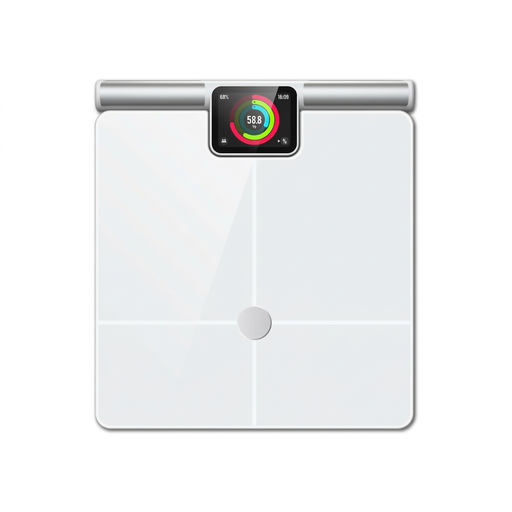
Why This Fits Their Persona: This model is designed for users who need detailed, segmental analysis to optimize their training and nutrition. The precise breakdown of muscle and fat mass for arms, legs, and torso enables data-driven training management.
The 8-electrode technology with a handheld unit completely bypasses the inaccuracy of 4-electrode systems. Dual-frequency BIA and Wi-Fi connectivity ensure precise and automatically synced data.
Offers a professional 5-compartment body analysis with 56 metrics. The combination of Wi-Fi and Bluetooth connectivity ensures seamless data synchronization.
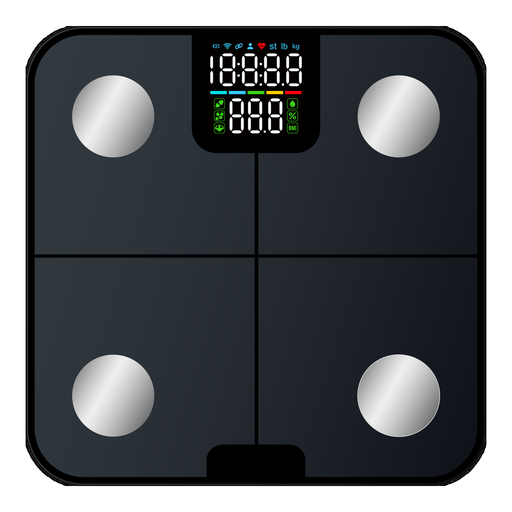
Why This Fits Their Persona: Ideal for users who want a comprehensive overview of their health data without the complexity of a handheld unit. The color LED display shows key metrics directly, and the app allows for detailed long-term analysis.
This model avoids the pitfall of unreliable apps with a stable Bluetooth 5.4 connection for fast data transfer. It offers 25 metrics, including heart rate, making it more than just a basic "smart" scale.
Provides a comprehensive health analysis with 25 metrics and heart rate measurement. The concealed LED color display ensures a clear and aesthetic presentation of data.
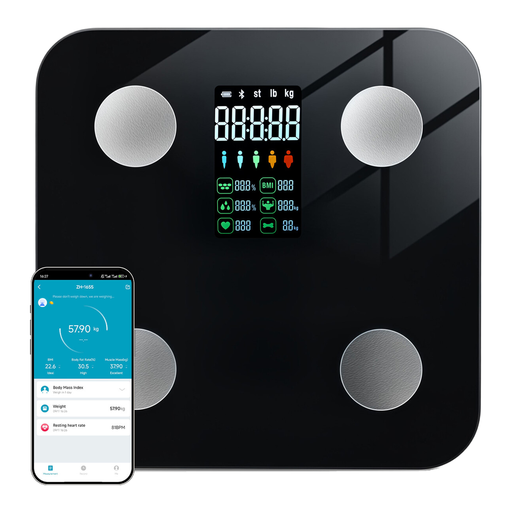
Why This Fits Their Persona: Support for multiple user profiles with automatic recognition makes this scale ideal for households where several people want to track their health data separately. The bright color display is easy for all age groups to read.
This model solves the problem of impersonal data by assigning each family member their own profile. App synchronization ensures that each individual's progress remains private and well-organized.
Features a high-contrast color LCD display that shows key metrics like weight, body fat, and heart rate directly. The app supports multiple user profiles with automatic recognition.
We have compiled a complete, up-to-date list of products that fully meet these strict selection criteria and safety standards.
Yes, absolutely. Individuals with electronic medical implants such as pacemakers should not use body composition scales. The BIA technology sends a very weak, imperceptible electrical current through the body, which could interfere with the function of such devices. For pregnant women, measuring body composition via BIA is also not recommended, as the reference values are not designed for their specific physiological state. In these cases, either only the weight function should be used, or a different measuring device should be chosen.
For a consistent and meaningful trend analysis, it is recommended to take measurements once or twice a week. It is important to always perform the measurement under the same conditions: ideally in the morning after waking up, after using the restroom, and before eating or drinking. Daily fluctuations in body weight and composition are normal and often reflect only the body's water balance, not an actual gain or loss of fat or muscle.
A smart body fat scale with Bluetooth requires your smartphone to be within range with the app open during the measurement to transfer the data. In contrast, a personal scale with Wi-Fi connects directly to your home network. After the measurement, the data is automatically uploaded to the provider's cloud and synchronized with your account. You can then view the results in the app at any time, without the smartphone needing to be present during the weighing process, which makes it much more convenient.