
Lieferung heute & morgen

Qualitätsgarantie

Willkommens-Angebote freischalten: KOSTENLOSE Lieferung | Bis zu 80 % RABATT | Kostenlose 30-Tage-JoyPlus-Testphase
App herunterladen
Constant tightness, rough patches, and relentless itching—anyone living with very dry skin knows these challenges all too well. Reaching for the nearest body lotion is often routine, yet the results are not always satisfying. Many products promise relief but leave behind nothing more than a greasy film, or their effects vanish after a short time.
As a Joybuy Product Recommendation Officer, I analyse product information daily to help you make informed decisions. In this guide, I'll show you which pitfalls to avoid when buying a body lotion for very dry skin and which key parameters truly matter.
The skincare market is crowded and confusing. Marketing promises can be misleading, tempting you to spend money on products that fail to deliver long-term skin improvement.
To find an effective moisturising body lotion that offers more than just superficial care, you need to pay close attention to the ingredients. Three groups of active ingredients are of central importance here.
Humectants are substances that attract water from the environment and deeper skin layers, binding it in the outermost layer of the skin (the stratum corneum). They are the foundation of any effective moisturiser.
An intact skin barrier is crucial for retaining moisture in the skin and protecting it from external irritants. With very dry skin and conditions like eczema, this barrier is often compromised.
Persistent itching is one of the most distressing symptoms of dry skin. A good anti-itch lotion therefore contains ingredients that actively soothe the skin.
Based on the criteria above, we have identified several products suitable for specific needs associated with very dry skin.
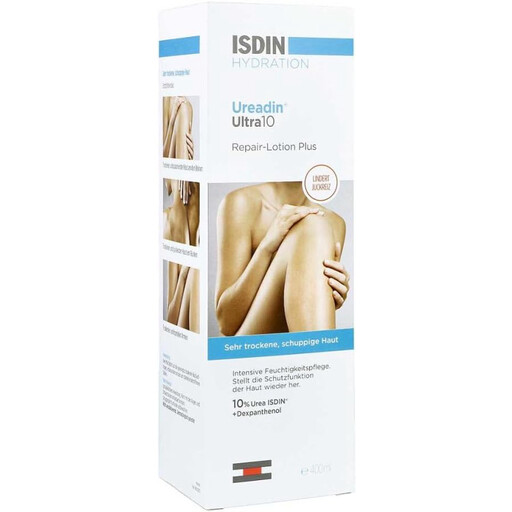
Why This Fits Their Persona: This lotion is designed for individuals whose skin is not only dry but also prone to rough, calloused patches. The high concentration of urea provides intense hydration while also smoothing the skin.
Instead of just leaving a greasy film, it uses the keratolytic effect of 10% urea to slough off flakes and actively improve the skin's moisture absorption.
The combination of 10% ISDIN Urea and Dexpanthenol restores the moisture balance and supports the repair of the skin barrier.
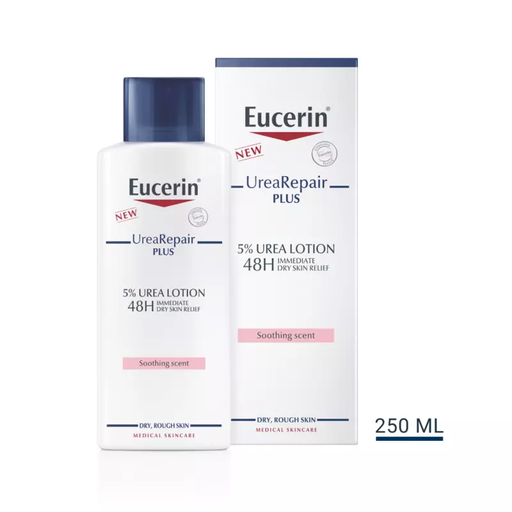
Why This Fits Their Persona: Ideal for users seeking a reliable, dermatologically-backed solution for daily use. The formula is tailored to the needs of sensitive skin, including mature or diabetic skin.
This lotion bypasses the fragrance trap with a soothing scent formula specially developed for sensitive skin, which is dermatologically tested and non-irritating.
The formula combines 5% Urea with Ceramides and Natural Moisturising Factors (NMFs) to strengthen the skin barrier and provide up to 48 hours of moisture, according to the manufacturer.
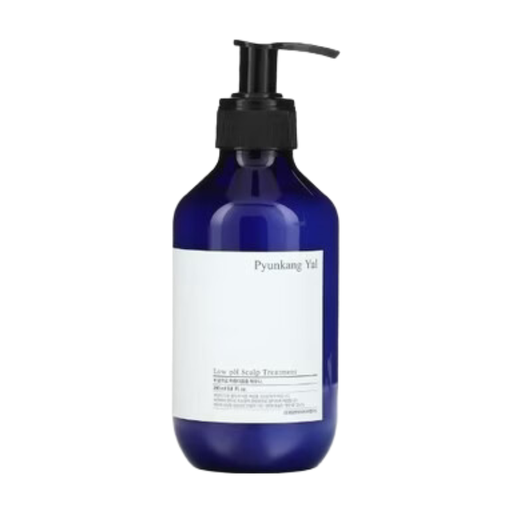
Why This Fits Their Persona: Perfect for users who want to specifically rebuild their damaged skin barrier. The lightweight formula is suitable for both face and body and relies on a high concentration of ceramides.
This lotion is completely fragrance-free and absorbs quickly without leaving a sticky or heavy film. It debunks the myth that effective barrier care has to be greasy.
Contains a complex of five different ceramides (NP, NS, AS, EOP, AP) that comprehensively repairs the skin barrier and minimises moisture loss.
We have compiled a complete, up-to-date list of products that fully meet these strict selection criteria and safety regulations.
1. How often should you apply a body lotion for very dry skin? For optimal results, it is recommended to apply the lotion daily, ideally right after showering or bathing, onto slightly damp skin. This helps to effectively lock in moisture. If needed, especially in cases of severe tightness or itching, it can be reapplied several times a day.
2. What is the difference between a lotion with 5% and 10% urea? A lotion with 5% urea is primarily designed for intensive hydration and strengthening the skin barrier. It is well-suited for daily basic care for dry and sensitive skin. A lotion with 10% urea also offers a keratolytic effect. This means it helps to slough off dead skin cells and rough calluses, making it a more intensive treatment for very rough, flaky, or keratosis pilaris-prone skin areas.
3. Can I use a body lotion on my face? Whether a body lotion is suitable for the face depends on its formulation. Some products, like the Pyunkang Yul Ceramide Lotion, are explicitly formulated for both face and body. In general, facial skin is thinner and more sensitive. Body lotions can be richer and contain ingredients that might clog pores on the face (act comedogenically). Therefore, always check the manufacturer's instructions and look for the term "non-comedogenic" if you are considering using it on your face.