
Lieferung heute & morgen

Qualitätsgarantie

Willkommens-Angebote freischalten: KOSTENLOSE Lieferung | Bis zu 80 % RABATT | Kostenlose 30-Tage-JoyPlus-Testphase
App herunterladen
The monotonous task of counting laps in the pool can test your concentration and motivation. Music or podcasts can liven up your workout, but conventional headphones are unsuitable for use in water. Bone conduction headphones offer a functional solution by transmitting sound directly to the inner ear via the cheekbones, leaving the ear canals open.
This article serves as a guide. It explains the key features of bone conduction headphones for swimming and presents a selection of models to help you make an informed purchasing decision.
Choosing the right model depends on specific technical features. Three criteria are particularly relevant for use in water and during other sports activities.
The IP (Ingress Protection) rating classifies how well an electronic device is protected against the ingress of foreign objects (first digit) and water (second digit). For waterproof headphones for swimming, the IP68 rating is the crucial standard.
An IP68 headphone is therefore designed for use as an underwater headphone and can withstand the water pressure of lap swimming.
Bluetooth signals have a very limited range in water. The connection to your smartphone typically drops just a few centimetres below the surface. For this reason, Bluetooth headphones, even if waterproof, are impractical for swim training.
A reliable solution is offered by swimming headphones with an MP3 function. These models have internal storage where you can directly load your music files or podcasts. This allows for completely standalone playback without an external connection. A bone conduction headphone with an MP3 player is therefore essential for an uninterrupted listening experience while swimming.
Bone conduction headphones are characterised by their open-ear design. Since your ears remain uncovered, you can still hear ambient sounds like traffic, announcements, or other athletes. This significantly increases safety, especially during activities like running and cycling.
A stable and lightweight titanium frame that fits securely on the head prevents the headphones from slipping—whether you're doing flip turns in the water, sprinting, or working out at the gym.
Based on the criteria above, we have compiled a selection of models suitable for use both in and out of the water.

Why It Stands Out: The Verbex X7S combines a high waterproof rating with generous storage space, making it a reliable companion for long training sessions in the water.
Pros:
Who Is It For? This model is aimed at swimmers and triathletes looking for straightforward and durable headphones with large storage capacity for extended training sessions.
Why It Stands Out: The HaptiFit Terra goes beyond being just a headphone by integrating AI-powered sports tracking features like heart rate monitoring and pace control via voice prompts.
Pros:
Who Is It For? Ideal for data-driven athletes and tech enthusiasts who want to precisely monitor and control their performance in running, cycling, and swimming without giving up music.

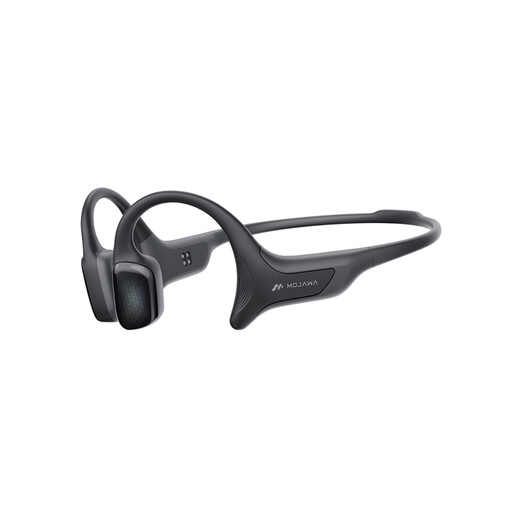
Why It Stands Out: The Mojawa Run Plus places a special focus on audio quality. According to the manufacturer, the sound was tuned by Grammy-winning audio producers and optimised with a patented bass enhancement technology.
Pros:
Who Is It For? This open-ear sports headphone is the right choice for athletes who value high-quality sound and powerful bass during all their activities—from swimming to the gym.
Headphone technology is constantly evolving. If you are considering other types of headphones besides specialised sports models, such as for enjoying music at home or in the office, you will find a wide selection in our range.
Discover more Headphones with an Audio Jack and other audio devices here.
1. Does Bluetooth really not work underwater? No, Bluetooth is unsuitable for a stable connection. Water strongly absorbs the 2.4 GHz radio waves used by Bluetooth. The connection drops just a few centimetres below the water's surface. An integrated MP3 storage is therefore essential for swimming.
2. What exactly does the IP68 certification mean for headphones? IP68 is a high protection class. The '6' stands for complete protection against dust ingress. The '8' confirms protection against continuous submersion in water under the conditions specified by the manufacturer (usually depth and duration). Devices with this certification are designed for swimming. However, it is recommended to rinse the headphones with fresh water after use in chlorinated or salt water to protect the seals.
3. Are bone conduction headphones safe for your hearing? Since the sound bypasses the eardrum and is transmitted directly to the inner ear, your ears remain open. This can be beneficial for people with certain types of hearing problems. However, as with all headphones, care should be taken to keep the volume at a moderate level to avoid overstraining the inner ear. The biggest safety advantage is the ability to perceive ambient sounds, which reduces the risk of accidents outdoors.