
Lieferung heute & morgen

Qualitätsgarantie

Willkommens-Angebote freischalten: KOSTENLOSE Lieferung | Bis zu 80 % RABATT | Kostenlose 30-Tage-JoyPlus-Testphase
App herunterladen
A bookcase has to do more than just hold books. It needs to fit the available floor space, remain stable over time, and blend harmoniously into your living room, bedroom, kitchen or home office. Tall models often look spacious in product images, but the details on shelf load capacity, depth and anti-tip safety are what determine whether the shelf is actually practical in everyday use.
A tall bookcase measuring 180 or 200 cm in height makes efficient use of wall space. However, the number and height of the shelves are equally important. Large art books need different spacing than paperbacks, ring binders or decorative items. A shelf with many narrow levels can be impractical for books, whereas a standing shelf with shelves of varying heights offers greater flexibility.
Marketing materials often quote a maximum total weight. For actual use, however, the load capacity per shelf is far more important. If heavy books, file folders or plant pots are concentrated on a single level, uneven loading can become problematic. Always check whether the stated capacity applies per shelf or to the entire book and display shelf.
An industrial bookcase or vintage bookcase with an open metal frame looks light and modern. Yet narrow, tall furniture still carries an increased risk of tipping, especially in homes with children or pets. An anti-tip wall fixing kit, adjustable feet and a level floor surface are essential features. Assembly should always follow the instructions provided.
Measure not only the available width, but also the depth, ceiling height and the distance to doors or radiators. A 180 cm tall bookcase offers plenty of vertical storage, but needs enough room for assembly and, where necessary, for wall fixing.
For smaller rooms, a narrow bookcase or a corner shelf is ideal. Particularly compact models with a depth of around 30 to 40 cm can sit in alcoves, next to a desk or in an entrance hall. With a corner shelf, you need to consider the wall angles and the position of skirting boards.
A wooden shelf with a metal frame combines a wood-based panel with a supporting metal structure. Look out for:
MDF and particle board are suitable for books and decoration as long as the stated shelf load is observed. Solid wood can offer a different look and feel, but is not automatically suitable for every load or room humidity level.
A shelf with open compartments makes access easy and works well as a decorative shelf for books, picture frames, plants or baskets. At the same time, dust settles on open shelves more quickly than in a closed cabinet. For cleaning, a dry or slightly damp cloth is usually sufficient. Excessive moisture and direct sunlight can damage coated surfaces.
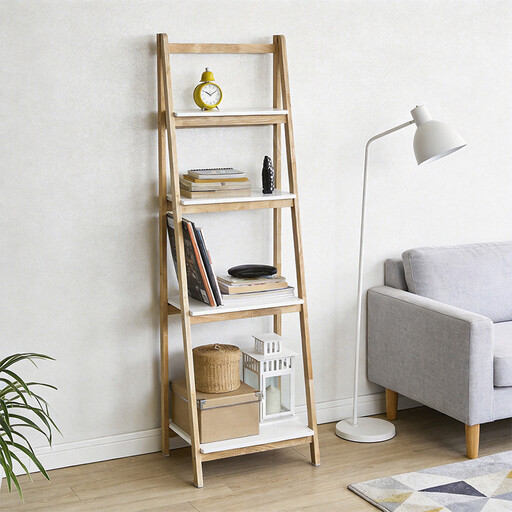
Why this product suits the profile: This folding standing shelf is ideal for students, rented flats and rooms where furniture occasionally needs to be moved or stored away to save space.
The folding design reduces the space needed when not in use. The stated load capacity of up to 15 kg per shelf should still be observed.
Four shelves, rubberwood frame and foldable design; can also be used as a kitchen or plant shelf.
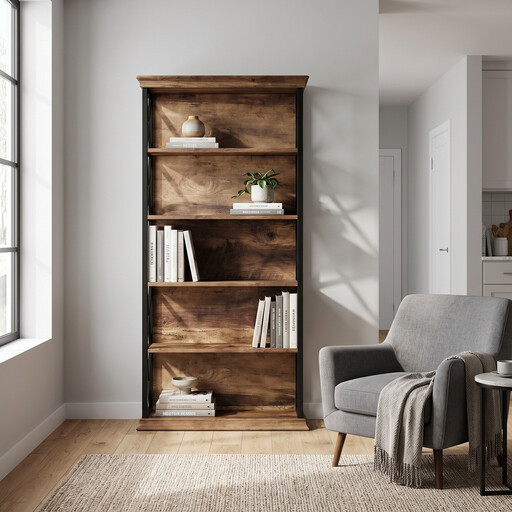
Why this product suits the profile: For extensive book collections or a shelf for the living room and home office, this model offers six shelves and a vertical design measuring 80 × 30 × 180 cm.
The included anti-tip kit is designed for wall fixing. The stated load of up to 34 kg per shelf must not be exceeded.
E0-grade MDF according to the product specification, metal frame, five shelves and X-shaped side elements in a vintage industrial style.
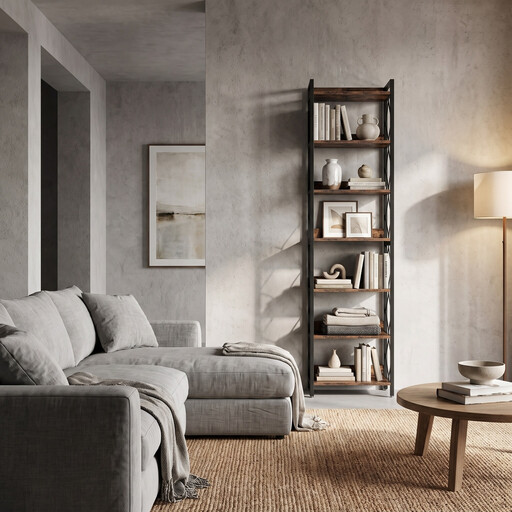
Why this product suits the profile: This corner shelf measuring 35 × 35 × 200 cm makes use of unobtrusive corners in small flats, hallways, living rooms or kitchens.
Adjustable feet help compensate for uneven floors. The anti-tip kit and the 18 kg limit per shelf address the safety and load concerns.
Seven open compartments, metal and particle board construction, and a retro-industrial appearance.
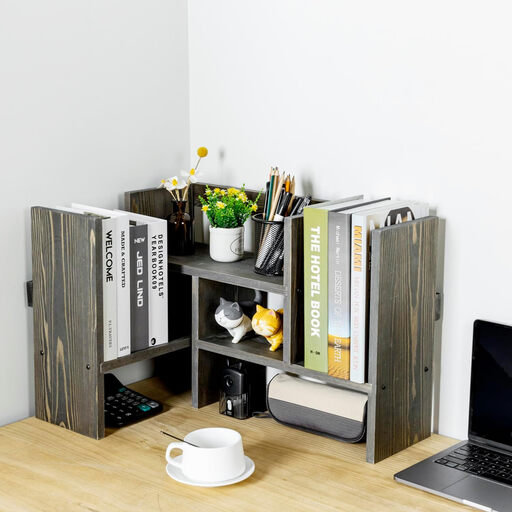
Why this product suits the profile: This desktop shelf is aimed at users with limited floor space who want to organise books, folders, plants or accessories directly on their desk.
The adjustable shelves avoid fixed shelf heights. As a desktop shelf, the load is limited to its intended use area.
Solid wood according to the product description, three shelves and stackable or adjustable use for a home office or student flat.
We have put together a complete, regularly updated list of products that fully meet these strict selection criteria and the safety regulations in force in the EU.
First, place the bookcase on a level, load-bearing surface. Arrange heavy books on the lower shelves where possible and distribute the weight evenly. Tall models, narrow shelves and corner shelves should be secured to the wall using the supplied anti-tip kit. Before drilling, check that there are no pipes or underfloor heating in the way.
For a shelf in the living room or home office, arrange cables, decoration and frequently used items so that no shelf is loaded unevenly. For damp rooms, follow the manufacturer's instructions; MDF and particle board are not automatically suitable for consistently high humidity levels.
That depends on the ceiling height, available floor space and the amount of storage you need. Models between 180 and 200 cm tall make good use of wall space, but require secure wall fixing and enough room for assembly. In rooms with low ceilings, also consider the distance to the ceiling.
The key figure is the shelf load capacity stated by the supplier, not just the total weight capacity. Distribute books evenly and do not exceed the stated load per shelf. If in doubt, a shelf with a documented load capacity and a stabilising metal frame is a sensible choice.
The piece of furniture should stand on a level floor and be fixed to the wall using the supplied or a suitable anti-tip kit. Heavy items belong on the lower shelves. Children should not climb on the shelves or pull on the furniture.