
Lieferung heute & morgen

Qualitätsgarantie

Willkommens-Angebote freischalten: KOSTENLOSE Lieferung | Bis zu 80 % RABATT | Kostenlose 30-Tage-JoyPlus-Testphase
App herunterladen
A bookcase should hold your books, help keep things tidy and fit in with your home. In practice, unclear dimensions, overlooked wall fixings and delicate finishes can often lead to the wrong purchase. With an open bookcase in particular, it’s important to look beyond appearance and consider load capacity, floor space and how it needs to be assembled.
The number of shelves tells you little about how useful a bookcase will be in practice. What matters are the internal dimensions of the compartments, the usable height and the depth. Large illustrated books, ring binders and storage boxes need more space than paperbacks or decorative items. A bookcase with several shelves may therefore look practical, even though some compartments are too small for what you plan to store.
A freestanding bookcase needs a sufficiently wide base and a level surface. Tall, narrow models and ladder bookcases may also need to be secured to the wall. Fitting an anti-tip device is particularly important if the bookcase is in a home with children or pets. Bookcases are pieces of furniture, not climbing frames or something to lean on.
Many models are made from MDF, chipboard or other engineered wood, with a melamine, lacquer or veneer finish. This may be suitable for a living space, but it isn’t the same as a solid wood bookcase. Check the material details, care instructions for the finish and guidance on moisture. A kitchen shelf, for example, needs a different assessment of load capacity and care from a decorative shelf in a bedroom.
Measure the available space, including skirting boards, doors and sockets. As well as width and height, shelf depth is important. Compact dimensions are enough for many books, while ring binders and larger boxes need deeper shelves. A shallow, space-saving bookcase can work well in a narrow hallway or small office, but make sure it doesn’t stick out so far that it blocks walkways.
For a room divider bookcase, check that it looks attractive from both sides. An asymmetrical freestanding bookcase can help divide a room, but it shouldn’t block radiators, windows or escape routes.
Check the stated maximum load capacity and, where possible, place heavy books on the lower shelves. The load limit doesn’t necessarily apply to each individual compartment, so check the manufacturer’s specifications. Placing heavy items at the top can affect the centre of gravity.
The way you load a shelf also matters: books spread evenly across a compartment put it under a different kind of strain from a single heavy ring binder or a plant pot. If you’re displaying plants, take care to prevent water from escaping and use a suitable protective mat.
A freestanding bookcase will usually need to be assembled at home. Before buying, check whether you’ll need tools and whether it would be easier to have someone help with assembly. Wall plugs aren’t always included with wall shelves, as the right fixings depend on the wall material. Concrete, brick and plasterboard all require different fixing solutions.
A wall shelf must be secured according to the assembly instructions and shouldn’t be overloaded. For many coated finishes, a soft, dry cloth is all you need for cleaning. Depending on the material, prolonged exposure to moisture and direct sunlight can damage the finish.
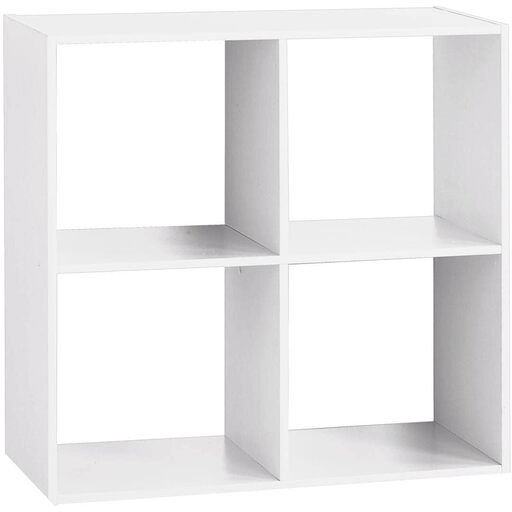
Why it suits this type of buyer: Its compact dimensions make it a good fit for smaller living spaces, a bedroom or a workspace where you want books and decorative items close to hand.
The dimensions of 67.6 × 32 × 67.6 cm make it easy to work out how much floor space you’ll need before buying. Assemble it according to the instructions and secure it to the wall to keep it stable.
Four shelf surfaces, four compartments, a lacquered finish and a stated depth of 32 cm.
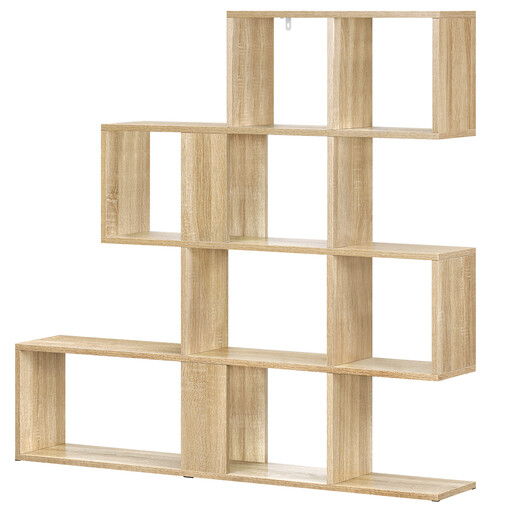
Why it suits this type of buyer: At 115 cm wide and 109.5 cm high, this bookcase is well suited to a living room or office, or as an open-shelf room divider.
The product details specify 11 open compartments, a depth of 19.5 cm and a maximum load capacity of 70 kg. The anti-tip device supplied must be securely fixed to the wall.
Four levels, a melamine finish, a wide base and an open design that works as a bookcase or room divider.
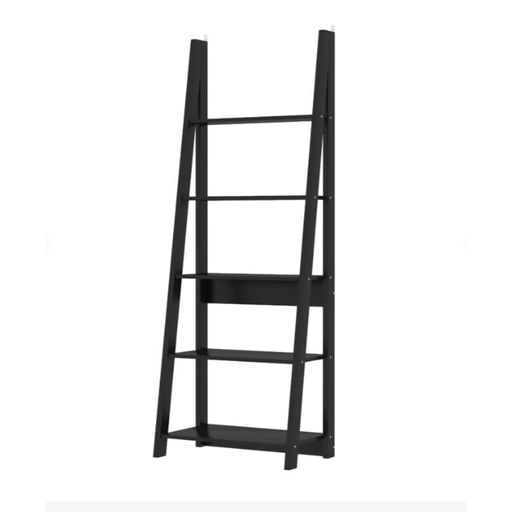
Why it suits this type of buyer: Standing 175.5 cm tall, this ladder bookcase makes use of vertical space and fits well in a living room, bedroom or home office with limited floor space.
The height of 175.5 cm and depth of 39 cm are clearly stated. Two people and a screwdriver are needed for assembly; dry cleaning is recommended.
Vertical ladder design, five open storage areas as shown in the image, and melamine-coated engineered wood panels.
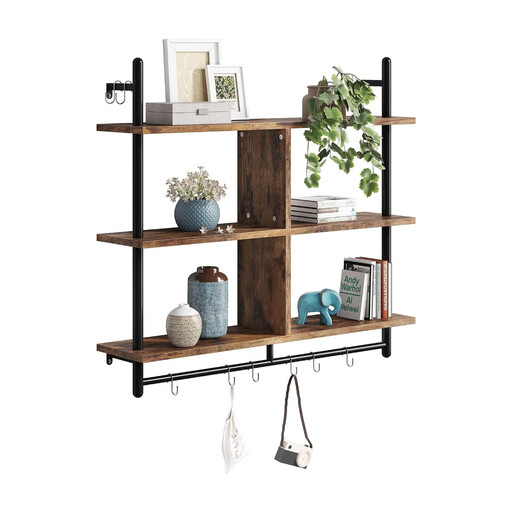
Why it suits this type of buyer: This wall-mounted design frees up floor space and is suitable for a kitchen, living room, balcony or workspace.
This shelf must be mounted on the wall. Before buying, check your wall type, the fixings you’ll need and the permitted load; take care not to overload it.
Three shelf surfaces, dimensions of 105 × 23.8 × 94 cm, a metal frame and wooden shelves.
We’ve put together a complete, regularly updated list of products that meet these strict selection criteria and fully comply with the safety regulations in force in the EU.
First, identify the type of wall. Use suitable wall plugs and screws, and follow the assembly instructions for your model. Make sure the anti-tip device is securely fixed. If you’re unsure, it may be worth getting help from a professional.
Its lifespan depends on the material, load, assembly and care. Evenly distributed weight, dry cleaning and protection from prolonged moisture can help preserve the finish. A reliable lifespan can only be given if the manufacturer explicitly states one.
The price depends on factors such as size, material, construction, mounting method and features. So, don’t just compare the purchase price: consider the fixings you’ll need, the assembly involved and whether it’s suitable for the way you plan to use it. This will help you decide which bookcase is right for your living room, bedroom, office or kitchen.