
Lieferung heute & morgen

Qualitätsgarantie

Willkommens-Angebote freischalten: KOSTENLOSE Lieferung | Bis zu 80 % RABATT | Kostenlose 30-Tage-JoyPlus-Testphase
App herunterladen
A bookcase needs to hold your books securely, make the best use of the available space, and blend in with your décor. When shopping online, many models can look similar at first glance. The real differences often only become apparent when you look at the dimensions, weight capacity or fixing method.
Three typical buying patterns can lead to the wrong choice:
Before you buy, it is worth checking the technical specifications rather than relying solely on product photos and style labels like industrial bookcase or vintage bookcase.
Measure not only the available wall width, but also the depth and height. A model that is 30 cm deep will need extra space for skirting boards, cables or access to plug sockets. For small rooms, a slim bookcase with a vertical layout can be a good choice. A tall bookcase makes use of the wall space, but should have enough clearance from doors, windows and radiators.
For alcoves, a corner shelf or a compact wall shelf could work. However, a wall shelf must be fixed properly for the type of wall you have. With a freestanding shelf, a level floor surface is important.
Wooden shelves, MDF, chipboard and metal frames differ in weight, care and stability. Coated wood-based materials can usually be cleaned with a dry or slightly damp cloth. Avoid direct moisture and strong heat sources unless the manufacturer states otherwise.
Look for three key details:
A 6-tier bookcase offers plenty of vertical storage, but it is not automatically designed for heavy stacks of books. The weight should be distributed evenly. Decorative items, plants and personal belongings can complement the use of a shelf with open compartments, but they also add to the total weight.
For tall furniture, an anti-tip kit is an important safety feature. Follow the assembly instructions and use suitable fixings for your wall type. X-shaped cross braces, adjustable feet and a back panel can help with stability, but they do not always replace the need for wall fixing.
An office shelf should also leave enough room for ring binders. In the living room, an open storage shelf with decorative elements may be more suitable. For the bedroom or hallway, compact dimensions and easy cleaning are often more important than maximum shelf height.
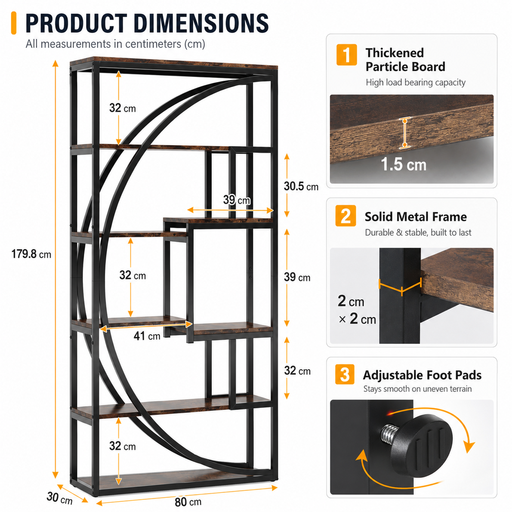
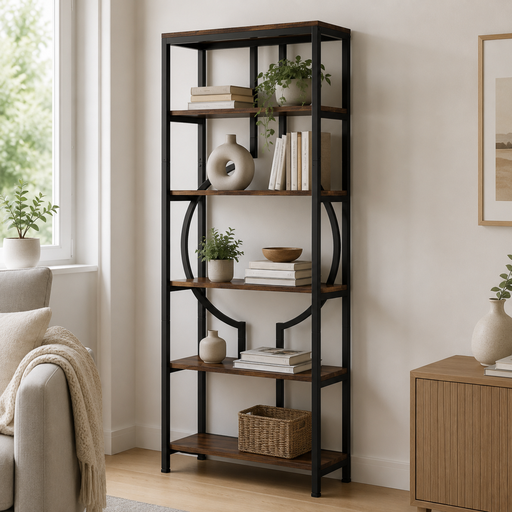
Why this product fits the profile: The combination of 80 × 30 × 179.8 cm, five tiers and eight open compartments offers a clear, straightforward solution for the living room, study or home office.
The dimensions and number of compartments are clearly stated. This means you can check before buying whether your books and decorations will fit the intended space.
Chipboard shelves and black metal frame; open layout with eight separate storage areas.
Why this product fits the profile: This model combines six open shelves with a black metal frame and a rustic brown finish. It is suitable for a larger book collection and decorative items.
The stated maximum load capacity of 100 kg makes capacity planning clearer. The weight still needs to be distributed evenly.
Dimensions of 30 × 70 × 180 cm; six open tiers and powder-coated metal frame according to the product details.
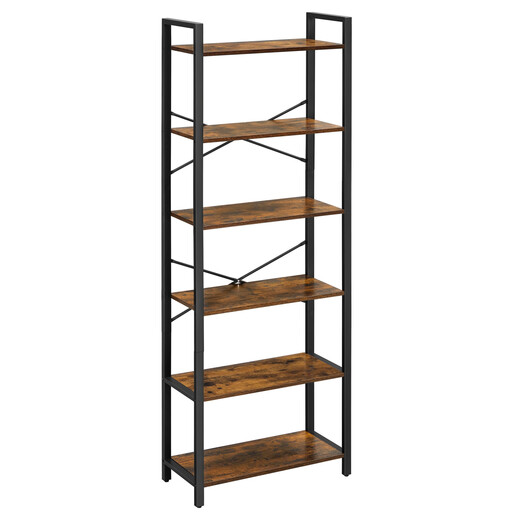
Why this product fits the profile: With six tiers, a width of 66 cm and a stated total load capacity of 60 kg, it fits into many living and working areas with limited floor space.
X-bracing, adjustable feet and an included anti-tip kit address typical stability issues. The wall fixing should be used.
Combination of chipboard and steel; 30 cm depth and 60 kg maximum static total load according to the product description.
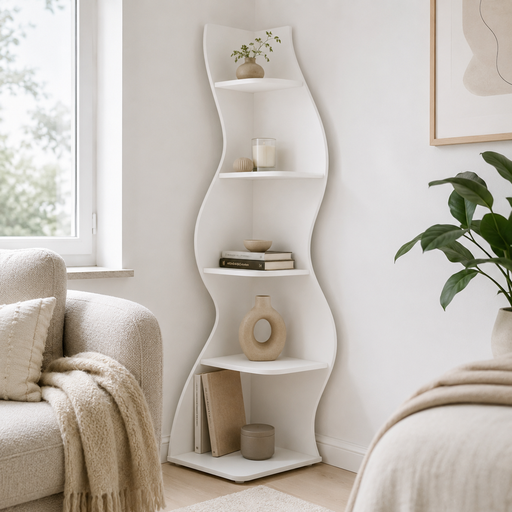
Why this product fits the profile: The vertical design is intended for corners, smaller living areas or a home office. It can hold books, plants and smaller personal items.
Using a corner reduces the need for straight wall space. Before assembly, check the alignment, surface and shelf spacing.
Five tiers, white finish and a design intended for corners according to the product description.
We have put together a complete, regularly updated list of products that fully meet these strict selection criteria and the safety regulations in force in the EU.
Place the shelf on a level, load-bearing surface. Heavy books should go on the lower shelves if possible. For a tall freestanding shelf, the wall fixing should be carried out according to the instructions. After assembly, check all screws and connections and tighten them if necessary.
For cleaning, a dry or slightly damp cloth is usually sufficient for coated surfaces. Avoid standing water, harsh cleaning products and prolonged direct sunlight unless the manufacturer states otherwise.
For paperbacks, shallower depths are often sufficient. Large hardbacks, ring binders and decorations need more space. The key is that the actual shelf depth matches your intended use and that items do not protrude over the front edge.
For tall or narrow shelves, wall fixing is advisable for safety reasons and is explicitly recommended for some models. Use the supplied anti-tip kit along with wall plugs and screws suitable for your wall type.
The lifespan depends on the material, assembly, load and care. Even weight distribution, staying within the stated load capacity and regularly checking the connections can all help to maintain its usability.