
Lieferung heute & morgen

Qualitätsgarantie

Willkommens-Angebote freischalten: KOSTENLOSE Lieferung | Bis zu 80 % RABATT | Kostenlose 30-Tage-JoyPlus-Testphase
App herunterladen
A bookcase should safely support your books, make sensible use of the available space and complement your interior style. In practice, however, some typical buying decisions can lead to unnecessary costs: a tall bookcase may save floor space, but it might not fit beneath the ceiling or be possible to secure safely to the wall. An inexpensive freestanding shelving unit may be perfectly adequate if its load limits and material thickness are suitable for your intended use. And attractive design alone says little about stability, maintenance requirements or assembly.
This buying guide explains which details are important to check before purchasing a bookcase and which models suit different living situations.
A shelving unit with open compartments is easy to access and suitable for books, photo frames or decorations. However, its actual usefulness depends on the height and depth of the compartments. Large coffee-table books need more room than paperbacks. Before buying, check whether the internal dimensions are suitable for the items you already own.
Statements such as “sturdy construction” are difficult to assess without specific figures. What matters is a stated maximum load per shelf or for the shelving unit as a whole, along with an even distribution of weight. Books in particular can place considerable weight on individual shelves when grouped together.
A tall, shallow shelving unit makes good use of wall space, but it can tip over if it is loaded unevenly. For models measuring 180 cm or more in height, anti-tip protection for wall mounting is an important safety measure. The floor should also be level and able to support the weight. In households with children, a shelving unit must not be used as a climbing frame.
First, measure the available wall or alcove width. With a 180 cm bookcase, you should also take the ceiling height into account. A model measuring 179.8 cm in height needs sufficient clearance for positioning and should not be wedged tightly between the floor and ceiling.
The depth of the shelving unit affects both the feel of the room and how it can be used:
A narrow, tall shelving unit saves floor space. A wider model, on the other hand, often has a lower centre of gravity and may be better suited as a living room shelving unit, or for use in an office or bedroom.
Many shelving units are made from MDF or chipboard with a decorative finish, combined with metal frames. A wooden shelving unit with a metal frame combines a homely surface with a clean-lined structure. Look out for:
An industrial shelving unit with black metal and a brown wood-effect finish works well with vintage, industrial and modern interiors. For use in the kitchen or bathroom, you should also check whether the specific product is suitable for damp rooms. A general reference to MDF or chipboard does not indicate permanent moisture resistance.
The maximum load should be suitable for what you intend to store. Heavy books should ideally go on the lower shelves. Decorations, plants or lightweight boxes can be placed higher up. Never exceed the manufacturer’s stated limit.
A tall, freestanding storage shelving unit must be fitted with the supplied wall-fixing equipment as intended. Use wall plugs and screws suitable for the wall material. Plasterboard walls may require special fixings.
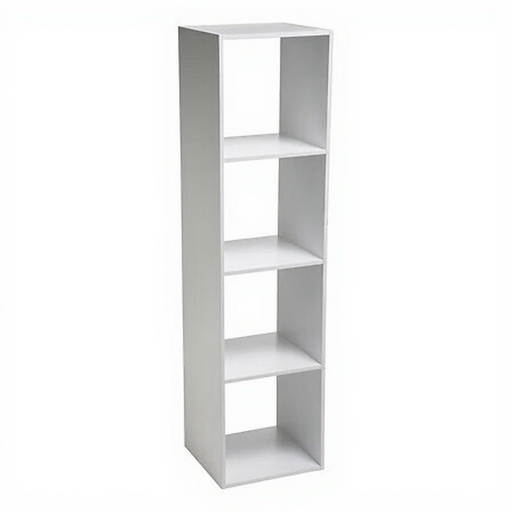
Why this product suits this profile: With four compartments, this compact shelving unit is ideal for smaller living spaces, a bedroom or a modest home office. Its white finish works well with a range of interior styles.
The stated dimensions of 134 x 34.5 x 32 cm make it easy to assess how much space is needed before buying. The four compartments also help set realistic expectations about storage capacity.
Four open compartments, freestanding design, assembly according to the instructions and cleaning with a soft, damp cloth.
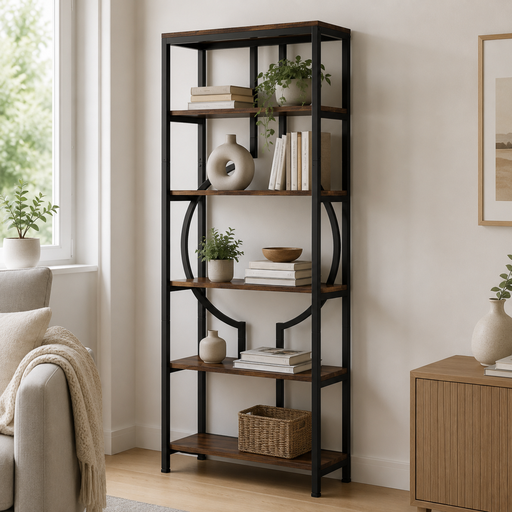
Why this product suits this profile: This 180 cm-tall industrial shelving unit is designed for anyone who wants to combine vertical storage with a black-and-brown interior style. Six open tiers provide space for books and decorations.
The product specifications state a maximum total load of 100 kg. They also require the weight to be distributed evenly and the unit to be placed on a level surface.
Dimensions of 30 x 70 x 180 cm, six open tiers, a powder-coated metal frame and a scratch- and stain-resistant surface according to the product description.
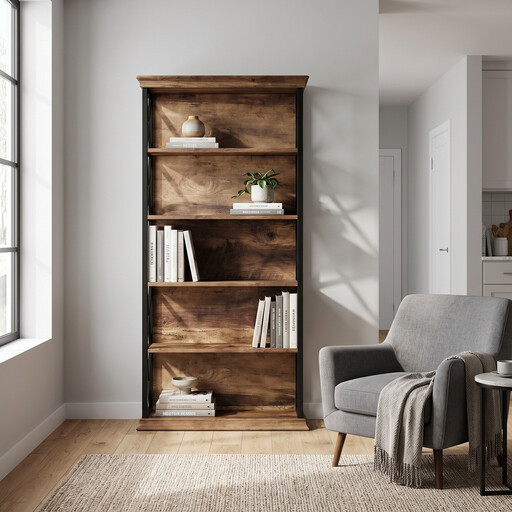
Why this product suits this profile: This model combines E0 MDF boards with a metal frame and is suitable for the living room, home office, bedroom or kitchen, provided the surrounding conditions are suitable.
The stated capacity of up to 34 kg per compartment provides a clear basis for planning. The supplied anti-tip kit should be used for wall mounting.
80 x 30 x 180 cm, five tiers, water- and scratch-resistant properties according to the description, as well as X-shaped side elements.
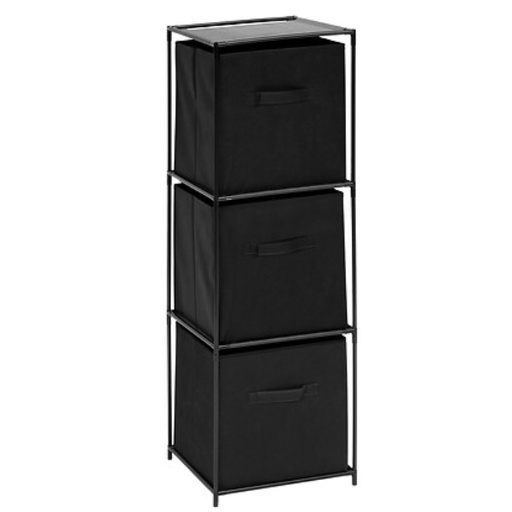
Why this product suits this profile: Measuring 34 x 34 x 99 cm, this modular shelving unit is suitable for hallways, bedrooms, offices or smaller living spaces. Three boxes complement the open compartments with partially concealed storage.
Its low height reduces the requirements for wall space. At the same time, the product specifically requires a level surface and compliance with the maximum load per compartment.
Three open compartments, three matching storage boxes, PP and steel construction, and a weight of 1,885 kg according to the product specifications.
We have put together a complete, regularly updated list of products that fully meet these strict selection criteria and the safety regulations applicable in the EU.
Allow plenty of space for assembly and sort all screws and components beforehand. The shelving unit should stand on a level surface. For tall models, fit the wall fixings according to the instructions. Place heavy books at the bottom and avoid concentrated overloading of individual compartments.
A dry or slightly damp cloth is usually all that is needed for care. Abrasive cleaning products, standing water and direct heat can damage decorative surfaces or MDF edges. For shelving units used in kitchens or bathrooms, suitability for damp conditions is particularly important.
The right height depends on the room, ceiling height and the amount of storage you need. A shelving unit approximately 100 to 135 cm high is easier to access and suitable for smaller rooms. A tall bookcase measuring 180 or 200 cm makes efficient use of wall space, but should be securely fixed to the wall.
This depends on the model. The key figures are the maximum load per compartment and the total load capacity. These limits must not be exceeded. Books should be distributed evenly, with heavier volumes placed in the lower sections.
Its service life depends on the material, assembly, load and room conditions. Positioning it on a level surface, securing it correctly to the wall, distributing the contents evenly and keeping it dry can help maintain its usability. If there is visible damage to the shelves, frame or connections, the shelving unit should no longer be loaded.