
Lieferung heute & morgen

Qualitätsgarantie

Willkommens-Angebote freischalten: KOSTENLOSE Lieferung | Bis zu 80 % RABATT | Kostenlose 30-Tage-JoyPlus-Testphase
App herunterladen
A new bookshelf should create order while also serving as a visual highlight in your room. But the search for the right model can quickly become overwhelming. Often, appealing product images hide design flaws or unsuitable materials that lead to frustration. As your Joybuy Product Recommendation Officer, I'll help you identify the crucial features and sidestep common buying traps, ensuring you find a durable and functional solution for your home.
Before you decide on a model, you should be aware of the typical weaknesses that often only become apparent after assembly or during daily use.
To avoid these pitfalls, focus on three objective criteria. These will help you evaluate the quality and functionality of a bookshelf, independent of marketing promises.
The choice of material significantly influences stability, load capacity, and appearance.
You can also recognise a solid construction by a sturdy back panel or additional cross-bracing that protects the shelf from lateral sway.
Two specifications are crucial here:
Measure the available space accurately and consider what you want to store.
Here are some recommendations tailored to different needs and living situations.
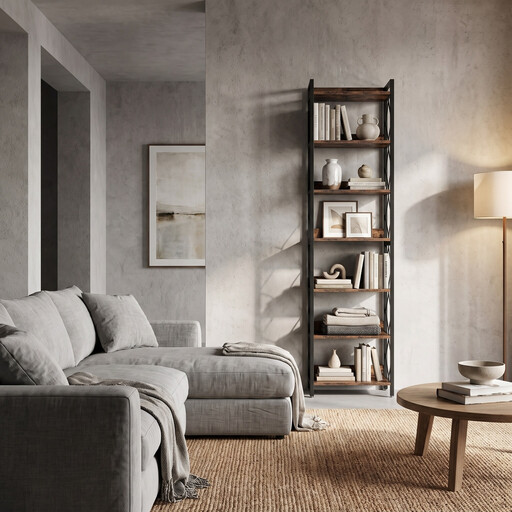
Why This Fits Their Persona: Ideal for those looking to transform unused corners in smaller apartments or rooms into valuable storage space. Its tall, narrow design makes perfect use of vertical space without taking up much floor area.
This corner shelf solves the space dilemma by making use of an often-overlooked area. Instead of a bulky shelf that juts out into the room, it fits seamlessly into the corner.
Combination of a sturdy metal frame and engineered wood shelves. According to the manufacturer, an anti-tip kit for wall mounting is included.
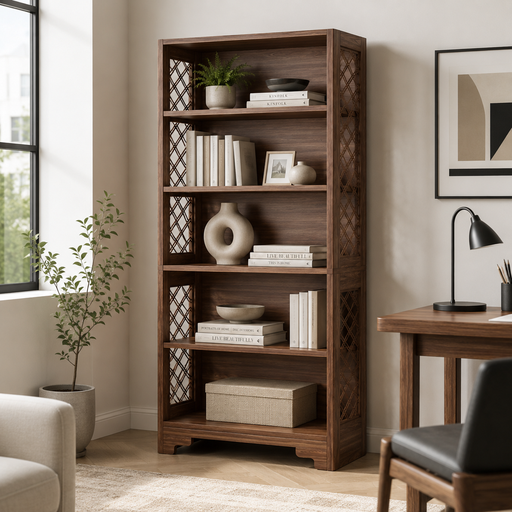
Why This Fits Their Persona: For those seeking a piece of furniture that is more than just storage. The striking industrial design with its X-frame bracing makes this shelf a real focal point in the living room or home office.
This model avoids the instability trap thanks to its robust construction. The X-shaped braces on the sides are not just a design element; they also contribute to structural stability.
The 1.5 cm thick MDF shelves promise high load capacity. According to the manufacturer, each shelf can hold up to 34 kg, making it ideal for heavy book collections.
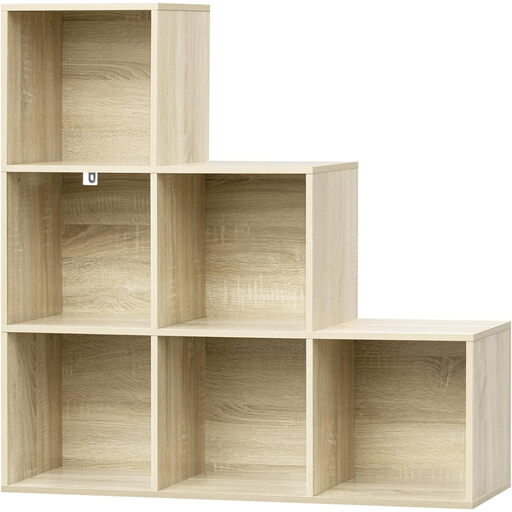
Why This Fits Their Persona: Perfect for anyone looking for an adaptable storage solution. This cube shelf can be used as a step shelf under sloped ceilings, a classic standing shelf, or even as a low room divider.
It bypasses the material misconception with a clear specification of a 60 kg total load capacity. The sturdy engineered wood construction is designed for flexible use as a cube or step shelf.
High versatility in its setup. The six spacious compartments offer room for books, decorative items, or storage boxes, allowing for individual customisation.
We have compiled a complete, up-to-date list of products that fully meet these strict selection criteria and rigorous safety requirements.
1. How much weight can a bookshelf hold? The load capacity varies greatly depending on the model and material. Always check the maximum load capacity per shelf specification in the product description. For standard paperbacks, 5-8 kg is often sufficient, but for heavy coffee table books or binders, it should be at least 10-15 kg. Always place heavy items on the lower shelves to increase stability.
2. Does every shelf need to be attached to the wall? It is strongly recommended to anchor all shelves that are taller than they are deep to the wall using the provided anti-tip kit. This is an essential safety measure to prevent tipping, especially if there are children in the household or the shelf is heavily loaded.
3. What is the difference between MDF and particleboard? Both are engineered woods, but MDF (medium-density fibreboard) is made from finer wood fibres pressed under high pressure. This makes it denser, more resistant to bending, and gives it more stable edges than conventional particleboard, which is made from coarser wood chips. For shelves that need to bear weight, MDF is often the more solid choice.