
Lieferung heute & morgen

Qualitätsgarantie

Willkommens-Angebote freischalten: KOSTENLOSE Lieferung | Bis zu 80 % RABATT | Kostenlose 30-Tage-JoyPlus-Testphase
App herunterladen
A bookshelf is more than just a place to store your reading material. It's a central piece of furniture that creates order, expresses personality, and significantly defines the aesthetic of a room. However, the selection is vast, and not every model lives up to the promises of its product images. As your Joybuy Product Recommendation Officer, I'm here to help you navigate the common pitfalls and make an informed decision.
Many buyers focus primarily on design, overlooking crucial functional flaws. These three problems frequently lead to disappointment:
To avoid making the wrong choice, you should focus on three objective key parameters. These will help you to objectively evaluate the quality and suitability of a shelf.
The material determines durability, stability, and maintenance requirements. The most common options are:
A tall bookshelf must stand perfectly securely. Look for the following features:
The right type of shelf depends on your available space and intended use:
Here are some models that are well-suited for specific user profiles based on their specifications.
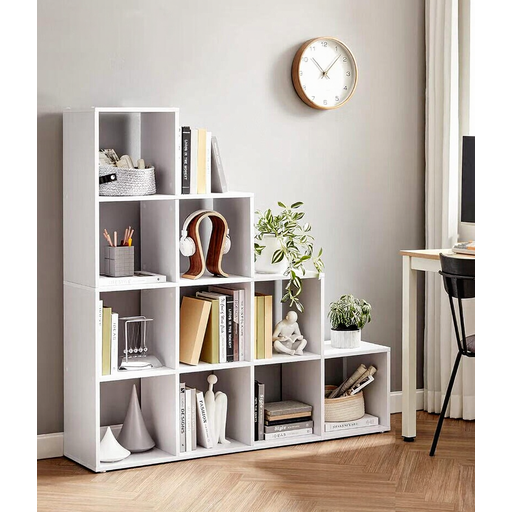
Why This Fits Their Persona: Ideal for users who want to visually divide a large room. The stepped design feels more open than a solid cabinet and is accessible from both sides, making it a functional room divider.
The shelf is designed without an unsightly back panel, making it accessible from both sides. The 15 mm thick particleboard and included anti-tip kit provide the necessary stability for freestanding placement.
The 10 cubes offer versatile storage space. According to the manufacturer, each cube can hold up to 15 kg, which is sufficient for books and decor. The melamine surface is scratch- and wear-resistant.
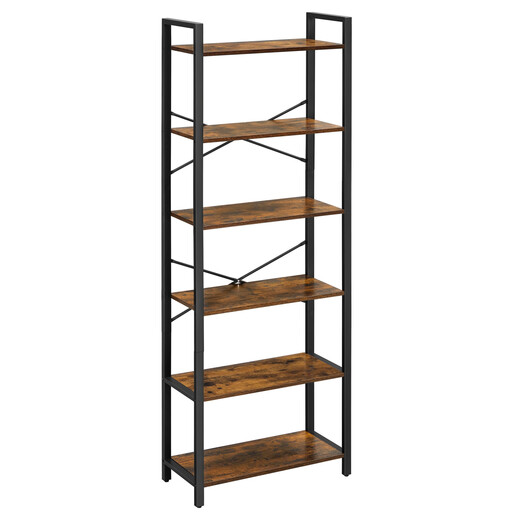
Why This Fits Their Persona: This tall, narrow industrial-style shelf makes optimal use of vertical space. It's perfect for a home office to organise binders, textbooks, and office supplies in a neat and stylish way.
The combination of a steel frame, X-bracing on the back, and an included anti-tip kit counteracts the problem of instability. Adjustable feet ensure it stands securely even on uneven floors.
The shelf offers ample storage on 6 tiers with a small footprint. The specified total load capacity of 60 kg makes it a sturdy storage unit for heavier items like binders.
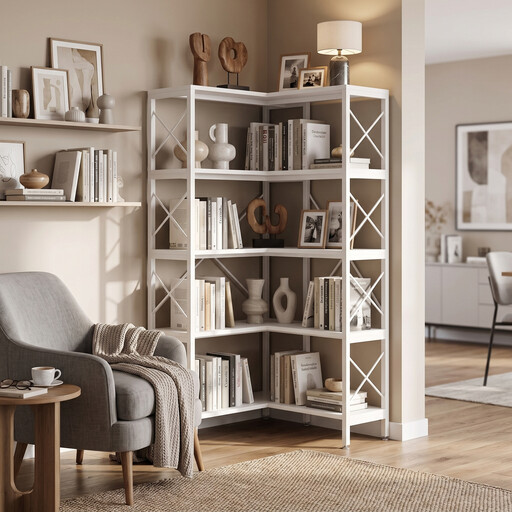
Why This Fits Their Persona: Perfect for anyone looking to turn unused corners in living rooms, bedrooms, or studies into valuable storage space. The design is functional and maximises the use of the area.
Instead of leaving a corner unused, this specially shaped shelf fills the space perfectly. The combination of a metal frame and X-bracing provides a stable structure, while adjustable feet ensure it stands securely.
It offers plenty of open storage on 5 tiers. According to the manufacturer, each shelf holds up to 20 kg, and the surfaces are scratch-resistant, promising long-term use.
We've compiled a complete, up-to-date list of products that fully meet these strict selection criteria and safety standards.
1. How do you securely attach a tall bookshelf to the wall? Most tall shelves come with an anti-tip kit. This usually consists of a bracket or strap that is screwed to the shelf and the wall. Use wall anchors and screws appropriate for your wall type (e.g., for concrete or drywall) and ensure the fastening is secure. Additionally, always place heavier items on the lower shelves to keep the shelf's centre of gravity low.
2. What material is best for heavy books? For a large and heavy book collection, shelves made of solid wood or models with a sturdy metal frame and thick MDF or particleboard shelves (at least 1.5 cm) are a good choice. The crucial factor is the maximum load capacity per shelf specified by the manufacturer. Do not exceed this value to prevent the shelves from sagging or breaking.
3. What's the difference between a bookshelf and a storage shelf? The terms are often used interchangeably. Classic bookshelves are often designed with depths and shelf heights suited to standard book sizes. A storage shelf can have more versatile dimensions to accommodate binders, boxes, or larger decorative objects. Ultimately, the deciding factors for your choice are the exact dimensions of the compartments and the specified load capacity, not the product name.