
Lieferung heute & morgen

Qualitätsgarantie

Willkommens-Angebote freischalten: KOSTENLOSE Lieferung | Bis zu 80 % RABATT | Kostenlose 30-Tage-JoyPlus-Testphase
App herunterladen
A new bookshelf should do one thing above all: create storage and bring order. But the sheer number of options can quickly become overwhelming. Often, hidden flaws or exaggerated marketing claims lead to a purchase that proves to be a mistake within just a few months. Before you invest, it's wise to know the most common pitfalls to find a durable and functional solution for your home.
Many shelves look stable and high-quality in the showroom or on product photos. In everyday use, however, their weaknesses quickly become apparent. Pay special attention to these three points:
To avoid a bad purchase, you should base your decision on objective criteria. These three parameters are crucial for the quality and functionality of your new shelf.
The material determines not only the look but also the stability and lifespan.
A freestanding bookshelf must be stable on its own.
The shelf must fit your needs and your space.
Based on these objective criteria, we have identified some models that represent a well-thought-out solution for specific living situations and needs.
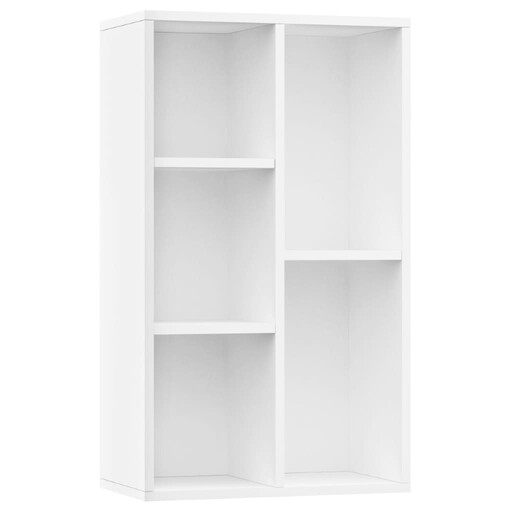
Why This Fits Their Persona: Ideal for a first apartment, small rooms, or as a flexible addition. Its compact dimensions and simple white design allow it to blend unobtrusively into existing decor and be easily repurposed if needed.
It avoids the pitfall of misleading material claims. The product is clearly declared as being made from engineered wood. Its stability is appropriate for its intended use and size, especially when used horizontally as a sideboard.
Can be used vertically as a bookcase or horizontally as a sideboard. The smooth surface is low-maintenance and easy to clean.
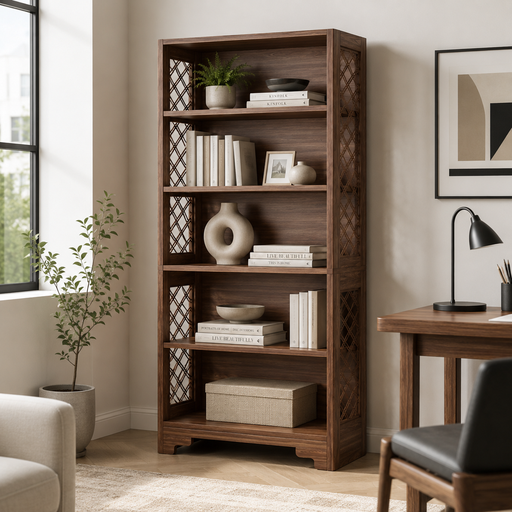
Why This Fits Their Persona: Perfect as a visual highlight in the living room or home office. The combination of wood-look decor and a black metal frame with X-bracing embodies the popular industrial look while offering ample storage space on 6 tiers.
This model actively addresses the problem of instability. The description mentions a solid base, a back panel, and a high load capacity of up to 34 kg per shelf. This ensures it can support heavy books without sagging or wobbling.
High load capacity per shelf. The sturdy metal frame with X-bracing provides excellent stability.
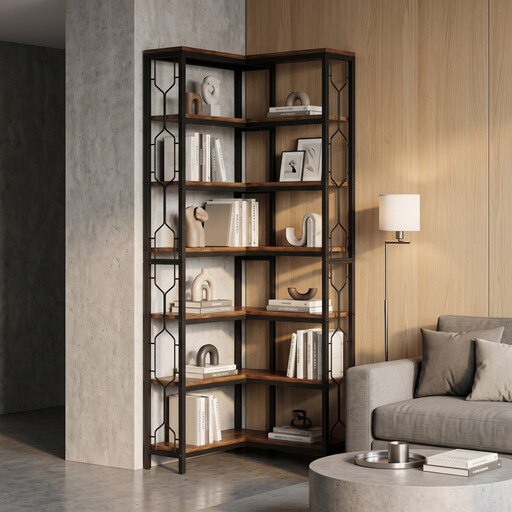
Why This Fits Their Persona: Specifically designed to turn unused corners into valuable storage space. Ideal for smaller living rooms or studies where every square centimetre counts and standard shelves would be impractical.
It solves the problem of "wasted space" created by standard rectangular shelves. It also addresses stability concerns with adjustable feet and an included anti-tip kit—crucial for a tall, narrow design.
Efficient use of room corners. With 7 tiers at a height of 200 cm, it offers maximum vertical storage on a minimal footprint.
We have compiled a complete, up-to-date list of products that fully meet these strict selection criteria and safety requirements.
Always use the included anti-tip kit. Drill holes in the wall, insert wall anchors suitable for your wall type (e.g., drywall, brick), and firmly screw the bracket to both the wall and the shelf. This is an indispensable safety step, especially in households with children or when the shelf is heavily loaded.
The load capacity varies greatly. Always check the manufacturer's specification for the maximum load capacity per shelf. A simple particle board shelf often only holds 5–10 kg. In contrast, a sturdy industrial shelf with a metal frame can support 20 kg or more per shelf. Distribute the weight evenly and always place heavy items on the lower shelves.
Yes, but the choice of material is crucial. For a bathroom shelf or kitchen shelf, moisture-resistant materials are required. Powder-coated metal, plastic, or specially sealed woods are well-suited. Standard MDF or particle board without a high-quality, sealed coating can swell and be damaged by moisture.