
Lieferung heute & morgen

Qualitätsgarantie

Willkommens-Angebote freischalten: KOSTENLOSE Lieferung | Bis zu 80 % RABATT | Kostenlose 30-Tage-JoyPlus-Testphase
App herunterladen
Finding a new bookshelf seems simple at first glance. However, the sheer number of options can quickly become overwhelming and lead to buyer's remorse. Many shelves look appealing online but turn out to be unstable or impractical after assembly. Before you decide on a model, it's important to know the most common pitfalls to find a durable and functional solution for your home or office.
This guide will help you identify the crucial features and select a shelf that meets your storage and style needs.
Some problems only become apparent after months of use. Watch out for these three typical weak points to avoid disappointment:
To make the right choice, focus on three objective criteria. These will help you evaluate the quality and functionality of a shelf, regardless of marketing promises.
The material is a key determinant of durability and stability. The most common materials are:
Also, pay attention to stabilising elements. A full back panel or at least a cross-brace on the back prevents the shelf from swaying from side to side.
Always check the specified maximum load capacity per shelf. For paperbacks, 5–7 kg per shelf is sufficient. For heavy textbooks, art books, or binders, it should be at least 10–15 kg. A good storage shelf should clearly state these values.
For safety, especially in households with children, an anti-tip kit is essential. This small component securely connects the top edge of the shelf to the wall, preventing it from tipping forward.
Measure the available space precisely—height, width, and depth. Also, consider the space you'll need for assembly. A tall, narrow shelf can be an ideal solution for unused corners or niches. Modular systems that can be stacked or placed side-by-side offer flexibility if your storage needs grow in the future.
Here are some recommendations tailored to specific use cases that avoid the pitfalls mentioned.
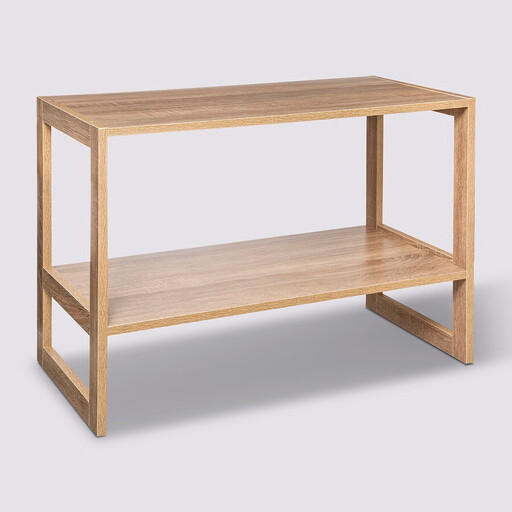
Why this model is a great fit: Ideal for a first apartment or for growing storage needs. This shelving unit can be used alone or combined with other modules to create a custom shelving system, either side-by-side or stacked.
The maximum load capacity of 20 kg is clearly defined and realistic for its size. The modular design doesn't force a rigid, ill-fitting solution but rather one that grows with your needs.
Stackable and expandable system. FSC-certified material. Simple assembly in about 20 minutes.
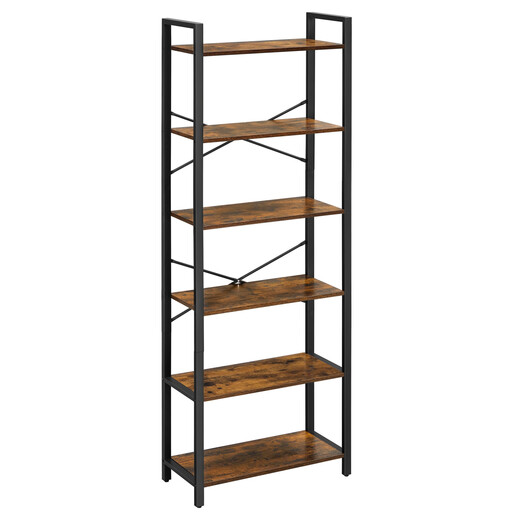
Why this model is a great fit: Perfect for fans of modern industrial style. The combination of a black steel frame and greige (grey-beige) shelves creates an elegant accent in the living room or office.
The design actively addresses stability issues: an X-shaped cross-brace on the back prevents side-to-side wobbling. An included anti-tip kit ensures it stands securely against the wall.
Sturdy steel frame and high-quality particleboard. High total load capacity of 60 kg. Adjustable feet to compensate for uneven floors.
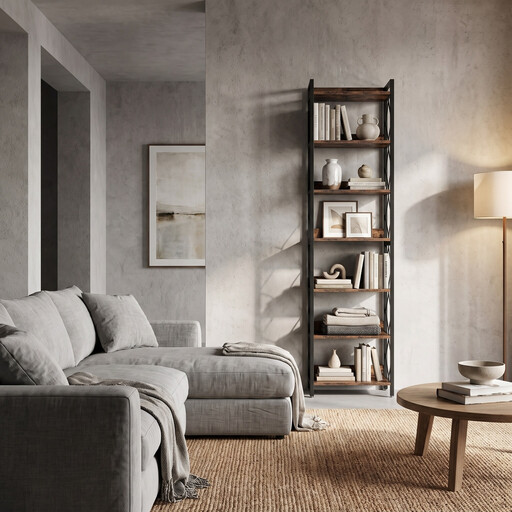
Why this model is a great fit: This corner shelf is specifically designed to turn unused corners into valuable storage space. With a height of 200 cm and seven tiers, it makes optimal vertical use of space without taking up much floor space.
As a tall, narrow shelf, it comes with an anti-tip kit to ensure stability. The load capacity of 18 kg per shelf is solid and clearly stated for a shelf of this type.
Maximum space utilisation on a small footprint (35x35 cm). Sturdy metal frame and adjustable feet. Open design for easy access.
We've compiled a complete, up-to-date list of products that fully meet these strict selection criteria and German safety regulations.
The load capacity varies greatly depending on the material and construction. The crucial factor is the load capacity per shelf, which should be specified in the product details. A solid oak shelf will hold more than one made of thin particleboard. As a rule of thumb, distribute heavy items like art books or binders on the lower shelves to increase stability.
Always use the provided anti-tip kit. This usually consists of a bracket or a strap that is screwed to the shelf and the wall. Ensure you use the appropriate anchors and screws for your wall type (e.g., special anchors for drywall). A spirit level will help you align the shelf perfectly straight before drilling.
Particleboard is made from coarse, glued wood chips. It is lightweight and inexpensive but less dense and more prone to sagging under heavy loads over a wide span. MDF (Medium-Density Fibreboard) is pressed from very fine wood fibres. This makes it heavier, denser, and more dimensionally stable. Its smooth surface is better for painted finishes, and screws hold more firmly. For a durable and resilient shelf, MDF is often the more robust choice.