Joybuy Insights

Bookshelf Buying Guide: How to Avoid Common Buying Mistakes

A new bookshelf should bring order and enhance a room. However, the selection can quickly become overwhelming. A hasty decision often leads to a piece of furniture that wobbles, its shelves sag, or it simply doesn't suit your needs. As your Joybuy Product Recommendation Officer, I'll filter the essential information for you, so you can make an informed decision and avoid common purchasing pitfalls.

The most common problems arise from three factors:

  1. Unstable Construction: Many shelves look sturdy in product photos but turn out to be a wobbly affair. Inadequate material thickness or poor connections between components can cause the shelf to lose stability even under a light load.
  2. Misleading Material Descriptions: Terms like "wood-effect" often conceal the fact that the material is simple foil-wrapped particleboard. These materials are more susceptible to moisture and wear than MDF boards or even solid wood.
  3. Impractical Dimensions: Fixed, non-adjustable shelves can mean that larger books, binders, or decorative objects won't fit. A beautiful design is useless if it doesn't meet the practical demands of daily life.

What to Look For Before You Buy: The Key Parameters

To avoid a bad purchase, you should check three crucial aspects: material quality, shelf type, and safety features. These determine the durability, functionality, and safe use of the shelf in your home.

1. Material and Workmanship: Wooden Shelves, Metal Shelves, and Their Differences

The choice of material is fundamental to your shelf's stability and longevity.

  • Particleboard: The most cost-effective option. It consists of glued wood chips and is usually covered with a wood-effect or coloured foil. Particleboard is lightweight but also the least load-bearing and is prone to swelling when it comes into contact with moisture.
  • MDF (Medium-Density Fibreboard): Denser and more stable than particleboard. MDF boards offer a smooth surface that is ideal for painting or veneering. They are a good compromise between price and quality.
  • Solid Wood: The most durable and robust, but also the most expensive, option. A wooden shelf made of solid wood is extremely resilient and can last for decades with proper care.
  • Metal: Often found in combination with wooden shelves in an industrial-style shelf. A frame made of steel or aluminium provides a very high load capacity and stability. Look for a high-quality powder coating to prevent rust and scratches.

2. The Right Type for Your Space: Freestanding, Wall-Mounted, or Corner Shelves

Measure your available space carefully before deciding on a type.

  • Freestanding Shelf: The classic choice. It is flexible to position and offers plenty of storage space. Tall, narrow models make optimal use of room height. With models like a cube storage unit or a step shelf, you can also add creative accents.
  • Wall-Mounted Shelf: Ideal for small rooms as it takes up no floor space. It is perfect for displaying books, decor, or as a kitchen shelf organiser for spices and dishes. Its load capacity is highly dependent on the wall type and the mounting.
  • Corner Shelf: A smart solution to turn unused corners into valuable storage space. It connects two walls and creates harmonious space utilisation where a classic shelf would seem bulky.
  • Narrow Shelf: Perfect for niches or small wall sections. It provides targeted storage without cluttering the room.

3. Stability and Safety: Anti-Tip Kits and Load Capacity

Safety is not an optional extra. Pay attention to the maximum load capacity per shelf specified by the manufacturer. Always place heavy items like books on the lower shelves to lower the centre of gravity.

An anti-tip kit is essential, especially for tall freestanding shelves and in households with children. This is hardware used to anchor the shelf to the wall to prevent it from tipping over. Many manufacturers already include this.


Top Picks for Different Needs

Here are some recommendations tailored to specific use cases and needs.
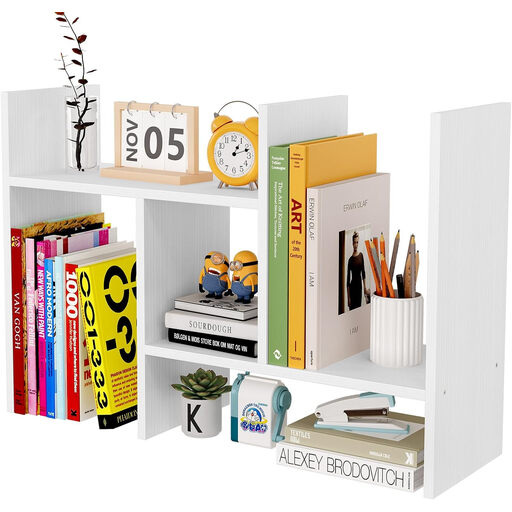
MATCH FOR: THE FLEXIBLE ORGANISER
Senhoglb Freestanding Wood Small Desk Shelves Adjustable, White

Senhoglb Freestanding Wood Small Desk Shelves Adjustable, White

Why This Fits Their Persona: Ideal for anyone who wants to create vertical storage on a desk or sideboard without losing space. Perfect for students or the home office to organise books, pen holders, and small plants.

How It Avoids the Trap

This shelf avoids the trap of impractical design. With its adjustable width from 41 cm to 73 cm, it flexibly adapts to the available space instead of imposing rigid dimensions.

Key Advantage & Pros

Creates two additional tiers on the desk, optimising the workspace. The melamine board construction is robust and easy to clean.
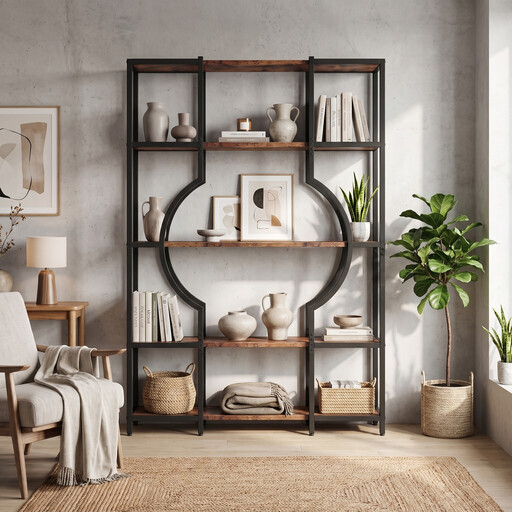
MATCH FOR: THE DESIGN-FOCUSED HOME OFFICE USER
5-Tier Bookcase, Tall Vintage Bookcase with 12 Open Display Shelves

5-Tier Bookcase, Tall Vintage Bookcase with 12 Open Display Shelves

Why This Fits Their Persona: For users seeking a combination of generous storage and a striking industrial design. It serves not only as a bookshelf but also as a display area for decorative objects in the living room or home office.

How It Avoids the Trap

This shelf avoids the trap of instability. The sturdy metal frame combined with MDF shelves ensures a high total load capacity of 113 kg and solid stability.

Key Advantage & Pros

With 12 open compartments on 5 levels, it offers an exceptionally high organisational capacity. The curved silhouette gives it a unique aesthetic character.
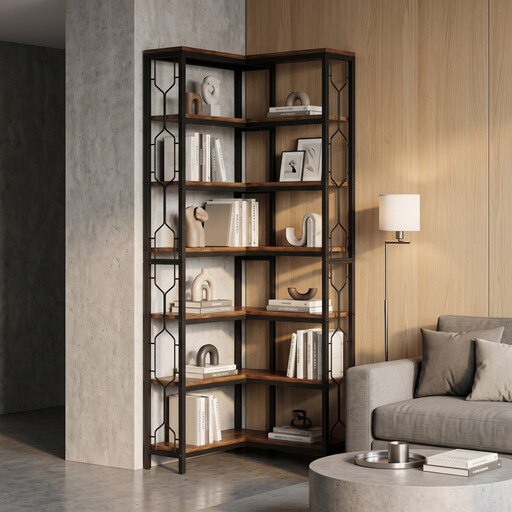
MATCH FOR: THE SPACE-SAVING MAXIMISER
Corner Bookcase, 7-Tier Industrial Corner Shelf, Wood and Metal

Corner Bookcase, 7-Tier Industrial Corner Shelf, Wood and Metal

Why This Fits Their Persona: Perfect for anyone looking to transform an unused corner in the living room, kitchen, or office into maximum storage space. The L-shape is one of the most efficient methods of space utilisation.

How It Avoids the Trap

This corner shelf solves the problem of impractical design by making use of an often-ignored area. Instead of a gap in the corner, it creates a continuous, functional storage surface.

Key Advantage & Pros

Seven tiers offer a tremendous amount of vertical storage. Adjustable feet compensate for uneven floors, and the included anti-tip kit provides the necessary safety.

Looking for more options?

We have compiled a full, up-to-date list of products that fully meet these strict selection criteria and UK safety regulations.

Frequently Asked Questions (FAQ)

How do I securely attach a bookshelf to the wall?

Most tall freestanding shelves come with an anti-tip kit. This usually consists of a bracket or a strap that is screwed to the top of the shelf and to the wall. Always use wall plugs and screws that are appropriate for your wall type (e.g., concrete, plasterboard). A spirit level helps to align the shelf perfectly before drilling.

What is the difference between MDF, particleboard, and solid wood in shelves?

The main difference lies in density, stability, and durability.

  • Particleboard: Lowest density, most affordable, but also the least load-bearing.
  • MDF: Medium density, more stable and resilient than particleboard, offers a smooth surface.
  • Solid Wood: Highest density and stability, very durable and repairable, but also the most expensive option.

How much weight can an average bookshelf hold?

The load capacity varies greatly depending on the material and construction. A simple particleboard shelf often holds only 5-10 kg. Shelves made of MDF or solid wood in a sturdy frame can support 15 kg, 30 kg, or more. Always check the manufacturer's specifications for the maximum load capacity per shelf. Do not overload the shelves to prevent sagging or breaking.