
Lieferung heute & morgen

Qualitätsgarantie

Willkommens-Angebote freischalten: KOSTENLOSE Lieferung | Bis zu 80 % RABATT | Kostenlose 30-Tage-JoyPlus-Testphase
App herunterladen
Finding a new bookshelf seems simple at first glance. However, the vast selection of styles, materials, and sizes can quickly become overwhelming. It's often only after the purchase that you discover the chosen model wobbles, the shelves bend under the weight of books, or it simply doesn't fit the room's aesthetic.
As your Joybuy Product Recommendation Officer, I'm here to help you avoid the common pitfalls. In this guide, I'll show you what to look for to make an informed decision and find a shelf that is both functional and beautiful.
Many buyers focus solely on design and price, often overlooking crucial quality features that determine a shelf's durability and safety.
wooden shelf is made of solid wood. Many budget-friendly models consist of foil-wrapped or veneered particleboard (MDF). While these can be durable, the quality of the coating is critical. Poorly finished edges and surfaces are susceptible to scratches and moisture.To find a suitable and long-lasting bookshelf, you should check three core aspects before making a decision.
The material determines not only the look but also the stability and lifespan of your shelf.
metal shelf, often combined with wooden shelves, is typical of the industrial shelf style. Steel frames offer high stability and load-bearing capacity. Check if the frame is powder-coated to protect it from rust.Regardless of the material, construction is key. A tall freestanding shelf should always come with an anti-tip kit for wall mounting. For open shelves, diagonal cross braces on the back provide additional stability.
The right type of shelf depends on the available space and its intended use.
living room shelf or office. It offers plenty of storage space and is available in many heights and widths.floating shelf looks airy and modern but generally has a lower load capacity.console table with multiple levels serves as an elegant storage shelf for decorations and everyday items.Measure the intended space precisely—in height, width, and depth. Think about what you want to store. For large coffee table books or binders, you'll need greater shelf depth and taller compartments than for paperbacks. Adjustable shelves offer maximum flexibility here.
Here are some recommendations tailored to different needs and interior styles.
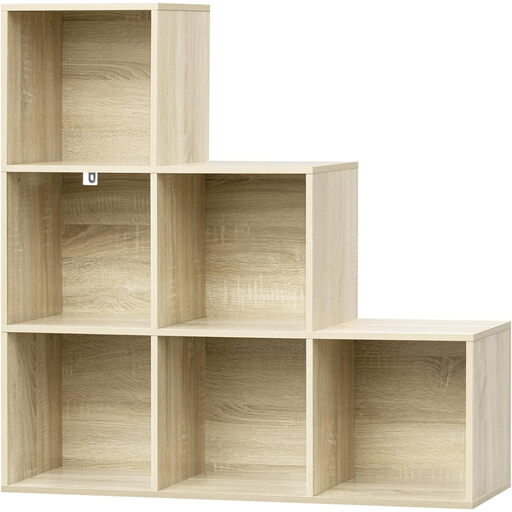
Why it's a great fit: Ideal for a first apartment, dorm room, or office. The stepped design is modern, and the six compartments offer flexible storage for books and decor. It's a functional and straightforward solution.
The wide base ensures a stable footing, and the specified maximum load capacity of 60 kg provides clear guidance on its capacity, avoiding the stability and capacity traps.
The versatile step design can also be used as a compact room divider or placed under sloped ceilings.
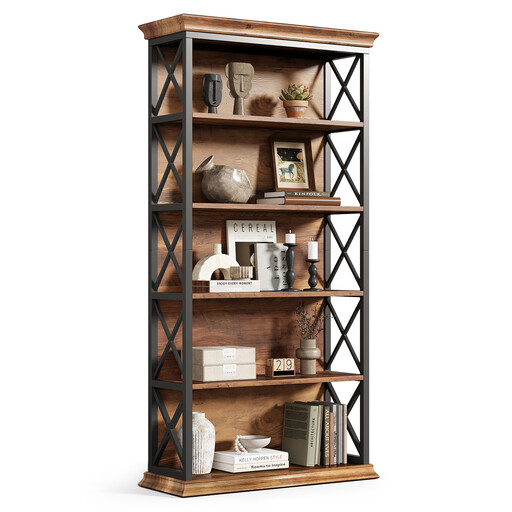
Why it's a great fit: For anyone looking for a statement piece. The combination of a black metal frame and wood-tone shelves embodies the urban industrial style. At 180 cm tall, it offers enormous vertical storage space.
The X-shaped braces on the sides and the sturdy metal frame counteract the stability trap. The high load capacity per shelf (up to 34 kg according to the manufacturer) prevents sagging.
The open sides and the tall, slim design create an open sense of space and make optimal use of ceiling height.
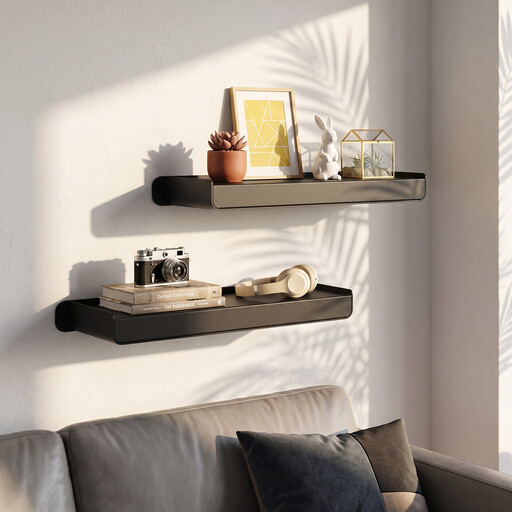
Why it's a great fit: Perfect for anyone looking to save floor space and create a clean, modern aesthetic. As a minimalist `black shelf`, it provides a stylish stage for select books, plants, or picture frames.
This `wall shelf` is made of sturdy aluminium instead of thin MDF, which bypasses the material deception. The specified load capacity of up to 20 kg (44 lbs) is solid for a floating shelf.
According to the manufacturer, the design won the German Design Award 2022. It's not just a shelf, but also a decorative wall object.
We've compiled a full, up-to-date list of products that fully meet these strict selection criteria and safety regulations.
1. How do you securely attach a tall bookshelf to the wall? Most tall freestanding shelves come with an anti-tip kit. This set usually consists of a bracket or strap that is attached to the shelf and secured to the wall with a screw and a suitable wall anchor. Make sure to use an anchor appropriate for your wall type (e.g., drywall, brick) to ensure a secure hold.
2. How much weight can a floating shelf hold? The load capacity of a floating shelf depends heavily on the shelf's material, the quality of the mounting hardware, and the wall's condition. Lightweight MDF shelves often only support 5-10 kg. Models made of solid wood or metal with robust anchoring can hold up to 20 kg or more. Always check the manufacturer's specified maximum load capacity and distribute the weight evenly.
3. Which material is the most durable for a bookshelf? For maximum durability, solid wood is an excellent choice as it is very robust and can be sanded and refinished if needed. It is closely followed by metal shelves, whose frames are extremely stable and resilient. For shelves made of engineered wood (particleboard/MDF), quality is key: a thick board (at least 1.8 cm) with a scratch-resistant and well-sealed coating offers very good value for money and a long lifespan with proper care.