
Lieferung heute & morgen

Qualitätsgarantie

Willkommens-Angebote freischalten: KOSTENLOSE Lieferung | Bis zu 80 % RABATT | Kostenlose 30-Tage-JoyPlus-Testphase
App herunterladen
Finding a new bookshelf seems simple at first glance. But the selection is vast, and not every model lives up to its promise. Flaws often only become apparent after a few months: sagging shelves, impractical compartment sizes, or a wobbly construction. The goal of this guide is to provide you with objective criteria to make an informed decision and find a durable solution for your book storage.
Before you decide on a model, you should be aware of three common problems that often go unnoticed until after the purchase:
To avoid the problems mentioned above, focus on three essential features. These will help you objectively evaluate the quality and functionality of a bookshelf.
The material is the decisive factor for the longevity and stability of your shelf.
Always check the manufacturer's specified maximum load capacity per shelf. This value, in kilograms, is a reliable indicator of the construction's stability.
Measure not only the available space in your room but also your books.
Safety comes first, especially in households with children.
Here are some models tailored to specific needs and living situations that meet the criteria mentioned above.
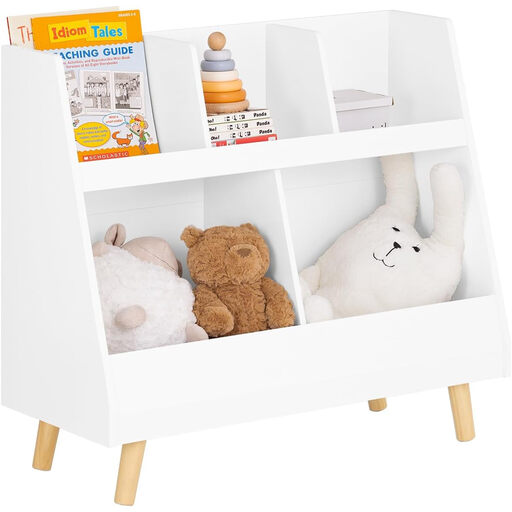
Why it's a great fit: This playroom-ready unit combines book and toy storage. The open, child-height compartments empower kids to access and tidy up their own belongings, promoting organisational skills.
All corners and edges are carefully rounded to minimise the risk of injury. The construction of MDF (E1) and solid pine wood legs provides the necessary stability for a child's room.
The combination of angled book slings on top and deep boxes below is ideal for various types of toys and books. The maximum load capacity is clearly defined at 25 kg.
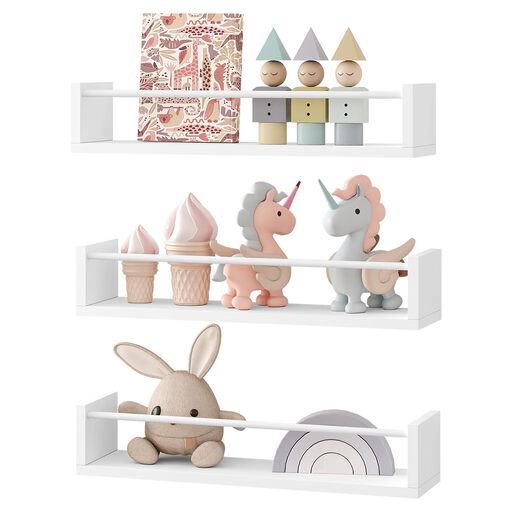
Why it's a great fit: This set of three individual wall shelves creates valuable storage without taking up any floor space. It's ideal for small apartments, narrow hallways, or making functional use of an empty wall.
The modular design solves the problem of impractical dimensions, as the shelves can be arranged as needed. The iron bars at the front prevent items from falling off.
High flexibility in arrangement (horizontally, vertically, or around a corner). The maximum load capacity of 15 kg per shelf is a solid value for a wall shelf of this size.
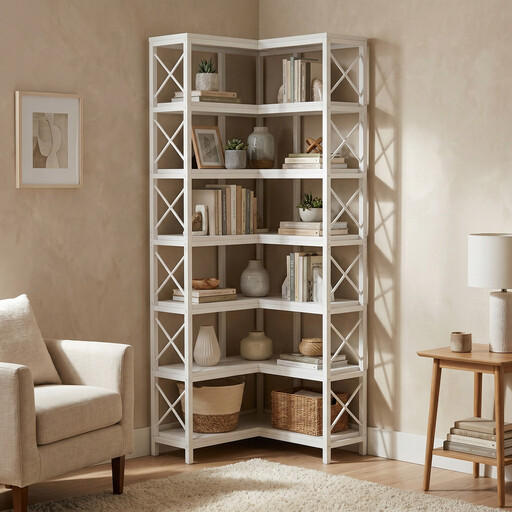
Why it's a great fit: This tall corner shelf makes optimal use of otherwise awkward corners, offering enormous space on 7 tiers for books, collectibles, and decor. It's an ideal solution for anyone needing to house a large collection.
The X-shaped cross-bracing on the sides of the metal frame provides additional stability and prevents books from tipping sideways. The construction of metal and E1 particleboard is designed for durability.
Maximum space efficiency thanks to the corner design. Adjustable feet ensure a secure stance even on uneven floors, further enhancing overall stability.
We've compiled a complete, up-to-date list of products that fully meet these strict selection criteria and safety standards.
1. How much weight can a bookshelf hold? The load capacity depends heavily on the material, construction, and thickness of the shelves. Solid wood shelves are the most resilient, followed by MDF and particleboard. Always check the "maximum load capacity per shelf" specified by the manufacturer. As a rule of thumb, distribute heavy books evenly and place them on the lower shelves.
2. How do you securely attach a bookshelf to the wall? Tall or narrow freestanding shelves should always be anchored to the wall using the included anti-tip hardware. Use screws and wall anchors that are appropriate for your wall type (e.g., concrete, brick, drywall). Drill the holes, insert the anchors, and firmly screw the bracket to both the wall and the shelf. If you are unsure, it is advisable to consult a professional.
3. What depth should a bookshelf be? The ideal depth depends on your book collection. For standard paperbacks, about 20 cm is sufficient. For most hardcovers, 25 cm is a good measurement. If you plan to store large art books, atlases, or binders, you should plan for a depth of at least 30 cm. Measure your largest books before buying to ensure they will fit.