Which brands are useful for comparison?
The features mentioned relate to specific model ranges and can help you compare speaker types, amplifier requirements and space requirements. They are not a general assessment of the brands or of how the speakers will sound in your room.
Teufel
The ULTIMA 20 Mk4 is a passive pair, while the ULTIMA 25 AKTIV is an active pair with built-in amplification.
- The manufacturer says the ULTIMA 25 AKTIV has several inputs, including Bluetooth, Optical and AUX.
- The differences between these models' features don't prove that one will sound better in a particular shared room.
KEF
The passive Q3 Meta and R3 Meta are examples of speakers for systems with separate components; the LSX II LT is an active or wireless system option.
- Amplifier requirements are documented for the Q3 Meta, and KEF describes the R3 Meta as a three-way model.
- Amplifier requirements and speaker type alone don't tell you how a model will sound in a particular position.
ELAC
The passive Debut 3.0 DB63 is an option to consider when planning a stereo system with a separate amplifier.
- ELAC lists a nominal impedance of 6 Ω and a recommended amplifier power of 20–140 W for the DB63.
- Technical specifications are no substitute for comparing speakers from your intended listening position.
Canton
The passive Reference 9 is a larger compact speaker model; the GLE 30 S2 offers a different cabinet format within the brand's range.
- Canton lists the Reference 9's dimensions as 26 × 46 × 39 cm and its weight as 18 kg per speaker.
- You'll need enough space for this model. Its dimensions alone don't tell you whether it will suit every listening position.
DALI
The passive RUBIKORE 2 is an option from the named model range for placing on furniture or a stand.
- DALI describes the model as designed for smaller rooms and specifies a 6½-inch mid-bass driver.
- Manufacturer claims about sound dispersion don't guarantee that every position in a shared room will be suitable.
Joybuy products for active and passive systems
The Joybuy products below include active and passive HiVi-Swans bookshelf speakers. Passive models need to be paired with a suitable amplifier.
 No image available
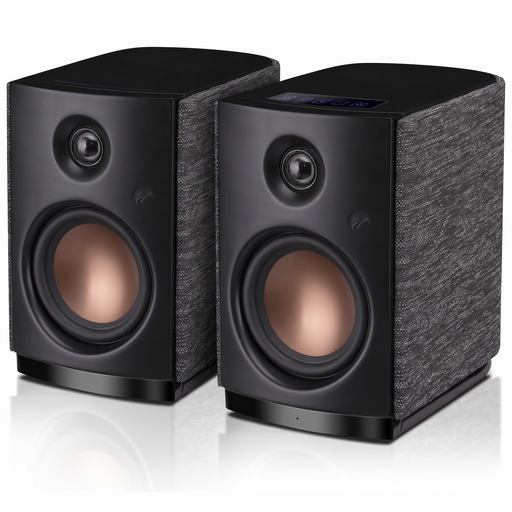
HiVi-Swans OS-10 active bookshelf speakers
This active model may suit a Bluetooth music source, provided its connections and the space you have for it are suitable.
Bluetooth 5.0, touch controls, 4-inch woofer and 62W RMS.
View at Joybuy
 No image available
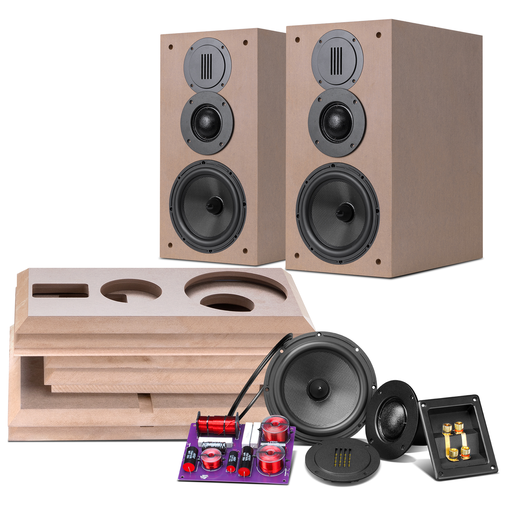
HiVi-Swans DIY3.1 passive bookshelf speakers, 6.5-inch, pair
This pair may suit a passive stereo system if you already have a suitable external amplifier.
6.5-inch design; passive speaker pair.
View at Joybuy
 No image available
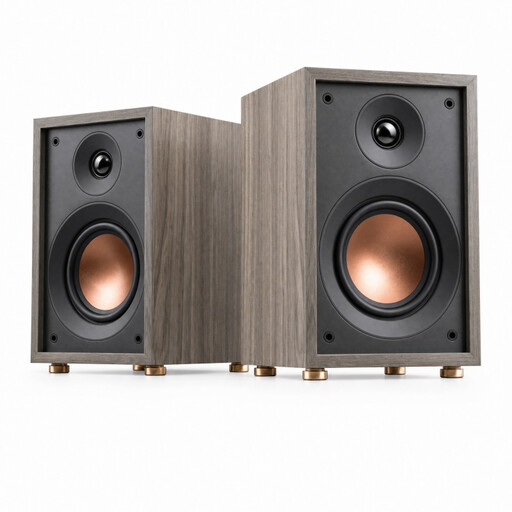
HiVi-Swans Oasis passive bookshelf speakers
This model is an option for a passive music system if its power handling and impedance are compatible with your amplifier.
2-way bass reflex design, 4-inch woofer, 20-mm dome tweeter, 60Hz–20kHz, 4Ω and 10–50W.
View at Joybuy
 No image available
HiVi D3.1MKII passive bookshelf speakers
This model may suit a passive hi-fi stereo system if you can use an external amplifier that meets the stated specifications.
6.5-inch mid-bass driver, 28-mm dome tweeter, 8 Ohm and 10–120W.
View at Joybuy
Frequently asked questions
Can I choose the right speaker based on its frequency range alone?
No. The frequency range alone won't tell you how a speaker will sound in your room. Compare familiar recordings from your intended listening position; Genelec notes that the room, reflections and speaker position all affect playback.
How should I start positioning speakers in a shared room?
First, plan two suitable positions and try the speakers in place. Similar heights and, where possible, symmetrical distances from your listening position can be a useful starting point. Genelec's monitor placement guidance doesn't prescribe measurements for every hi-fi living room.
Is there a single time in Germany after which speakers must not be used?
The German Environment Agency's guidance doesn't specify one nationwide cut-off time for using speakers. For noise between neighbours, it points to state and local rules and house rules. Check the requirements in your area and agree how the shared room will be used.
What should I bear in mind when buying online and if a fault develops later?
Check the complete system and what's included, and distinguish your statutory rights from a voluntary guarantee. According to the Verbraucherzentrale, if a product is faulty, repair or replacement may be available in the first instance. Most goods ordered online are generally covered by a 14-day right to cancel from the date you receive them, although statutory exceptions may apply.


