Which option is right for you?

Vinyl listeners at their desk

If you want to listen to soul LPs through a compact stereo pair, first check whether your turntable outputs a phono or line-level signal. Audio-Technica explains that an unamplified phono signal needs a suitable phono preamp before it can be connected to a standard line input.

Listeners short on space

At your desk, you’ll need enough room for both speakers and the flexibility to angle them towards your listening position. Genelec notes that the room and speaker placement affect the sound where you sit.

Listeners with an existing hi-fi system

If you already have an amplifier, or want to choose your amplifier and passive speakers separately, plan the whole connection chain, including the right amplification.

What should you look for when buying?

Active speakers with an analogue input

A good fit if: you don’t want a separate amplifier and your source provides a compatible line-level signal.

Bear in mind: a line input is not a substitute for a phono preamp. The power supply and speaker connections also need to suit your setup.

Active speakers for computers and streaming

A good fit if: you mainly listen to soul albums on your computer or via streaming, and the digital connections you need are a priority.

Bear in mind: digital features don’t automatically mean you can connect a turntable directly. The KEF LSX II LT speakers are linked by a cable.

Passive speakers with a separate amplifier

A good fit if: you already have a suitable amplifier or want to choose your speakers and amplifier separately.

Bear in mind: your planned audio setup will need an amplifier, speaker cable and, where necessary, a phono preamp.

Buying priority What to check before buying Who is it most relevant to?
Space and stereo placement Measure the width, depth and height of both speakers, including room for the cables. Plan to position them as evenly as possible to the left and right of your listening spot. Genelec explains how the room and speaker placement affect the sound. If my desk is short on space, I want to fit both speakers and position them sensibly for where I sit. Around 25% of consumers say space and placement are their main concern.
Phono signal path Check the turntable output and PHONO/LINE switch against the input on your active speakers or amplifier. Audio-Technica explains the difference between phono and line-level signals. If I want to listen to vinyl, my turntable’s signal needs to match the input, without leaving out a preamp that’s needed. Around 25% of consumers say phono connections are their main concern.
Sound at your listening position Position the speakers where you plan to use them, then decide whether you need adjustment controls or a subwoofer output. If I want to listen to vocals, instruments and bass at my desk, the sound where I actually sit is what matters. Around 20% of consumers prioritise sound at their listening position.
Computer and streaming connections Check the computer connection you plan to use and the streaming features you need. A digital connection does not automatically replace an analogue input for a turntable. If I play soul albums from my computer or via streaming, I need a suitable way to connect my devices. Around 15% of consumers say digital connectivity is their main concern.
Active or passive Take any existing amplifier, suitable inputs and the amplification required for the specific speaker model into account when planning your system. If I want to use my existing amplifier or choose my amplifier and speakers separately, the whole system needs to work together. Around 15% of consumers prioritise their choice of amplifier.

Common buying and connection mistakes

  • Assuming a line input is a phono input

    An unamplified phono signal is not designed for a standard line input.

    Check your turntable’s PHONO/LINE switch and the actual input in your audio setup.

    Depending on what you already own, you may need to add an amplifier, speaker cable or suitable phono stage.

  • Choosing speakers on wattage or bass claims alone

    A power rating on its own doesn’t tell you how speakers will sound at your desk. The room and speaker placement affect what you hear.

    Measure the space available and position both speakers as close as possible to where you plan to listen.

Key brands to consider

Edifier

The active R1280DBs pair offers analogue and digital inputs, with no separate amplifier required.

  • Edifier lists two RCA inputs, Bluetooth, optical and coaxial inputs, and a subwoofer output for this model.
  • This does not confirm that it has a built-in phono preamp. According to Edifier, each speaker measures 146 × 234 × 196 mm.

Nubert

The active nuBoxx A-125 pro is designed for desk use, with USB-C and a range of other connection options.

  • Nubert lists USB-C, digital inputs, Bluetooth, an analogue Aux input and bass adjustment.
  • For a turntable, the signal must be compatible with the Aux input; check separately which phono signal path you need. The manufacturer’s sound descriptions are not an independent assessment.

KEF

The active LSX II LT is designed for computer and network playback, while the passive Q1 Meta is intended for use with a separate amplifier.

  • KEF lists USB-C, HDMI-ARC, streaming and a cable connection between the speakers for the LSX II LT.
  • According to KEF, the Q1 Meta needs an amplifier. Features or sound claims for one model do not automatically apply to the other.

ELAC

The passive Debut 3.0 DB53 is an example of a compact speaker designed to be used with a separate audio system.

  • ELAC lists a nominal impedance of 6 Ω, a front-firing bass reflex port and cabinet dimensions of 172 × 311 × 267 mm for the DB53.
  • The amplifier and phono signal path need to be checked separately. The manufacturer’s sound assessments are not independent evaluations.

Joybuy products

The products below include active speakers with an AUX input and passive bookshelf speakers for use with a separate amplifier. For vinyl, you’ll also need to make sure the phono signal path is right.
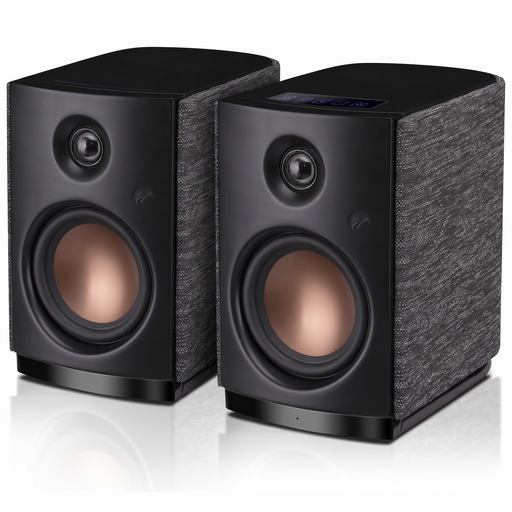
HiVi-Swans OS-10, active hi-fi bookshelf speakers

HiVi-Swans OS-10, active speakers

An active option for desk listening if Bluetooth or an analogue AUX connection suits your audio source.

Features listed in the product title: Bluetooth 5.0, 4-inch woofer, 62 W RMS, touch controls and a black finish.

View at Joybuy
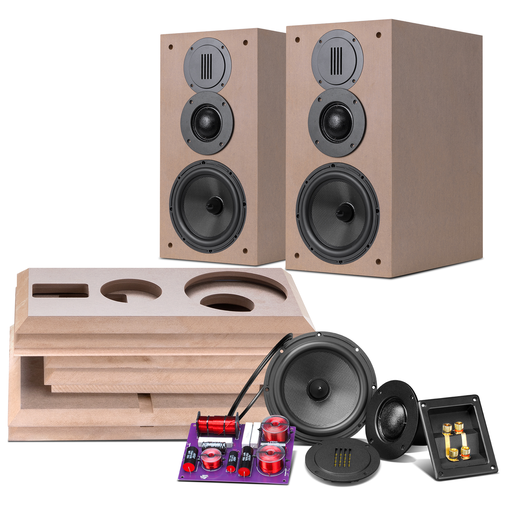
HiVi-Swans DIY3.1, passive speaker pair with 6.5-inch drivers

HiVi-Swans DIY3.1, passive pair

A passive option for an audio setup with a separately selected, compatible amplifier.

Features listed in the product title: a pair of passive bookshelf speakers with 6.5-inch drivers. You’ll need to allow for an amplifier as well.

View at Joybuy
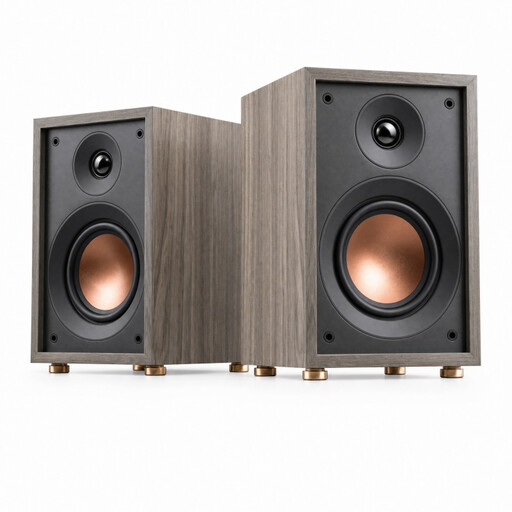
HiVi-Swans Oasis, passive two-way bookshelf speaker

HiVi-Swans Oasis, passive two-way speaker

For use with a separate amplifier system. Before buying, check that the amplifier and speakers suit the connections you plan to use.

Features listed in the product title: 4-inch woofer, 20 mm dome tweeter, bass reflex, 60 Hz–20 kHz, 4 Ω and 10–50 W. A suitable separate amplifier is required.

View at Joybuy

HiVi D3.1MKII, passive two-way bookshelf speaker

HiVi D3.1MKII, passive two-way speaker

A passive option for an existing amplifier system or one you’re planning separately.

Features listed in the product title: 6.5-inch mid/bass driver, 28 mm dome tweeter, rear bass reflex port, 8 Ω and 10–120 W. A suitable separate amplifier is required.

View at Joybuy

Frequently asked questions

Can I connect a turntable directly to active bookshelf speakers?

Yes, as long as the output and input are compatible. A turntable switched to LINE, with a built-in phono preamp, can be connected to a suitable line input. If the turntable outputs PHONO, you’ll need a suitable phono preamp before the line input.

What should I bear in mind when positioning and cleaning speakers in a home office?

Angle both speakers towards your listening position, taking reflections into account and aiming for balanced left-to-right placement. Edifier’s instructions for the R1280DBs recommend keeping the ventilation openings clear and switching the speakers off and unplugging them before cleaning. These model-specific instructions do not automatically apply to every speaker.

What are my rights if I buy online or a product develops a fault in Germany?

Online purchases generally come with a 14-day right to cancel; the exact date the period starts depends on the contract and the goods. The Verbraucherzentrale also distinguishes between your statutory rights against the seller and a voluntary guarantee. Which rights apply in a particular case depends on the purchase and the fault in question.

What labelling should I look for on Bluetooth speakers sold in Germany?

The Bundesnetzagentur lists CE marking, product identification, manufacturer details and any required German-language instructions among the things to check. By applying the CE mark, the manufacturer declares conformity under its own responsibility; it is not an independent sound or quality award.

How should you dispose of old speakers?

In Germany, electrical waste must not be put in household rubbish. The Umweltbundesamt lists local collection points and suitable retailer take-back schemes; removable batteries should be handed in separately.