What should you look for when buying?
First decide whether you want to connect an active pair directly to your source, or use passive speakers with an existing amplifier. Then check the positioning and controls from your usual listening spot.
| What matters to you |
What to look for |
Who should pay particular attention? |
| Quiet listening |
Try familiar music from your intended listening spot at the volume you want; check the controls and tone settings on the specific model. |
If I want to hear the melody and accompaniment clearly at a modest volume, the sound from my usual listening spot matters most. Around 33% of consumers prioritise sound at low volumes. |
| Connecting your source |
Check the output on your computer, TV or other player against the inputs on the complete model; don’t assume USB-C, optical and HDMI ARC are interchangeable. |
If you want to play music without needing extra equipment you hadn’t planned for, check that your source’s output matches the speaker’s input. Around 25% of consumers put source compatibility first. |
| Space for your speakers |
Measure the available width and depth, including space for cables; position both speakers as symmetrically as possible around your listening spot. |
If the speakers need to fit in a specific spot or on a desk, make sure their positioning works for your listening spot. Around 25% of consumers prioritise available space and positioning. |
| Amplifier system |
For passive speakers, check your amplifier’s specifications against the specific speaker model and allow for the cost of speaker cables. |
If you want to keep using your existing system, first check that it’s suitable for the speakers you’ve chosen. Around 17% of consumers prioritise using their existing amplifier system. |
Joybuy products
This selection includes active bookshelf speakers for direct connection and passive models for use with a separate amplifier system.
 No image available
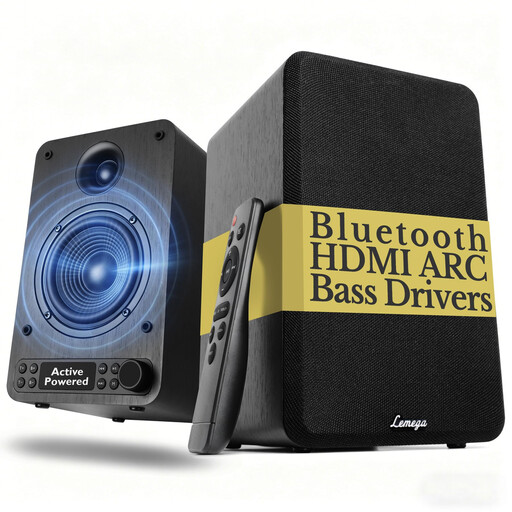
Lemega active bookshelf speakers, 40 W, pair
For direct connection to a TV or another compatible source; a remote control is included.
Described as an active pair with Bluetooth, HDMI ARC, optical input, USB, AUX and RCA. Bass and treble controls and a dimmable display are also listed.
View at Joybuy
 No image available
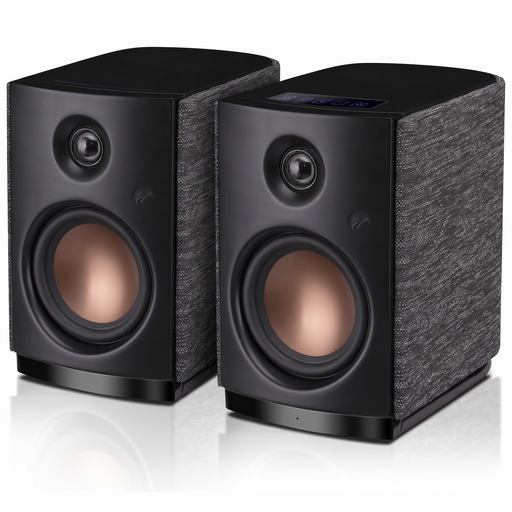
HiVi-Swans OS-10 active bookshelf speakers
A good choice for an active desktop setup if Bluetooth or controls on the speaker suit the way you listen.
Bluetooth 5.0 and touch controls are listed; the product title specifies a 4-inch woofer and 62 W RMS.
View at Joybuy
 No image available
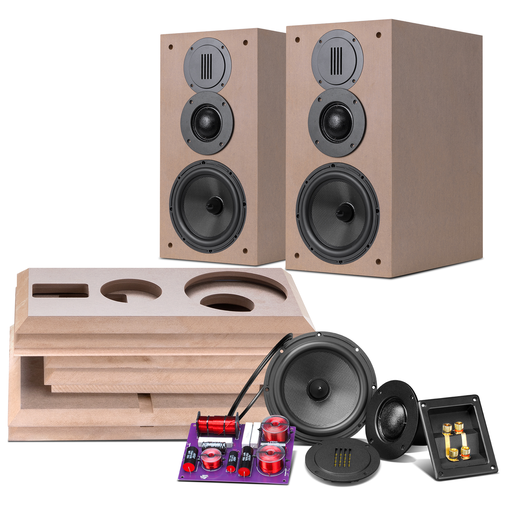
HiVi-Swans DIY3.1 passive bookshelf speakers, pair
For an existing system with suitable external amplification; this is a passive speaker pair.
The product title specifies a 6.5-inch mid-woofer and 8 Ω.
A suitable external amplifier or receiver is required.
View at Joybuy
 No image available
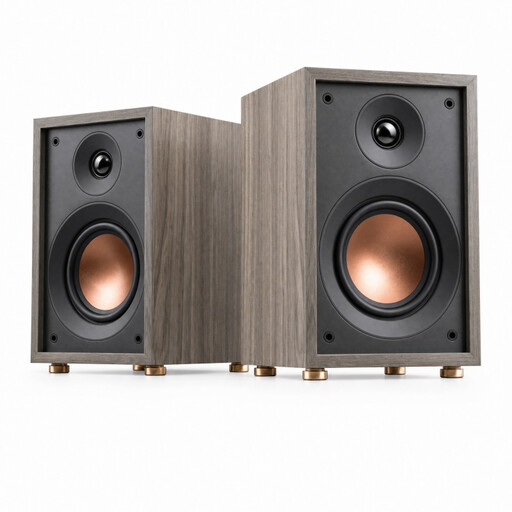
HiVi-Swans Oasis passive bookshelf speaker
For music and films with suitable external amplification; this passive model needs an amplifier.
The product title specifies a 4-inch woofer, a 20 mm dome tweeter, 60 Hz–20 kHz, 4 Ω and 10–50 W.
View at Joybuy
 No image available
HiVi D3.1MKII passive bookshelf speakers
For music or home cinema when you have a suitable external amplifier system.
The product title specifies a 6.5-inch mid-woofer, a 28 mm dome tweeter, 8 Ω and 10–120 W.
As a passive speaker pair, these require a suitable external amplifier.
View at Joybuy
Frequently asked questions
Does a high wattage matter if I listen at low volumes?
No. The stated output power alone doesn’t tell you what your preferred listening volume will be or how the speakers will sound from your listening spot. Compare suitable pairs with music you know, at the volume you actually want to use. The ISO equal-loudness contours are not measurements of a particular speaker model.
How should I position a stereo pair for a fixed listening spot?
Angle both speakers towards your listening spot and start with them positioned as symmetrically as possible on the left and right. Genelec notes that differences in reflections can affect the stereo image, so assess the positioning in your own room.
Can I connect passive speakers directly to my TV?
Passive speakers need suitable external amplification. Teufel describes the ULTIMA 20 as passive; for other models, check the speaker type too, and make sure the amplifier’s specifications are suitable for the specific speakers.
How can I check whether an active pair’s inputs are compatible with my source?
Compare the audio output on your computer, TV or other player with the inputs on the complete speaker model. For the R1280DBs, Edifier lists optical, coaxial and analogue inputs, as well as Bluetooth. For the M60, the manufacturer lists USB-C, AUX and Bluetooth.


