For quiet background music, your choice mainly depends on whether you already have a suitable amplifier and which music sources you want to connect. An active pair needs no separate amplifier, passive speakers do, and networked systems offer additional ways to stream. Then check the space available, cable routes and how easy the system is to use at your usual low volume. Yamaha Music points out that low and high frequencies can sound different at lower volumes, so a wattage rating alone won’t tell you whether you’ll like the sound in this situation.
Who are the different setups suited to?
Quiet listening without a hi-fi system
If you want to play background music without a separate amplifier, an active pair or a single speaker could be right for you. The key considerations are the space you have and whether you want to set up two separate speakers.
Make use of an existing amplifier
If you already have an amplifier, passive bookshelf speakers are worth considering. Check that the speakers’ specifications are compatible with your amplifier and that there’s enough room for the pair where you plan to put them.
Stream music from multiple sources
If you want to play music over a network or from other devices, check that the specific system’s streaming options and connections suit your sources. With a pair of speakers, you’ll also need to plan the cable route between them.
What should you consider when choosing?
First, make sure the system type is compatible with your amplifier and music source. Then check that the speakers, controls and cable route will work in your room and at your preferred low listening volume.
| What matters |
What to look for when buying |
Who is this important to? |
| Sound and controls at low volume |
Listen to familiar music from where you plan to sit; check the lower volume settings and the tone controls available on the specific device. |
If I usually listen quietly, I want to be able to adjust the volume precisely and judge whether the bass and treble sound right to me. Around 38% of consumers put this listening experience first. |
| Compatible music source |
Check that Bluetooth, Line-in, USB-C or network features match the output or streaming method used by your source. |
If my music comes from a phone, computer or streaming service, I want to be able to use the right connection. Around 23% of consumers say compatibility with their sources is their top priority. |
| Space and cable routes |
Measure the space for both speakers and check where the connecting cables will run. A single speaker needs a different setup from a separate pair. |
If shelf space is limited, I want to know in advance whether there’s room for two speakers and their connecting cable. Around 23% of consumers prioritise space and positioning. |
| Additional components |
Check whether you’ll need an amplifier, speaker cable or an adapter for the connection you want to use. |
If I’m planning a complete system, I want to know which existing devices I can keep using and what else I’ll need. For around 16% of consumers, the overall cost and effort are the main considerations. |
Which assumptions should you avoid?
-
Assuming a high wattage means great sound at low volume
A speaker’s power rating doesn’t tell you how its sound or volume steps will come across at the low levels you usually listen at.
Listen to the specific setup with familiar music at your actual listening volume and check which tone controls are available.
-
Comparing passive speakers and active systems on speaker price alone
Passive speakers need a suitable amplifier; an active system has amplification built in.
For each option, make a note of which devices and cables you already have and which ones you’ll need to buy.
-
Assuming ‘wireless’ means there’s no cable between two speakers
The KEF LSX II LT can receive music wirelessly, but its two speakers are connected by a C-Link cable.
Plan the cable route between the speaker positions before you buy.
-
Assuming a single bookshelf speaker is the same as a separate stereo pair
A single device takes up less space, but it doesn’t give you the option of positioning two speakers separately.
Decide whether you’d prefer straightforward background sound or two speakers in separate positions.
If you later decide you specifically want a separate pair, you may need a second compatible device. If so, check compatibility and what’s included in the box again.
Which brands offer suitable system options?
Edifier
The R1280DBs is an active bookshelf speaker pair with Bluetooth and several wired inputs.
- Edifier lists controls, a remote control and a subwoofer output for this model.
- The listed inputs don’t include Wi-Fi, and the power rating alone doesn’t prove that it will sound better at low volume.
ELAC
The passive Debut 3.0 DB53 is suited to a system with a compatible amplifier.
- ELAC lists a nominal impedance of 6 Ω and recommended amplifier power of 20–120 W for the DB53.
- You’ll need to buy an amplifier separately, and the manufacturer’s descriptions of the sound aren’t independent measurements at low volume.
KEF
The LSX II LT is a networked active stereo pair with several streaming options and digital inputs.
- KEF Germany lists AirPlay 2, Google Cast, Bluetooth, USB-C and HDMI ARC as supported options.
- A C-Link cable runs between the two speakers, and the sound claims come from the manufacturer.
Teufel
The ULTIMA 20 Mk4 is passive, while the ULTIMA 25 AKTIV is an active system.
- Teufel lists built-in amplification and several inputs for the ULTIMA 25 AKTIV.
- The ULTIMA 20 Mk4 needs a suitable amplifier; specifications for one version don’t automatically apply to other ULTIMA models.
Sonos
The Era 100 is a single networked speaker and an alternative to a separate speaker pair.
- Sonos lists Wi-Fi, Bluetooth, on-device controls and app control.
- Sonos specifies an input adapter for an AUX source. The manufacturer’s claims about sound at any volume aren’t independent measurements at low volume.
Joybuy products for background music
The Joybuy products below include active and passive bookshelf speakers for different sources and system setups.
 No image available
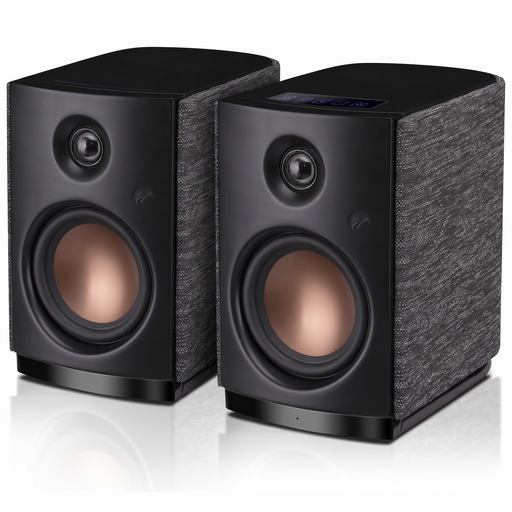
Lemega Active Bookshelf Speakers, 40W Pair
For an active pair with several wired sources, the product description lists a range of inputs and a remote control.
Bluetooth, HDMI ARC, optical, USB, AUX and RCA inputs; bass and treble controls, plus a dimmable display.
View at Joybuy
 No image available
HiVi-Swans OS-10, active bookshelf speakers, 62W RMS
If you’re looking for active speakers for a computer or desk, the description lists Bluetooth and touch-sensitive controls.
Bluetooth 5.0, 62W RMS and 4-inch woofers; the touch controls are used to adjust the volume and select the source. An AUX input is also listed.
View at Joybuy
 No image available
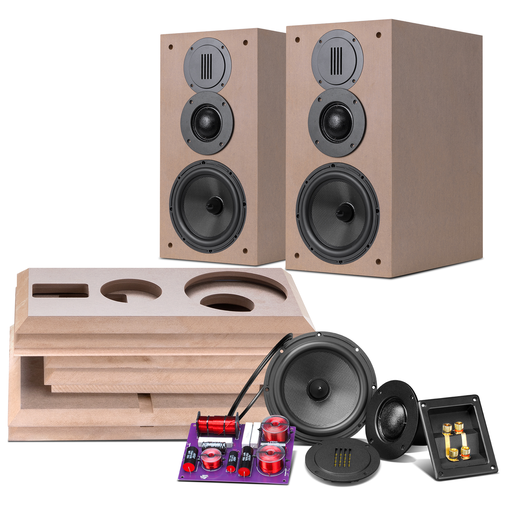
HiVi-Swans DIY3.1, passive bookshelf speakers, pair
This passive pair could be a good choice if you have a suitable amplifier or want to build a separate stereo system.
6.5-inch woofers, bass-reflex enclosure, 86 dB sensitivity and 8 Ω nominal impedance. A suitable amplifier is required for operation.
View at Joybuy
 No image available
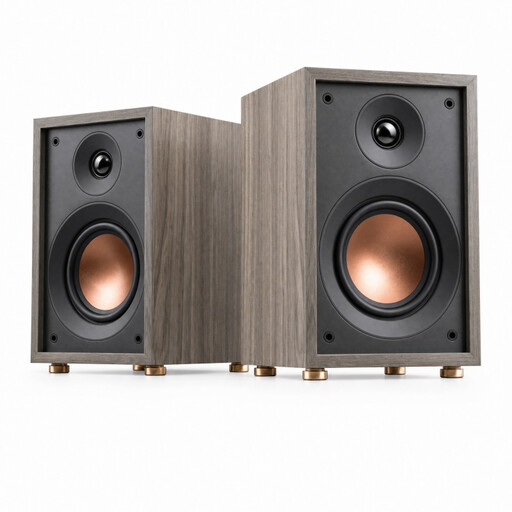
HiVi-Swans Oasis, passive two-way bookshelf speaker
If you’re setting up passive speakers on a shelf or desk, make sure you have a suitable amplifier.
4-inch woofer, 20 mm dome tweeter, 60 Hz–20 kHz, 4 Ω and 10–50 W. A suitable amplifier is required for operation.
View at Joybuy
 No image available
HiVi D3.1MKII, passive hi-fi bookshelf speakers
If you’re looking for passive speakers for music or home cinema, check that your amplifier is compatible with the listed specifications before buying.
6.5-inch mid-woofer, 28 mm dome tweeter, rear bass-reflex port, 8 Ω and 10–120 W. A suitable amplifier is required for operation.
View at Joybuy
Frequently asked questions
How do I check whether a speaker is suitable for very quiet background music?
Listen to familiar recordings from where you plan to sit, at your usual low volume. Check whether you can adjust the volume precisely and whether the tone controls suit your preferences. Don’t assume there’s a Loudness function unless it’s listed for the model. Yamaha Music explains that low and high frequencies can sound different at lower volumes.
What should I bear in mind when connecting passive speakers?
Passive speakers need a suitable amplifier, and its specifications must match those listed for the specific speaker. ELAC recommends switching off devices before connecting them and observing the correct polarity. Also check how the speakers will fit into your room.
What additional components and requirements should I allow for when buying online?
Depending on the system, allow for an amplifier, speaker cable or adapters, and distinguish your statutory rights from a voluntary manufacturer’s warranty. For goods covered by the EU right of withdrawal, Your Europe specifies a 14-day period from delivery; return costs may apply under the conditions explained there. Your Europe also states that goods bought in the EU come with a minimum two-year legal guarantee from the date you receive them.
What information about a speaker should I check in Germany?
As part of its market surveillance, the German Federal Network Agency lists CE marking, product traceability and correct manufacturer details among the points to check. This does not confirm that any specific speaker model complies with the requirements.


