Start by considering whether you already have a suitable amplifier, which sources you want to connect and where two speakers could go in your open-plan living space. A passive pair can be combined with separate hi-fi equipment, while an active pair has amplification built in. Wattage and frequency specifications alone can’t tell you whether vocals, guitar and bass will sound balanced at your usual listening volume and from your listening position.
Which setup is right for you?
Blues fans with an open-plan living space
If you want to set up two speakers in your living space, the room around your listening position and a suitable layout matter more than cabinet size alone. DALI recommends positioning the speakers as symmetrically as possible around your preferred listening spot.
Listeners with an existing hi-fi system
If you already have an amplifier, you can add passive speakers to your system. Check the requirements for the specific model and take the space needed for the pair into account.
Listeners without a separate amplifier
If you’d rather avoid extra hi-fi equipment, an active or connected system could be a good option. Check that its inputs and set-up process work with your audio sources.
What should you look for when buying?
Passive speaker pair
A good fit if: you already have a suitable amplifier or want to choose your amplifier and source components separately.
Things to consider: your amplifier and speakers need to work well together, and the pair isn’t ready to play on its own.
Active speaker pair
A good fit if: you want to listen without a separate amplifier and the inputs suit your sources.
Things to consider: the connections available and how easy it is to replace components later depend on the system.
Connected speakers as a stereo pair
A good fit if: app and Wi-Fi playback are part of the set-up you want.
Things to consider: set-up and model compatibility may come with extra requirements; a single speaker isn’t a stereo pair with speakers placed apart.
| What matters |
What to check before buying |
Who should consider this? |
| Positioning around your listening spot |
Measure the space available and the distance to your listening spot; follow the guidance for the specific model. |
If I want to position two speakers so they’re both aimed at my listening spot, the space available matters to me. Around 28% of consumers focus on speaker placement and sound at the listening position. |
| Playing familiar recordings |
Compare the same blues recordings at the same volume, at a level that suits your home. |
If vocals, guitar and bass matter to me in the recordings I know well, I want to assess the speakers at my usual listening volume. Around 28% of consumers prioritise how their music sounds. |
| Connections and system set-up |
List the sources you already have; check the inputs, amplifier requirements and any adapters needed for the complete system. |
If I want to connect my existing audio sources, I want to know in advance which devices and connections I’ll need. Around 22% of consumers focus on connections and system set-up. |
| Volume and neighbours |
Check your tenancy agreement or house rules and local quiet hours; consider how you’ll actually use the system when choosing. |
If I listen to music in a flat, I want to be considerate of my neighbours while finding a suitable listening volume. Around 22% of consumers put being considerate first. |
Which buying mistakes should you avoid?
-
Assuming passive and active speakers have the same features
A passive pair needs a suitable amplifier. An active model has amplification built in, but the inputs available vary from one system to another.
Check that the complete set-up works with your existing sources, and see whether the offer includes one speaker or two.
If you still need an amplifier, source component or suitable cables, remember to include them in the cost of your complete set-up.
-
Assuming a bookshelf is automatically a suitable place for your speakers
A bookshelf may restrict where you can position the pair and how far apart they are from your listening spot. Placement affects the sound, and general rules can’t replace the guidance for the specific model.
Measure the space available for both speakers and, if possible, try the planned layout before making it permanent.
-
Treating Bluetooth, Wi-Fi and analogue inputs as interchangeable
Connections and set-up steps vary between active and connected systems. Sonos says the Era 100 needs to be set up over Wi-Fi before you can use Bluetooth. Analogue line-in also requires a compatible adapter.
Check each audio source against the inputs and set-up requirements listed for the specific model.
You may need an extra adapter; Sonos specifies a separate adapter for the Era 100’s analogue input.
-
Assuming more deep bass is automatically better for a home
A subwoofer takes up extra space, and powerful bass won’t suit every recording or living situation. Music may disturb people in neighbouring homes.
Assess the system at your usual listening volume and take your house rules and local quiet hours into account. When discussing neighbour noise caused by people’s behaviour, Germany’s Federal Environment Agency refers to state and local regulations as well as house rules.
A 2.1 system includes a separate subwoofer, which needs extra space.
Which brands are worth considering?
ELAC
Passive Debut 3.0 bookshelf speakers such as the DB63 are designed for systems with a separate amplifier.
- For the DB63, ELAC specifies a front-facing bass reflex port, a nominal impedance of 6 Ω and a recommended amplifier power of 20–140 W.
- These manufacturer specifications don’t confirm how the speakers will sound in your room or whether a particular amplifier you already own is suitable.
KEF
The range includes passive models such as the Q3 Meta and connected active systems such as the LS50 Wireless II.
- The Q3 Meta needs an amplifier; for the LS50 Wireless II, KEF lists built-in amplification, streaming and HDMI eARC.
- Manufacturer claims about sound or how it fills a space aren’t independent comparative measurements.
Teufel
The ULTIMA 25 AKTIV 2 is an active bookshelf speaker pair for a set-up without a separate amplifier.
- Teufel lists Bluetooth, HDMI, AUX and USB-C connections.
- Check that the inputs listed suit your sources; Bluetooth alone doesn’t mean the system has built-in Wi-Fi streaming.
Edifier
The S350DB pairs two compact speakers with a separate subwoofer, making it an option for anyone considering a 2.1 system.
- Edifier lists Bluetooth, optical, coaxial and analogue connections, as well as bass and treble controls.
- The extra subwoofer takes up space, and more deep bass won’t automatically suit every home or blues recording.
Sonos
The Era 100 may suit a connected set-up if app and Wi-Fi use meet your needs.
- Sonos lists Wi-Fi and Bluetooth connectivity for the Era 100.
- According to Sonos, the speaker must be set up over Wi-Fi before you can use Bluetooth. An adapter is needed for an analogue input, and model compatibility rules apply to stereo pairs.
Joybuy product options
The selection includes passive bookshelf speakers and an active hi-fi stereo model for different system set-ups.
 No image available
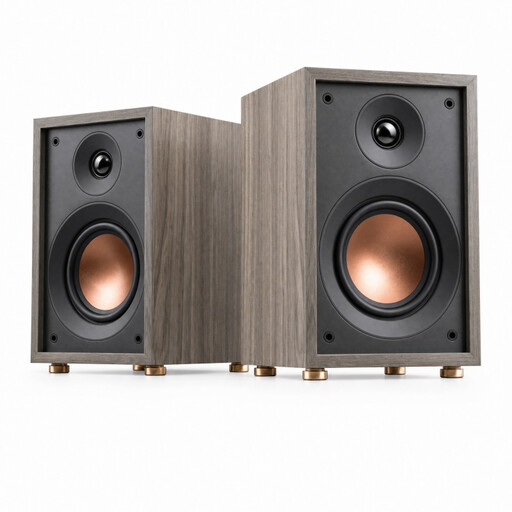
HiVi D3.1MKII passive bookshelf speakers
For a passive stereo set-up if you already have a suitable amplifier.
Two-way design; rear bass reflex port; 8 Ω; amplifier power 10–120 W.
View at Joybuy
 No image available
HiVi-Swans Oasis passive bookshelf speakers
For music playback with a suitable amplifier; these speakers are passive.
4-inch woofer; 20 mm dome tweeter; 60 Hz–20 kHz; 4 Ω; amplifier power 10–50 W.
View at Joybuy
 No image available
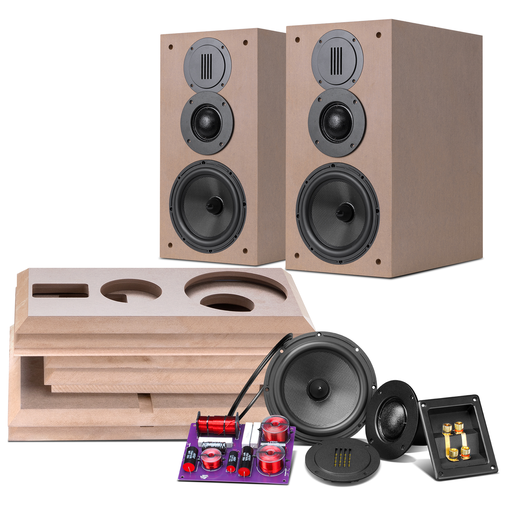
HiVi-Swans DIY3.1 pair of passive bookshelf speakers
For a passive stereo pair if you already have an amplifier or receiver.
6.5-inch speakers; rear bass reflex port.
View at Joybuy
 No image available
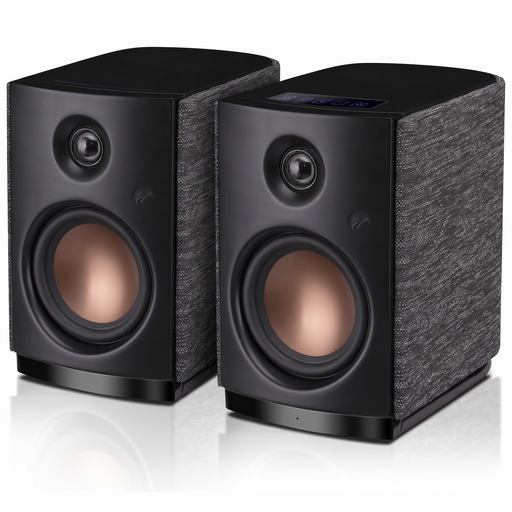
HiVi-Swans OS-10 active hi-fi stereo speakers
For an active stereo set-up without a separate amplifier; Bluetooth is specified in the product title.
Bluetooth 5.0; 4-inch woofer; 62 W RMS; touch controls.
View at Joybuy
Frequently asked questions
How should I position bookshelf speakers in an open-plan living space?
Start by arranging them as symmetrically as possible around your preferred listening spot, then try different positions. This is a manufacturer recommendation, not a guaranteed solution for every room layout; also follow the instructions for your specific model.
Is one connected speaker enough for a stereo pair?
No. A single speaker can’t replace two stereo channels positioned apart. Sonos’s model compatibility rules apply when creating a stereo pair.
What should I check with passive or active speakers?
Passive speakers need a suitable amplifier; active models have amplification built in. For both types, check that the inputs suit your audio sources and that the system includes everything you need for the stereo set-up you want.
Is there a single volume limit for music in every home in Germany?
There’s no single limit that applies to every home. When discussing neighbour noise caused by people’s behaviour, Germany’s Federal Environment Agency refers to state and local regulations as well as house rules. Check the requirements where you live and consider whether your music is actually causing a disturbance.
What does CE marking mean on a Bluetooth or Wi-Fi speaker?
Germany’s Federal Network Agency describes CE marking as the manufacturer’s declaration that a product meets the relevant legal requirements. It isn’t an independent sound test of the specific speaker.


