What should you look for when buying?
Start by working out where both speakers can go and which devices you want to connect. Then compare passive and active systems as complete setups.
Passive stereo pair
A good fit if: you already have a suitable amplifier or want to choose your amplifier and speakers separately.
Bear in mind: You’ll need to allow for an amplifier and speaker cables, and check the published specifications of both devices.
Active stereo pair without Wi-Fi streaming
A good fit if: you don’t want a separate amplifier and your existing source is compatible with the speaker inputs.
Bear in mind: As well as the inputs, both speakers need power. You’ll also need to plan how they connect to each other.
Active Wi-Fi stereo system
A good fit if: streaming and several digital input options matter to you, without the need for a separate amplifier.
Bear in mind: The KEF LSX II LT still needs a cable between the speakers, even when playing audio wirelessly.
| What matters |
What to check before buying |
Who it matters to most |
| Vocals and sense of space |
Check that you can position a stereo pair so both speakers face your listening position as evenly as possible. |
If I want to hear where the choral voices are positioned, I need two speakers that will fit my space. Around 36% of shoppers put vocals and sense of space first. |
| Space and proximity to walls |
Take dimensions, distance from walls and model-specific guidance on bass reflex ports into account. |
With limited space in my living room, I first need to find two usable positions. Around 29% of shoppers prioritise finding the right placement. |
| Amplifier and connections |
For passive models, check the amplifier specifications; for active models, check the inputs, power supply and speaker connection. |
If I want to connect my existing sources and choose between active and passive speakers, compatible connections are essential. Around 21% of shoppers put this first. |
| Complete system |
Check whether the offer includes a pair and which amplifiers, cables or other components you’ll need to use them. |
I want to know which components my stereo system actually needs before I decide. Around 14% of shoppers focus first on what’s included in the complete system. |
Joybuy product options
The options below include pairs of active and passive bookshelf speakers. Passive models need a suitable amplifier; for active models, check the inputs, power connection and link between the speakers.
 No image available
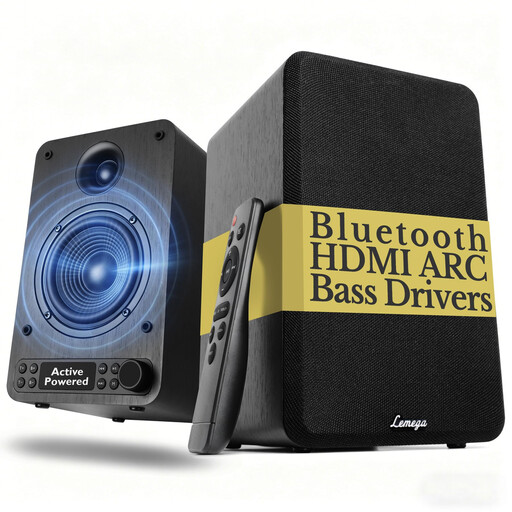
Lemega Active Bookshelf Speaker Pair, 40 W
Could suit you if you’re looking for an active pair without a separate amplifier and with several connection options.
Listed connections include HDMI ARC, optical, USB, AUX, RCA and Bluetooth. The two speakers need to be connected with speaker cable and plugged into a power supply.
View at Joybuy
 No image available
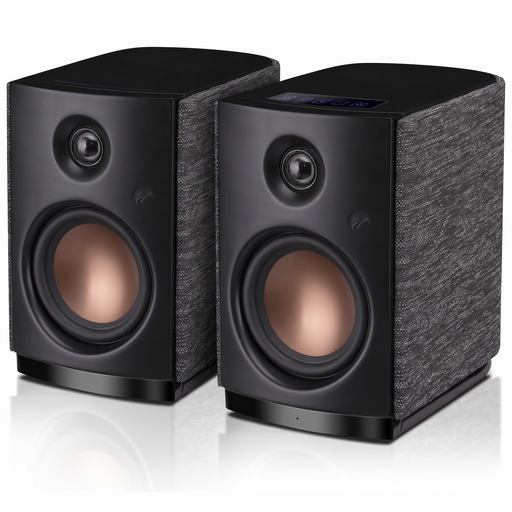
HiVi-Swans OS-10 Active Hi-Fi Stereo Bookshelf Speakers
Could work for a compact stereo setup if you’re looking for active speakers with Bluetooth playback.
The product name lists Bluetooth 5.0, a 4-inch woofer and 62 W RMS. The description mentions computer and desktop use.
View at Joybuy
 No image available
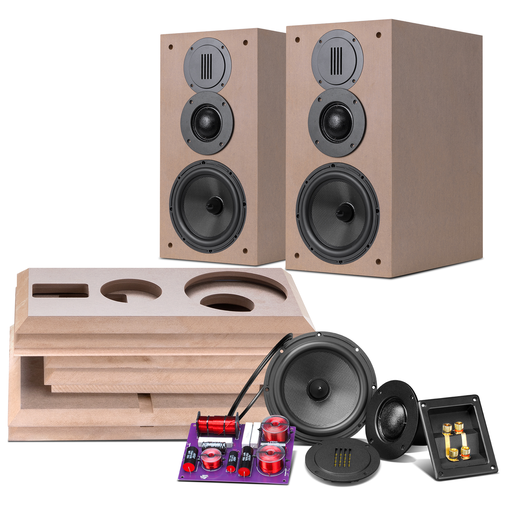
HiVi-Swans DIY3.1 Passive Bookshelf Speakers, Pair
Worth considering if you want to use a passive pair with a suitable amplifier.
Listed specifications include 8 Ω nominal impedance, 86 dB sensitivity and a rear bass reflex port. Take the port into account when choosing where to place the speakers.
View at Joybuy
 No image available
HiVi D3.1MKII Passive Two-Way Hi-Fi Stereo Speakers
Could suit you if you’re looking for a passive stereo pair to use with a suitable amplifier.
The product name lists a 6.5-inch mid-woofer, a 28-mm tweeter, 8 Ω and 10–120 W. Take the rear bass reflex port into account when positioning the speakers.
View at Joybuy
Frequently asked questions
Do I need an amplifier for passive bookshelf speakers?
Yes. Passive speakers need a suitable amplifier. Check the connections and published specifications for the specific speaker and amplifier models. ELAC lists 6 Ω nominal impedance and a recommended amplifier power of 20–120 W for the DB53; you’ll still need to check these against your amplifier.
How should I position speakers for choral music?
As far as your room allows, place both speakers at the same height and as symmetrically as possible around your listening position. Then adjust their positions gradually and listen to recordings you know well: walls and other surfaces affect the sound you hear. Follow the guidance provided by the manufacturer of your speakers.
Does wireless playback mean there’s no cable between the speakers?
No. Wireless playback doesn’t automatically mean the speakers can operate without a cable connecting them. According to the manufacturer, the KEF LSX II LT needs a cable between the speakers. For active models, also check where you’ll need access to power sockets.
Can I return speakers bought online if I change my mind?
In Germany, consumers generally have a right to cancel a contract made online; the cancellation period is usually 14 days from receiving the goods. The Verbraucherzentrale explains that the specific terms of the purchase should be checked. You must notify the seller that you wish to cancel.
Is the CE marking a sound or quality seal?
No. The CE marking isn’t an independent assessment of sound quality or a general quality seal. When monitoring the market, the Bundesnetzagentur checks details including labelling, product identification and manufacturer information. It also points out that CE marking doesn’t mean a product was made in the European Economic Area.


