Choose bookshelf speakers for traditional dance music based on your listening distance, where you can position both speakers and how loudly you actually listen – not just the size of your floor space. An active pair makes it easy to connect without a separate amplifier, while passive speakers require a suitable amplifier. A networked pair is worth considering if you need compatible streaming features. In every case, check the connections, cable routes and bass at your listening position. Genelec recommends positioning both speakers as similarly as possible towards your main listening position. Teufel also highlights listening distance, preferred volume and speaker placement as factors to consider.
Who are these options for?
Listeners who want to keep the volume considerate
You want to enjoy the rhythm without sending unnecessary bass and volume into your neighbours’ homes. Assess speaker placement and volume in your own home. The German Environment Agency points out that rules on neighbour noise can also depend on state law, local regulations or your building’s house rules.
Listeners with an open-plan living area
You mainly listen from the sofa, but sometimes from other spots too. Start by planning a stereo pair for your main listening position, then check how it sounds elsewhere. Genelec recommends positioning both speakers as similarly as possible.
Listeners with an existing system
You want to use an amplifier you already own or choose your connections and streaming features carefully. Active, passive and network-enabled options differ in the accessories they need and how they connect. KEF describes passive speakers as models that require an external amplifier.
What should you look for when buying?
First, check where you can position both speakers and where you’ll do most of your listening. Then you can choose the connections and type of amplification that best suit your system.
Active stereo pair
A good fit if: you want to listen from a suitable source without a separate amplifier.
Keep in mind: The speakers need power. Also check how they connect to each other and which inputs the specific model requires.
Passive stereo pair
A good fit if: you already have a suitable amplifier or want to choose your amplifier and speakers separately.
Keep in mind: Include the amplifier and connection cables in your system plans. Also check whether the offer includes one speaker or a pair.
Active networked stereo pair
A good fit if: you want to use compatible streaming services or multi-room features.
Keep in mind: Check the network requirements and supported services. The manufacturer says the KEF LSX II LT speakers need to be connected to each other.
| What matters to you |
What to check when buying |
Who is this important to? |
| Bass and consideration for neighbours |
Check the tone controls and volume adjustment. Assess the bass at the intended speaker position and at your usual listening volume. |
If you want to enjoy dance music with a strong, perceptible rhythm while keeping the volume under control at home, pay particular attention to the bass at your listening position. Around 29% of consumers prioritise bass control and consideration for neighbours. |
| Speaker positions and stereo imaging |
Measure the available spaces and speaker dimensions. Plan the height and positioning of both speakers for your main listening position. |
In an open-plan layout, finding two suitable positions and angling both speakers similarly towards the sofa can be tricky. Around 23% of consumers therefore make speaker placement a priority. |
| Listening distance and other positions |
Note the distance to your main listening position and check the sound in the places you actually use. |
Distance is important if you listen attentively from the sofa and also want to hear the music in other parts of your home. Around 18% of consumers focus first on playback at their main and other listening positions. |
| Sources and connections |
Check that the required inputs work with your phone, TV and existing devices. For networked models, check which services are supported. |
If you plan to connect a phone, TV or existing devices, you’ll want to know whether the connections are compatible before you buy. Around 18% of consumers prioritise having the right connections for their sources. |
| System cost and what’s included |
Check the number of speakers and what’s included. For passive speakers, factor in an amplifier and any necessary connections. |
If you want to put together a complete stereo system and budget for any additional purchases, consider the whole set-up rather than just the speakers. Around 12% of consumers focus first on what the system includes and the total cost. |
Common buying mistakes
-
Assuming the wattage promises consistent sound throughout your home
An RMS rating doesn’t tell you how loud the speakers will be at every listening position. Listening distance, preferred volume, room and speaker placement all affect the result.
Plan around your main listening position first, then assess other seating or living areas separately instead of judging suitability on the power rating alone.
-
Comparing passive speakers with active all-in-one pairs on the speakers alone
Passive speakers need a suitable amplifier. Offers may also be for one speaker or a pair.
Check the speaker type, quantity and what’s included. For passive models, factor in an amplifier and connection cables; you may also need stands.
Depending on the offer, passive speakers may also require an amplifier, cables or stands. If the offer is for a single speaker, you may need to buy a second one too.
-
Assuming “wireless” means there’s no cable between the speakers
The manufacturer says the KEF LSX II LT speakers need to be connected to each other. This may affect where you can position them.
Before setting them up, check what power supply and connections the model needs, and whether the cable route will work for your chosen positions.
Depending on the layout, you may need to run cables between the speaker positions.
Key brands at a glance
Edifier
Active bookshelf speakers with a range of direct connection options.
- Edifier says the R1280DBs offers Bluetooth and digital inputs, while the R1700BTs has Bluetooth and two RCA inputs.
- Connections vary by model. An RMS rating alone doesn’t show how loud the speakers will be at a more distant listening position.
Teufel
The ULTIMA range includes both passive and active bookshelf speakers.
- Teufel says the ULTIMA 25 AKTIV 2 doesn’t need an external amplifier.
- The ULTIMA 20 is passive and needs a suitable amplifier. Check that the generation and what’s included match when comparing offers.
KEF
The Q1 Meta is a passive option, while the LSX II LT is an active networked stereo pair.
- KEF lists streaming and connections such as HDMI-ARC for the LSX II LT.
- The Q1 Meta needs an external amplifier. KEF says the LSX II LT speakers need to be connected to each other.
DALI
KUPID is a compact passive speaker option if space and wall mounting are important.
- DALI says a wall bracket is included with this model.
- You’ll need to factor in suitable amplification for passive use. The manufacturer’s claims about sound don’t guarantee the same results in every open-plan living space.
Canton
The GLE 30 S2 is a larger passive compact speaker among the models covered here.
- Canton lists dimensions of 19 × 36 × 27 cm and a 2-way bass reflex design for the GLE 30 S2.
- Check the space required and the number of speakers: the manufacturer’s offer referenced here lists a single item, while other offers may include a pair.
Joybuy products
The Joybuy offers below include active and passive bookshelf speakers. Passive models need to be used with a suitable amplifier.
 No image available
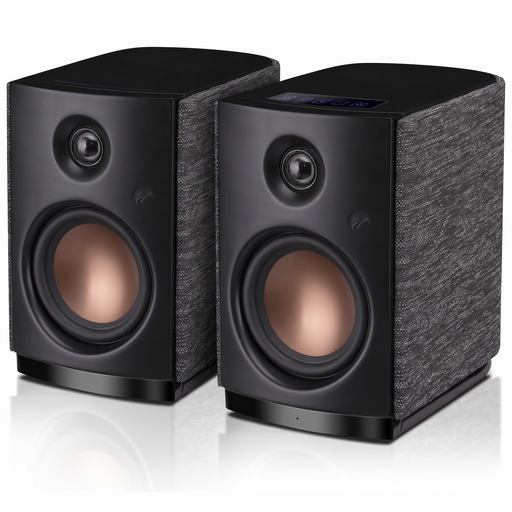
HiVi-Swans OS-10 active bookshelf speakers
If Bluetooth playback without a separate amplifier suits your set-up, the product title describes these as active speakers with Bluetooth 5.0.
Features listed in the title: 4-inch woofer, 62 W RMS and touch controls.
View at Joybuy
 No image available
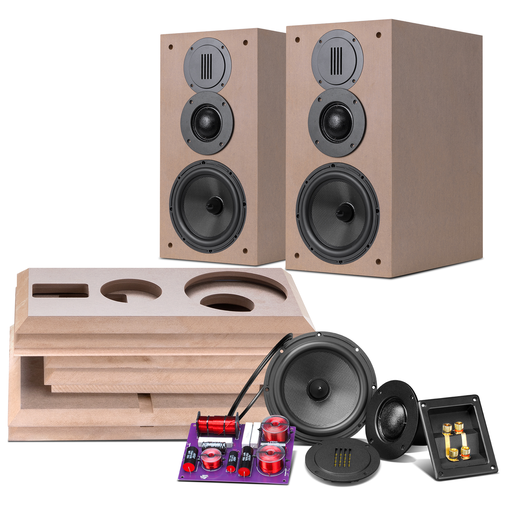
HiVi-Swans DIY3.1 passive bookshelf speaker pair
If you want to use a passive pair with a suitable amplifier you already own, the product title explicitly states that it’s a pair.
Features listed in the title: 6.5-inch drivers and passive design. A suitable amplifier is required.
View at Joybuy
 No image available
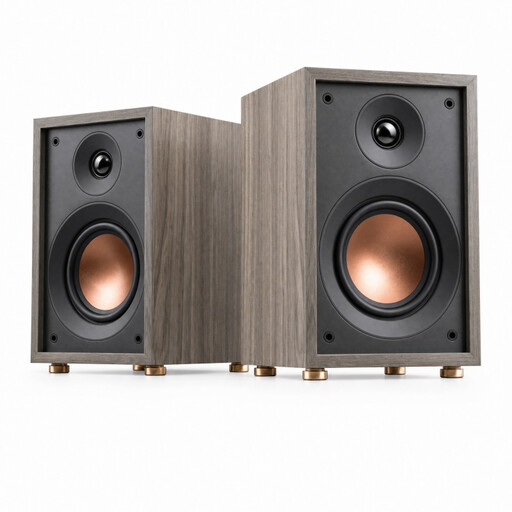
HiVi-Swans Oasis passive 2-way bookshelf speaker
If a passive bookshelf speaker suits your amplifier, the product title specifies a 2-way bass reflex design. A suitable amplifier is required.
Features listed in the title: 4-inch woofer, 20 mm dome tweeter, 60 Hz–20 kHz, 4 Ω and 10–50 W.
View at Joybuy
 No image available
HiVi D3.1MKII passive 2-way bookshelf speaker
If you’re looking for a passive speaker for music and have a suitable amplifier, the product title describes it as a Hi-Fi bookshelf speaker. A suitable amplifier is required.
Features listed in the title: 6.5-inch mid/bass driver, 28 mm dome tweeter, rear bass reflex, 8 Ohm and 10–120 W.
View at Joybuy
Frequently asked questions
Where should I start by positioning speakers in an open-plan living area?
Start by angling both towards your main listening position, keeping their height and distances as similar as possible. Then check the sound in other spots you actually use. Genelec’s stereo positioning recommendations can’t guarantee the same results in every home.
Is a front-facing bass reflex port always better when placing speakers close to a wall?
There’s no universal answer. In Visaton’s tests on the Vox 252, under the conditions tested at 1 m and 10 cm away, there was no difference between a front- or rear-facing bass reflex port. So check the guidance and sound of the specific model too.
What additional purchases and rights should I consider when shopping online?
For passive speakers, you’ll need to factor in a suitable amplifier and the necessary connections. Also check whether the offer includes one speaker or a pair. Consumer purchases made at a distance in Germany generally come with a 14-day right to cancel. The Verbraucherzentrale distinguishes this right from the statutory warranty you have against the seller and any voluntary guarantee.
Is there a single legally defined time in Germany by which I must turn my music down?
No. According to the German Federal Environment Ministry, there are no nationwide statutory rules on neighbour noise caused by people’s behaviour. Requirements may come from state law, local regulations or house rules, so the specific quiet hours for your home depend on the rules that apply where you live.


