Who this speaker question matters to

Folk listeners who put voices first

If you want to listen closely to vocals and acoustic instruments, compare speakers using recordings you know well and at your usual listening volume. Descriptions can point you in the right direction, but they can’t predict on their own how speakers will sound in your room.

People sharing a room with limited space

If you share a room with others, both speakers need to fit the available surfaces and work well for several listening positions. Check the dimensions and how you plan to position them rather than relying on the term “bookshelf speakers”.

Listeners without an existing hi-fi system

If you don’t have a separate amplifier, an active pair could be a good option. Compare the inputs and controls on the specific model with the devices you want to use for playing music.

What to look for when buying

Active stereo pair

A good fit if: you don’t have a separate amplifier, or several people want to start music from compatible playback devices.

Things to consider: Inputs and controls vary by model, so check the exact connection options.

Passive stereo pair

A good fit if: you already have a suitable amplifier or want to choose your speakers and electronics separately.

Things to consider: You’ll also need a suitable amplifier for a complete system, so check the requirements of the specific model.

Buying priority What to check Who it matters to
Voices and instruments Compare speakers using familiar recordings at your usual volume, and consider both speakers. If I want to assess vocals and acoustic instruments, listening in the intended space is more useful than relying on a review alone. Around 33% of consumers are likely to put listening tests first.
Positioning in a shared room Measure and plan space for both speakers and the seating positions. If I share the room with others, both speakers need to fit sensibly and work for our seating positions. Around 25% of consumers are likely to prioritise positioning in a shared space.
Sources and controls Check the devices you actually use and the connections they need against the full model name. If several people play music, I want to connect our existing sources and make the controls easy to share. Around 25% of consumers are likely to give connections and controls particular weight.
Complete stereo system Check whether an offer includes one speaker or a pair, and whether an amplifier is required. If I choose passive speakers, I want to know what else I’ll need for a complete system. Around 17% of consumers are likely to focus on whether the system is complete.

Common pitfalls

  • Assuming a single passive speaker is a complete stereo system

    A passive speaker needs a suitable amplifier. You’ll also need to check whether the offer includes one speaker or a pair.

    Check what’s included and the amplifier requirements for the specific model before planning your system.

  • Assuming all active models have the same connections

    Active models can have different inputs and control layouts. Bluetooth, HDMI and USB-C aren’t standard on every pair.

    Check that the connections you need for your playback devices match the details for the full model name.

  • Assuming compact speakers are easy to position

    Even compact speakers need space for both units. The room, walls and listening position all affect how they sound.

    Plan two places for your speakers and take your usual seating positions into account when deciding where to put them.

Brands to consider

Edifier

Active bookshelf speakers. The R1280DB could be worth considering if you need Bluetooth and several wired sources.

  • For the R1280DB, Edifier lists Bluetooth, optical and coaxial inputs, two RCA inputs, and side-mounted tone and volume controls.
  • These features apply to the model named and shouldn’t be assumed to apply to all Edifier speakers.

Teufel

The ULTIMA 25 AKTIV 2 is an active stereo pair for use without a separate amplifier.

  • For this model, Teufel lists HDMI, Bluetooth, AUX and USB-C.
  • Don’t assume the connections and what’s included are the same on older ULTIMA 25 models without checking.

KEF

The Q1 Meta is passive, while the LSX II LT is an active model with integrated streaming and different connections.

  • KEF lists amplifier requirements for the Q1 Meta and, among other connections, HDMI-ARC and USB-C for the LSX II LT.
  • The LSX II LT’s connection options shouldn’t be confused with those of the Q1 Meta. Manufacturer sound descriptions aren’t independent measurements.

DALI

The passive KUPID could be an option if space is limited or you’re considering wall mounting.

  • DALI says the KUPID comes with a wall bracket.
  • The bracket and positioning features apply to this model, not to passive speakers in general.

Nubert

The passive nuBoxx B Series is designed for stereo systems; the B-30 is worth considering when checking available space.

  • Nubert describes the nuBoxx B Series as passive speakers for stereo and home cinema systems.
  • Allow for a suitable amplifier with passive models. Manufacturer claims about sound can’t replace a comparison in your own listening space.

Joybuy product selection

This selection includes active and passive bookshelf speakers for stereo music, with different connection options and amplifier requirements.
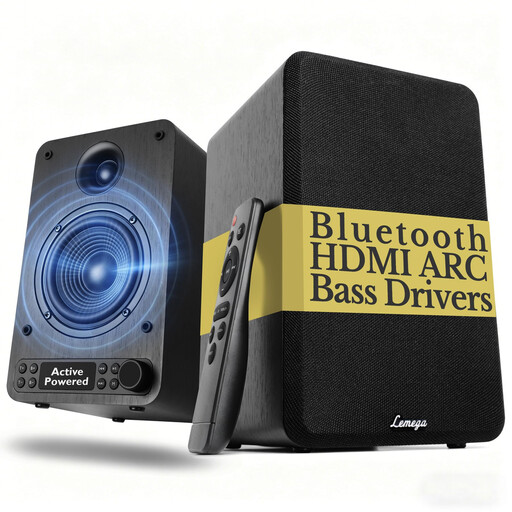
Lemega active bookshelf speakers, 40 W, stereo pair

Lemega Active Bookshelf Speakers, 40W, Pair

An active pair with several possible ways to connect, provided they’re compatible with your devices.

Bluetooth, HDMI ARC, optical, USB, AUX and RCA inputs; remote control.

View at Joybuy
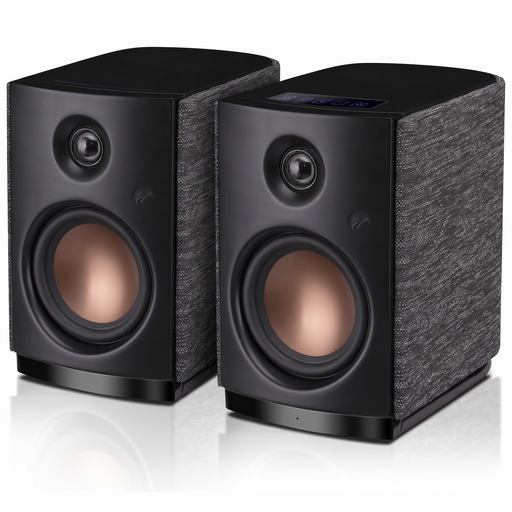
HiVi-Swans OS-10 hi-fi stereo bookshelf speakers

HiVi-Swans OS-10 HiFi Stereo Bookshelf Speakers

The listing describes this model as a passive stereo pair, but also refers to active Bluetooth speakers in the product name. Check the exact version and whether it needs an amplifier before buying.

View at Joybuy
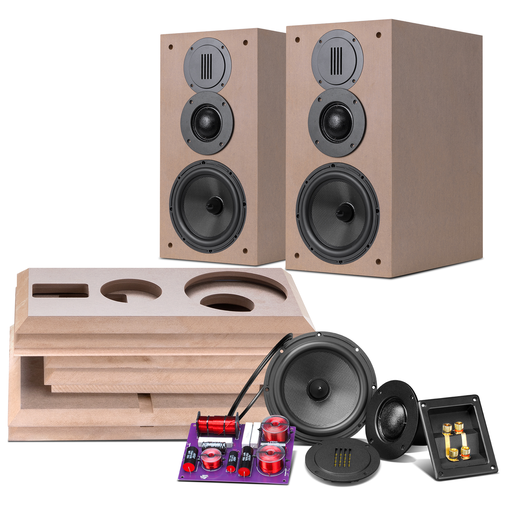
HiVi-Swans DIY3.1 passive bookshelf speakers, 6.5-inch, pair

HiVi-Swans DIY3.1 Passive Bookshelf Speakers, 6.5-inch, Pair

A passive pair for music if you already have a suitable amplifier or plan to add one.

6.5-inch mid-woofer, 28-mm tweeter and 8 ohms.

View at Joybuy
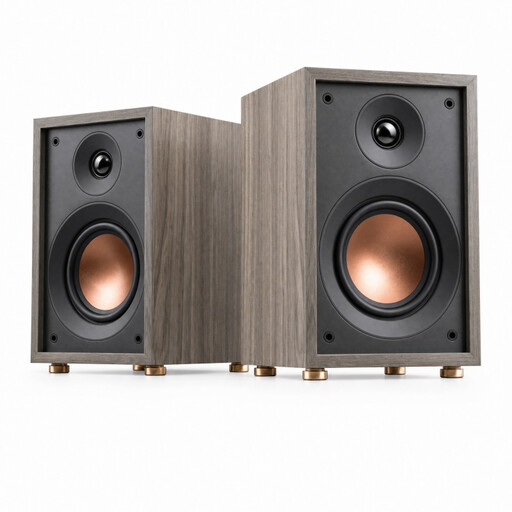
HiVi-Swans Oasis passive bookshelf speaker

HiVi-Swans Oasis Passive Bookshelf Speaker

A passive option if its compact size suits your available space; it needs a suitable amplifier.

4-inch woofer, 20-mm tweeter, 60 Hz–20 kHz and 4 ohms; stated amplifier range: 10–50 W.

View at Joybuy

HiVi D3.1MKII passive two-way bookshelf speakers

HiVi D3.1MKII Passive Bookshelf Speakers, 2-Way

Passive speakers for music, provided you have a suitable amplifier or plan to add one.

6.5-inch mid-woofer, 28-mm tweeter, 8 ohms; stated amplifier range: 10–120 W.

View at Joybuy

Frequently asked questions

Do I need an amplifier for passive bookshelf speakers?

Yes. Passive speakers need a suitable amplifier. KEF explicitly lists amplifier requirements for the passive Q1 Meta; check the details for your chosen model and make sure your amplifier is suitable.

Can I simply put the speakers on a bookshelf?

First, measure the space available for both speakers and plan where to put them in relation to your seating positions. The room, walls and speaker placement all affect how they sound, so a bookshelf won’t automatically suit every listening setup.

What happens if a product develops a fault after purchase in Germany?

Your statutory rights against the seller are separate from any voluntary guarantee. The Verbraucherzentrale explains that, if a product is faulty, the first step may be to request a repair or replacement. Check any additional guarantee terms separately.

Do speakers need a CE marking?

That depends on whether the relevant EU rules require CE marking for the specific product. The EU explains that it’s only mandatory for product groups covered by the relevant harmonised rules, so check the documentation for the specific active or wireless model.