Who are bookshelf speakers for folk music for?

Folk listeners with a regular listening spot

If you usually listen from the sofa, what matters is whether you can position a stereo pair to suit that spot. Genelec describes similar reflections on the left and right as the basis for precise stereo imaging.

Listeners in an open-plan kitchen and living area

In a connected living space with several places to sit, it’s worth planning your setup around the listening spot you actually use, rather than assuming the overall floor area alone determines the speaker size you need.

First-time buyers without an amplifier

If you don’t want to add a separate amplifier, an active pair could be right for you. Passive speakers need an external amplifier; Teufel explains the difference in its overview of active and passive speakers.

What should you look for when buying?

Active stereo pair

A good fit if: You don’t have a separate amplifier and want to connect your sources directly.

Consider: Inputs vary by model, so check that they match the outputs on your devices.

Passive stereo pair

A good fit if: You already have a suitable amplifier or want to choose your speakers and electronics separately.

Consider: Passive speakers won’t work without an external amplifier. Also check whether the model is sold individually or as a pair.

Buying priority What to look for Who it matters to
Positioning at your listening spot Space for both speakers; similar positioning towards the seat you use most. I want to position both speakers so they’re angled similarly towards my usual listening spot. Around 36% of consumers put speaker placement first.
Vocals and instruments Where possible, listen to familiar recordings at your own listening spot and at your usual volume. For folk, I want to judge vocals and instruments from my seat, not by wattage alone. Around 29% of consumers prioritise this listening experience.
Connections and equipment Check the outputs on your source devices against the inputs on the specific model; if you’re choosing passive speakers, check your amplifier too. I want to connect my existing devices and know whether I need an amplifier. Around 21% of consumers prioritise connections and the equipment they already own.
Everything you need in the box Check whether you’ll receive one or two speakers and what additional equipment you’ll need. I want to know before ordering whether I’ll get a complete stereo system and what else I’ll need. Around 14% of consumers put a complete set and the required equipment first.

Common buying misconceptions

  • One passive speaker is enough for a stereo pair

    A single speaker isn’t a complete stereo pair. Passive models also need an external amplifier.

    Before ordering, check how many speakers are included and whether you have a suitable amplifier.

  • A high wattage guarantees good sound throughout your living space

    Your listening experience also depends on where you sit, where the speakers are positioned and how sound reflects around the room.

    First plan for the area where you listen most often. If possible, assess models there or in comparable conditions.

  • All active speakers have the same connections

    The documented inputs vary from model to model, even when both speaker pairs are active.

    Check the outputs on your sources against the connection list for the full model name.

    If there isn’t a suitable connection, you may need an additional connection device or source component.

Key brands at a glance

Teufel

The ULTIMA 25 AKTIV is an active pair for buyers who don’t want to use a separate amplifier.

  • Teufel lists HDMI, an optical input, Bluetooth, AUX and a USB-C sound card for this model.
  • The list of connections doesn’t predict how the pair will sound in a particular flat; assess the positioning and listening spot separately.

Edifier

The R1700BTs is an active pair to consider if you want to use Bluetooth and analogue RCA sources.

  • Edifier lists two RCA inputs and a subwoofer output for this model.
  • Check that the listed connections match your sources; they don’t provide an independent assessment of how the speakers sound with folk music.

KEF

The Q3 Meta is a passive, two-way bass-reflex speaker for a separate hi-fi system.

  • KEF specifies amplifier requirements of 15–150 W for this model.
  • Check the requirements against your specific amplifier; the manufacturer’s specifications are no substitute for listening in your own room.

ELAC

The passive DEBUT B6.3 is an option if you already have an amplifier or plan to buy one.

  • ELAC describes the DEBUT B6.3 as a passive model for a separate speaker system.
  • ELAC says the speakers are sold individually, so you should order two for a pair. Manufacturer sound comparisons aren’t independent test results.

Joybuy product selection

This selection includes active bookshelf speakers with a range of connection options, as well as passive models for use with an external amplifier.

Lemega active bookshelf speakers, 40 W, pair, black

Lemega active bookshelf speakers, 40 W, pair, black

For an active stereo setup if you want to connect your sources using the listed inputs or Bluetooth.

Features listed in the product name: 40 W, Bluetooth, HDMI ARC, optical, USB, AUX and RCA inputs, bass and treble controls, and remote control.

View at Joybuy
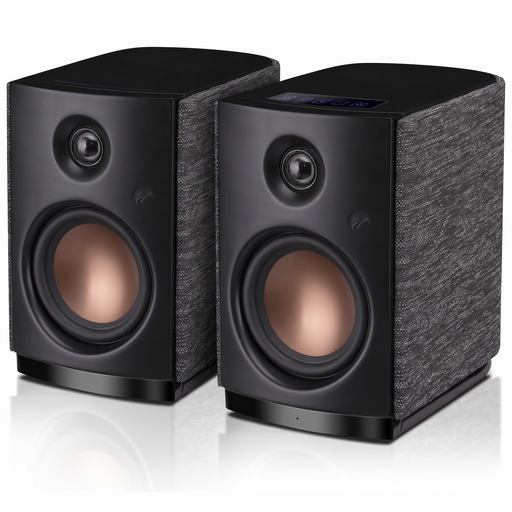
HiVi-Swans OS-10 active hi-fi bookshelf speakers, black

HiVi-Swans OS-10 active hi-fi bookshelf speakers, black

For a compact active stereo setup using Bluetooth or AUX; the product name also describes this model as a desktop speaker.

Features listed in the product name: Bluetooth 5.0, 4-inch woofer and 62 W RMS.

View at Joybuy
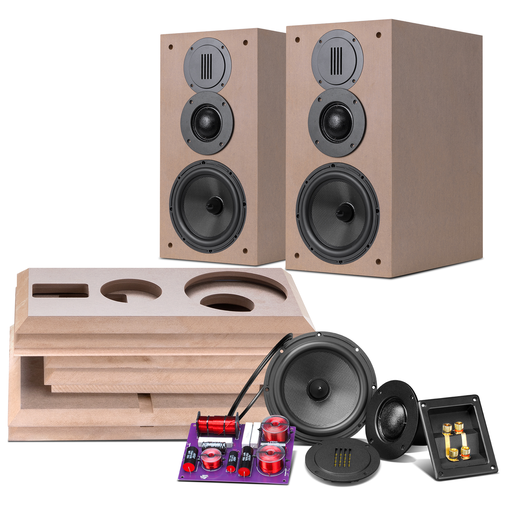
HiVi-Swans DIY3.1 passive bookshelf speakers, pair

HiVi-Swans DIY3.1 passive bookshelf speakers, pair

For a separate hi-fi stereo system if you have, or plan to buy, a suitable external amplifier.

The product name specifies a passive pair with 6.5-inch mid-woofer.

View at Joybuy
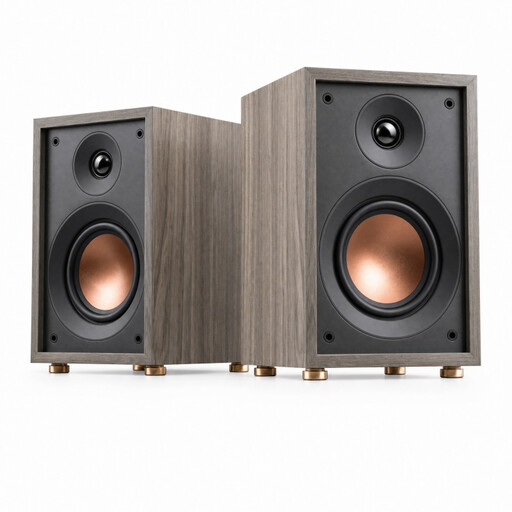
HiVi-Swans Oasis passive two-way bass-reflex speaker

HiVi-Swans Oasis passive two-way bass-reflex speaker

For a separate amplifier-based system; this is described as a passive speaker, so it needs an external amplifier.

Features listed in the product name: 4-inch woofer, 20 mm dome tweeter, 60 Hz–20 kHz and 4 Ω.

View at Joybuy

HiVi D3.1MKII passive two-way bookshelf speakers

HiVi D3.1MKII passive two-way bookshelf speakers

For a separate hi-fi system with a suitable external amplifier; passive speakers need one to work.

Features listed in the product name: 6.5-inch mid-woofer, 28 mm dome tweeter and 8 Ω.

View at Joybuy

Frequently asked questions

Do I need an amplifier for passive bookshelf speakers?

Yes. Passive speakers need an external amplifier, while active pairs have amplification built in. Check the connection requirements for the specific model and make sure they’re compatible with your amplifier.

How should I position a stereo pair in an open-plan living space to start with?

Start by angling both speakers towards your preferred listening spot, and aim to position them as similarly as possible on the left and right. Adjust their positions if being close to a wall or reflections affect playback; Genelec’s monitor placement guidance doesn’t guarantee a particular result in a living room.

What rights do I have after buying online in Germany?

According to the Verbraucherzentrale, online purchases generally come with a 14-day cancellation period from the date the contract is concluded or the goods are received; exceptions apply. If a product is faulty, statutory consumer rights should be distinguished from a voluntary guarantee.

What should I look for in a Bluetooth speaker in Germany?

The Bundesnetzagentur lists the CE marking, manufacturer details, instructions and safety warnings in German, and the declaration of conformity among the checks for electrical and electronic products. The CE mark isn’t a sound or quality certification; check the details for the specific listing.