When choosing bookshelf speakers for a shared living room, first consider whether you already have a suitable amplifier, which sources you want to connect and where you can put both speakers. An active stereo pair can make setup simpler, while passive speakers can work with an existing amplifier system. Try out the positioning from the seats people actually use. Wattage figures and a subwoofer are no substitute for keeping the volume considerate.
Who are the different options for?
Considerate jazz listeners
If you share your living room with others, easy-to-reach volume controls and suitable speaker placement matter more than a headline power rating. The German Environment Agency explains that rules on neighbour noise caused by people’s behaviour can be set out in state law, local regulations and house rules.
Listeners using several seats
If several people listen from different seats, you should be able to position the speakers to suit the room. KEF recommends setting up the speaker positions and listening position together. You can only judge whether the stereo image works from the actual seats by trying it out in the room.
Buyers looking for a simple setup
If you don’t already have an amplifier and several people use different sources, an active pair can make choosing your system easier. Check the connections on the specific model against your devices.
What matters when choosing?
Active stereo pair with direct inputs
A good fit if: you don’t have an amplifier and want to connect devices such as a smartphone, computer or TV.
Things to consider: Inputs and controls vary by model, so check that the connections match your sources.
Passive bookshelf speakers with an amplifier
A good fit if: you already have a suitable amplifier or want to choose your amplifier and speakers separately.
Things to consider: The complete system also needs amplifier compatibility, speaker cables and space for the speakers.
Active stereo pair with network streaming
A good fit if: you mainly want to stream music over your network. For the LSX II LT, KEF lists AirPlay 2 and Google Cast among its features.
Things to consider: According to the manufacturer, a cable connects the two KEF LSX II LT speakers. Here, “wireless” does not mean there is no cable between the speakers.
For jazz in a shared room, four key considerations can help you choose a system that suits your listening position, existing equipment and available space.
| Buying priority |
What should you check? |
Who is it particularly important to? |
| Keeping volume and bass considerate |
Consider the volume at your listening position, the effect of bass where the speakers will go and any house rules that apply. |
If I want to listen to music without disturbing conversations or quiet in a shared room. Around 31% of consumers put considerate volume and bass first. |
| Stereo sound from several listening positions |
Check the available space, the distance between the speakers and the rear wall, and where people sit in the room. |
If several people listen from different seats and the speakers need to be positioned accordingly. Around 25% of consumers focus on getting a usable stereo image from several listening positions. |
| Simple setup and compatible sources |
Check each connection you need. For passive speakers, check the amplifier specifications and speaker impedance. |
If I want to connect different devices and set up as few separate components as possible. Around 25% of consumers prioritise a simple setup and compatible connections for their sources. |
| Cost of the complete system |
Factor in the equipment you already own, any cables or stands you need, and what comes with the specific model. |
If I want to compare the cost of a complete, ready-to-play system rather than just a pair of speakers. About 19% of consumers make total cost their main priority. |
Which mistakes should you avoid?
-
Comparing only the price of passive speakers with that of an active pair
Passive speakers need a suitable amplifier before the system is ready to use. Check what equipment you already have and what’s included before comparing your options.
Depending on what you own, you may also need to buy an amplifier, speaker cables or speaker stands.
-
Assuming a front-facing bass reflex port means the speaker can go close to a wall
Room acoustics and speaker position affect bass reproduction, even with a front-facing port. ELAC specifies a front bass reflex port for the DB53, but that doesn’t replace trying it out in the intended position.
Test the specific model where you plan to use it instead of deciding based on the position of the port alone.
-
Assuming a high wattage means a comfortable listening volume
A power rating doesn’t tell you whether other people in the shared room or nearby rooms will be disturbed.
Agree the volume with the other people who use the room, and follow local regulations and house rules.
-
Treating Bluetooth, network streaming and wired inputs as interchangeable
These connection options meet different needs, and not every model offers them all.
Make a note of the sources you actually use and check each one against the specifications for the exact model.
If your chosen model doesn’t have a feature you want, you may need an additional streaming or playback device.
Which brands are worth considering?
KEF
The Q1 Meta is a passive compact speaker, while the LSX II LT is an active system with network streaming options.
- KEF describes the Q1 Meta as a passive design and specifies an amplifier power of 10–150 W.
- For the LSX II LT, KEF lists AirPlay 2 and Google Cast among its features.
- According to KEF, a cable connects the two LSX II LT speakers. Manufacturer claims about sound quality are not an independent comparison.
ELAC
The Debut 3.0 DB53 is a passive compact speaker designed for a system put together from separate components.
- ELAC specifies a front bass reflex port, a nominal impedance of 6 Ω and a recommended amplifier power of 20–120 W for the DB53.
- Even with a front-facing port, you should try the speakers in their intended position to check the bass.
Teufel
The ULTIMA 25 AKTIV 2 is an active stereo pair with several direct playback options.
- Teufel lists HDMI, Bluetooth, AUX and USB-C. According to the manufacturer, rubber feet are included with the AKTIV 2 model.
- According to Teufel, you may need a phono preamp to connect a turntable to the AUX input.
- Manufacturer claims about sound are not independent comparison results.
Edifier
The R1855DB is an active pair with Bluetooth and both analogue and digital inputs.
- Edifier lists Line-In, optical and coaxial inputs, as well as a subwoofer output.
- The stated power of 70 W RMS alone doesn’t show whether the model is right for a particular room or jazz recording.
Joybuy products for a passive system
The following Joybuy products are passive bookshelf speakers for use with a separate amplifier. Check the amplifier specifications against those of the specific model, and try the speakers in your room.
 No image available
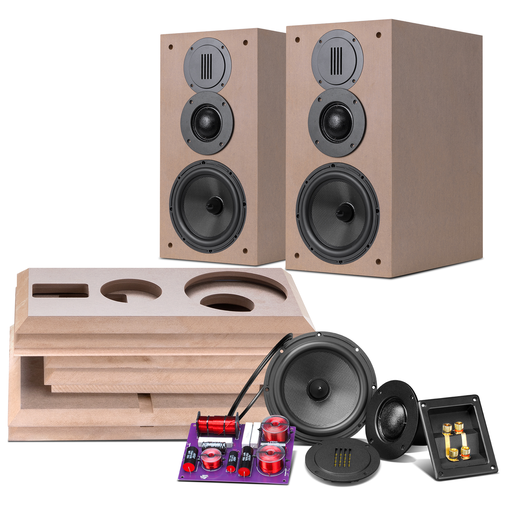
HiVi-Swans DIY3.1 passive bookshelf speakers, pair
A passive option if you already have a suitable amplifier or want to choose your amplifier and speakers separately.
6.5-inch driver; 26 mm dome tweeter; rear bass reflex port.
A suitable separate amplifier is required. Try different distances from the wall where you plan to position the speakers.
View at Joybuy
 No image available
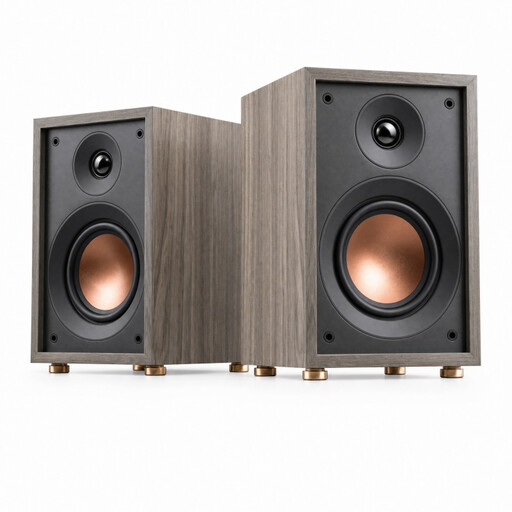
HiVi-Swans Oasis passive two-way bookshelf speakers
A passive option for a system with a separate amplifier, provided the stated connection specifications are compatible with your amplifier.
4-inch woofer; 20 mm dome tweeter; 60 Hz–20 kHz; 4 Ω; 10–50 W.
A suitable separate amplifier is required. Check the model’s impedance and power specifications when choosing one.
View at Joybuy
 No image available
HiVi D3.1MKII passive two-way stereo speakers
A passive option if you’re using a separate amplifier and can check its specifications against those of the speakers.
6.5-inch driver; 28 mm dome tweeter; rear bass reflex port; 8 Ω; 10–120 W.
A suitable separate amplifier is required. Try the speakers in the conditions of your shared living room.
View at Joybuy
Frequently asked questions
Do I need an amplifier for passive bookshelf speakers?
Yes, passive bookshelf speakers need a suitable amplifier. KEF describes the Q1 Meta as passive, while ELAC specifies a nominal impedance of 6 Ω for the DB53. Check the specifications of your speakers and amplifier together.
How should I start positioning speakers for several listeners?
Position both speakers in relation to the seats, then try changing the distance between them and from the rear wall. KEF’s positioning guidance is a recommendation; try the speakers in your room to see which position works best.
Can I connect a turntable directly to the AUX input on the ULTIMA 25 AKTIV 2?
According to Teufel, you may need a phono preamp. Check whether one is already built into your turntable.
Is there a standard quiet time for playing music through speakers across Germany?
The German Environment Agency’s overview does not give a single standard time for listening to music at home. Rules on neighbour noise caused by people’s behaviour may be set out in state law, local regulations and house rules. Check which rules apply where you live and in your accommodation.


