Choose bookshelf speakers for folk music in an open-plan flat based on your listening distance, where you can place both speakers and your music sources – not just the size of the room or the wattage. Active speakers are a good choice if you don’t want a separate amplifier; passive models need a suitable amplifier, while connected speakers depend on how you prefer to listen and set things up. Also plan for the complete system, speaker placement and the volume you’ll use from your usual listening spots.
Who are these speaker options right for?
Listeners in open-plan living spaces
If you listen to folk music from the sofa and occasionally from the dining area, consider your listening distance, where you can place both speakers and the effect of the room together. The Teufel Editorial Team lists room volume, listening distance, desired volume and speaker placement as factors when choosing speakers.
Stereo listeners with a hi-fi system
If you want to listen closely to vocals and acoustic instruments, a pair of passive speakers is an option if you already have a suitable amplifier or are choosing one at the same time. ELAC and KEF list passive models in their product information.
Listeners without a separate amplifier
If you want to connect your existing sources directly, consider active speakers and check the inputs on the specific model. Connected speakers are another option if app and network controls suit the way you listen.
What should you look for when buying?
Active stereo pair
A good fit if: You don’t want a separate amplifier and the speaker inputs suit your sources.
Consider: Check the space available, the connection between the speakers and the inputs you actually need. The Edifier R1280T’s 42 W RMS rating alone doesn’t tell you how loud it will sound at your listening spot.
Passive speaker pair
A good fit if: You have a suitable amplifier or want to choose your speakers and amplifier separately.
Consider: The amplifier is part of the complete system. KEF specifies an amplifier requirement of 40–100 W for the LS50 Meta; this applies to this model.
Connected stereo pair
A good fit if: App control and connected playback suit the way you listen. Sonos says that two Era 100 speakers can be paired for stereo.
Consider: According to Sonos, you’ll need a Line-In Adapter to connect an external analogue source to the Era 100. You’ll also need to set it up in the Sonos app.
| Buying priority |
What to look for |
Who it matters to most |
| Placement and listening distance |
Allow space for both speakers, the sofa and other listening spots. If placing them close to a wall, check the position of the bass reflex port. |
If I need to fit speakers into an open-plan layout, I want to know whether both can be placed sensibly for my preferred listening spot. Around 31% of consumers in this buying situation say placement is their top priority. |
| Stereo for vocals and instruments |
Check whether you can position two speakers separately. Manufacturer information about drivers and frequency response is no substitute for listening in your own room. |
If I want to listen closely to folk vocals and acoustic instruments from one listening spot, suitable stereo placement is essential. Around 25% of consumers make stereo listening their main priority. |
| Connections and signal path |
Match your music source’s outputs to the inputs on the exact model. Factor in an amplifier for passive speakers, and app and network requirements for connected speakers. |
If I want my existing music sources to work without extra steps, I want to check the signal path before buying. Around 19% of consumers say having the right connections is their top priority. |
| Being considerate of neighbours |
Think about your usual listening volume and distance. Check the rules that apply where you live and, if relevant, your tenancy or building rules. |
If I listen to music in a flat, I want to be able to adjust the volume for everyday listening without needlessly disturbing others. Around 13% of consumers prioritise being considerate of their neighbours. |
| Total system cost |
Check whether an offer includes one speaker or a pair, and whether you’ll need to buy an amplifier or connection accessories separately. |
If I’m putting together a complete stereo system, I want to plan for any missing components in advance. Around 12% of consumers focus mainly on the cost of the complete system. |
Common buying misconceptions
-
Bookshelf speakers fit on any shelf
The name doesn’t tell you whether the dimensions and the exact shelf position will suit your setup. If the speaker has a rear-facing bass reflex port, remember to allow for distance from the wall.
Check the dimensions and placement guidance for your chosen model, and if possible, listen from your usual spot.
-
Passive speakers work without any other equipment
Passive speakers need a suitable external amplifier; without one, they won’t produce any sound.
Include an amplifier and compatible audio sources as part of your stereo system.
You may need to buy an amplifier as an additional component.
-
Similarly named Edifier models are identical
Edifier lists Bluetooth and optical and coaxial inputs among the features of the R1280DBs. The R1280T is a different model and shouldn’t be treated as the same version.
Compare the full model name and the connections on the specific offer with your music sources.
-
The Era 100 has an analogue input that’s ready to use
According to Sonos, using Line-In on a Sonos Era 100 requires a separately sold adapter and setup in the Sonos app. A turntable without a built-in phono preamp may also need one.
Check the complete signal path from your source to the speaker in advance.
You may need to buy additional connection accessories to connect an analogue source.
Key brands at a glance
Edifier
Active bookshelf speakers such as the R1280DBs are worth considering if your existing source is compatible with the inputs provided.
- Edifier lists Bluetooth, Line-In, and optical and coaxial inputs for the R1280DBs.
- Claims about room-filling sound are from the manufacturer, not an independent assessment of performance in a particular open-plan flat. The R1280T is a different model.
ELAC
The Debut 3.0 DB63 is a passive option for a system with a suitable amplifier.
- ELAC lists an aluminium tweeter and an aramid-fibre woofer for the DB63.
- ELAC’s claims that it sets a new standard in its class or outperforms more expensive products are manufacturer claims, not independent comparisons.
KEF
The passive LS50 Meta is a compact hi-fi option. Choosing an amplifier and planning the placement are both part of the buying decision.
- KEF lists an amplifier requirement of 40–100 W and a frequency response of 79 Hz–28 kHz for this model.
- The manufacturer’s claims about particularly detailed sound don’t amount to a listening test in your flat.
Sonos
Two Era 100 speakers may suit you if you want connected controls and a configured stereo pair.
- Sonos explains how to connect two Era 100 speakers as a stereo pair.
- An external analogue source requires a separately sold Line-In Adapter. Using Line-In also requires setup in the Sonos app.
Teufel
ULTIMA 20 is a passive speaker range for buyers who want to pair their speakers with an amplifier.
- Teufel describes the ULTIMA 20 as a passive range.
- Sound descriptions on product pages are manufacturer claims, not independent assessments for folk music or a particular open-plan living space.
Polk Audio
The Monitor XT15 is a compact passive speaker model for a system with a suitable amplifier.
- Polk Audio lists a 5.25-inch woofer and a 1-inch tweeter for the Monitor XT15.
- The manufacturer’s claims about bass and vocals don’t tell you how the model will sound in your open-plan layout.
Joybuy products for active and passive stereo systems
This Joybuy selection includes active bookshelf speakers for direct connection and passive models to pair with a suitable amplifier.
 No image available
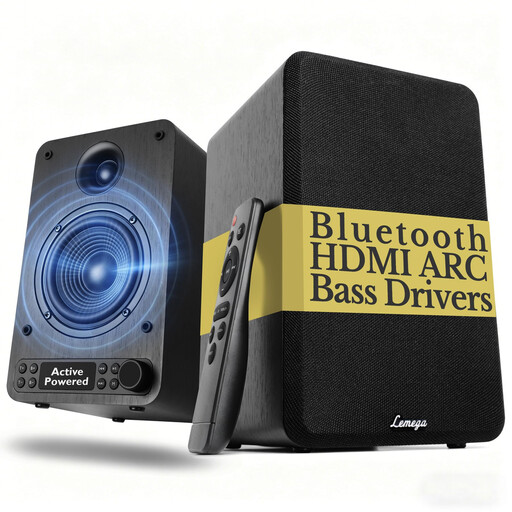
Lemega active bookshelf speakers, 40 W, pair
For sources you want to connect directly via Bluetooth or one of the listed inputs.
Features listed include Bluetooth, HDMI ARC, optical, USB, AUX and RCA inputs, as well as bass and treble controls and a remote control.
View at Joybuy
 No image available
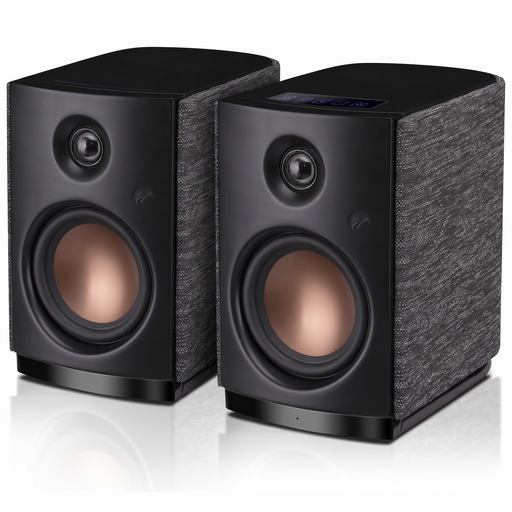
HiVi-Swans OS-10 active hi-fi stereo bookshelf speakers
For an active stereo setup with Bluetooth and an AUX connection.
Specifications listed for this model include Bluetooth 5.0, a 4-inch woofer, 62 W RMS and touch controls.
View at Joybuy
 No image available
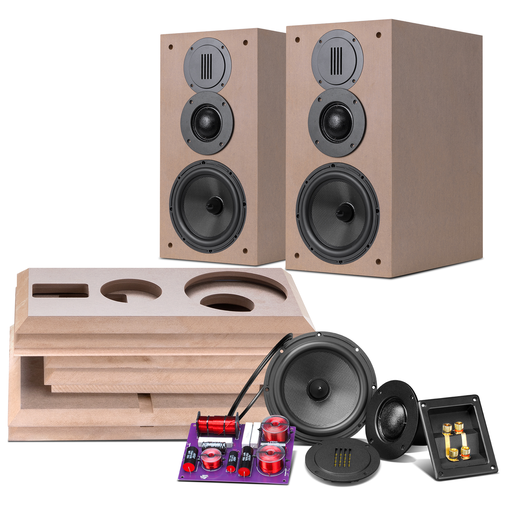
HiVi-Swans DIY3.1 passive bookshelf speakers, pair
For buyers who want to pair passive speakers with a suitable amplifier.
Specifications listed include a 6.5-inch mid-bass driver, a 26 mm dome tweeter, 8 Ω and a rear bass reflex port. If placing the speakers close to a wall, remember to allow space behind them.
View at Joybuy
 No image available
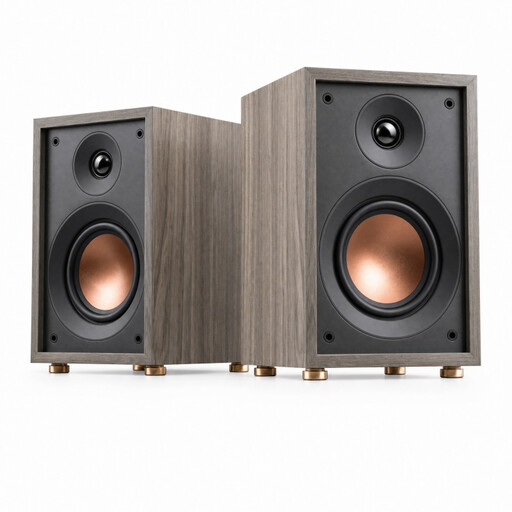
HiVi-Swans Oasis passive 2-way bookshelf speaker
For choosing a passive speaker and a suitable amplifier separately.
Specifications listed for this model include a 4-inch woofer, a 20 mm dome tweeter, 60 Hz–20 kHz and 4 Ω. Check whether the specific offer includes one speaker or a pair.
View at Joybuy
 No image available
HiVi D3.1MKII passive 2-way bookshelf speaker
For a passive hi-fi system with a suitable external amplifier.
Specifications listed include a 6.5-inch mid-bass driver, a 28 mm dome tweeter, 8 Ω, 10–120 W and a rear bass reflex port. If placing the speakers close to a wall, remember to allow space behind them.
View at Joybuy
Frequently asked questions
Do I need an amplifier for passive bookshelf speakers?
Yes. Passive bookshelf speakers need an external amplifier. Check the specifications for the model you’re considering; KEF’s 40–100 W recommendation applies specifically to the LS50 Meta.
How should I position bookshelf speakers in an open-plan room?
Start by positioning both speakers around your main listening spot, then try different distances from the rear wall where possible. Listen from other spots too; the floor area alone won’t tell you which placement will work best.
Can I connect a turntable directly to a Sonos Era 100?
According to Sonos, you’ll need a Line-In Adapter and a suitable audio cable to use Line-In. The Era 100 must also be set up in the Sonos app first. A turntable without a built-in phono preamp may need an external preamp as well.
Are quiet hours for music the same everywhere in Germany?
No. According to Germany’s Federal Ministry for the Environment, there is no nationwide legal regulation covering noise from neighbours’ everyday activities. Check the state and local rules that apply where you live, as well as your building rules if relevant.


