What should you look for when buying?
Start by working out your listening distance and the volume you want, then decide on the speaker type and where to place them. Next, compare the connections on the specific model with your existing system and factor in any additional components you’ll need.
| Criteria |
What to check before buying |
Who should pay particular attention? |
| Dynamics and volume |
Note your listening distance and the volume you want; compare amplifier and speaker specifications only for the exact model. |
If you sit further away, volume during both quiet and loud orchestral passages matters to you. Around 33% of consumers prioritise dynamics and volume at the listening position. |
| Stereo imaging and placement |
Check the space available for both speakers, cabinet depth, listening height and the position of your seat in advance. |
If your open-plan layout dictates different speaker positions on the left and right, finding a practical arrangement for both is crucial. Around 27% of consumers prioritise placement options and stereo imaging. |
| Connecting to your system |
For passive speakers, check that your amplifier is suitable; for active models, check the inputs and power supply. |
If you want to keep using your existing sources, the signal path needs to work without incompatible connections. Around 20% of consumers prioritise compatibility with their existing system. |
| Complete system and deep bass |
Check whether the product is sold as a pair and what electronics or bass extension you’ll need for your planned setup. |
If you’re weighing up the cost and bass performance of the complete system, start by assessing the bass at your usual listening position. Around 20% of consumers prioritise the complete system and the deep bass they want. |
Joybuy products for a passive stereo setup
This selection includes passive bookshelf speakers for a stereo setup with a suitable amplifier. Check the specifications of each model and make sure they match your system.
 No image available
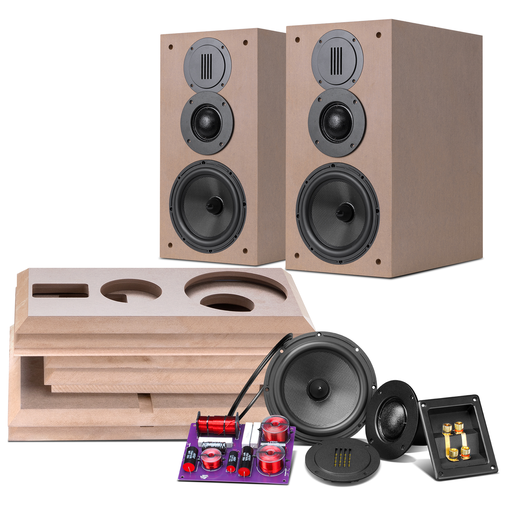
HiVi-Swans DIY3.1 passive bookshelf speakers, pair
Passive bookshelf speaker pair for a stereo setup with a suitable amplifier.
The product name specifies a 6.5-inch mid/bass driver.
View at Joybuy
 No image available
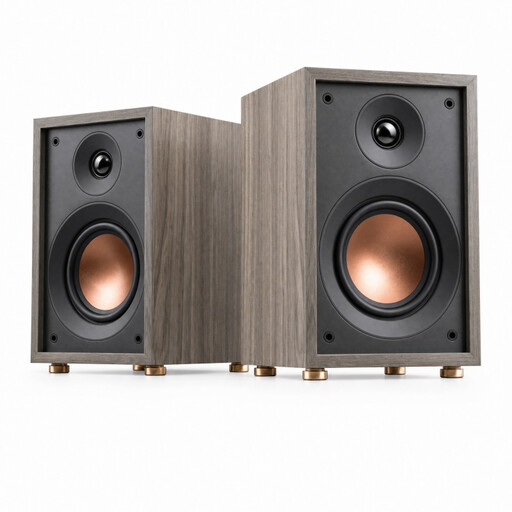
HiVi-Swans Oasis passive bookshelf speaker
Passive bookshelf speaker for a stereo setup with a suitable amplifier.
The product name specifies a 4-inch woofer, a 20 mm dome tweeter and a 2-way bass reflex design.
Specifications in the product name: 60 Hz–20 kHz, 4 Ω and 10–50 W.
View at Joybuy
 No image available
HiVi D3.1MKII passive bookshelf speakers
Passive bookshelf speakers for a stereo setup with a suitable amplifier.
The product name specifies a 6.5-inch mid/bass driver, a 28 mm soft-dome tweeter and a rear bass port.
Specifications in the product name: 8 Ω and 10–120 W.
View at Joybuy
Frequently asked questions
Is floor area enough to determine the size of bookshelf speakers?
No. Focus on the distance to your usual listening position and the volume you want; floor area alone doesn’t tell you what you need. Teufel points out that greater listening distances and higher volume levels may call for more headroom.
How should I position two speakers in an open-plan living space?
Choose a fixed listening position and aim for similar speaker positions and reflection conditions on the left and right. Genelec says similar reflections from both speakers are needed for precise stereo imaging. The room and furnishings also affect the result.
Do I need an amplifier for passive bookshelf speakers?
Yes, passive speakers need a suitable amplifier. An active pair has an amplifier built in; check that your existing sources work with the inputs on the specific model.
What are my rights when buying online in Germany?
For a distance contract, consumers generally have a right of withdrawal under § 312g of the German Civil Code (BGB), in accordance with § 355 BGB. The statutory withdrawal period is 14 days; exceptions and when the period starts depend on the legal requirements. If goods are faulty, rights under § 437 BGB may apply where the relevant conditions are met. This information is taken from the legal texts published by the Federal Ministry of Justice and the Federal Office of Justice.
Can I play orchestral recordings as loudly as I like at home?
No. The rules that apply may depend on the regulations of your federal state and local authority, as well as your house rules. For neighbour noise caused by people’s behaviour, the German Environment Agency refers to these different levels of regulation; check what applies to your home.


