For opera recordings in a small living room, choose a pair of speakers that suits the space you have and the playback equipment you already own. Passive models are an option if you have a suitable amplifier; active pairs make getting started simpler, as long as their inputs match your source and there’s enough ventilation where you place them. If possible, compare familiar recordings from your usual listening position, paying attention to voices, the placement of sounds and loud orchestral passages.
Who are the different options suited to?
Opera listeners with a regular listening position
If you want to pick out voices and the action on stage from your usual seat, check that you can position both speakers appropriately. Kali Audio recommends placing the tweeters at ear height and angling them slightly towards your listening position.
Listeners short on space
Before buying, measure the available space and take into account how close the speakers will be to the wall and where they’ll sit on the shelf. Manufacturers give different cabinet dimensions and placement options, so there’s no single minimum distance from the wall that applies to every model.
Listeners without an amplifier
If you want to connect your opera source directly, check that the inputs on active speakers match your source’s outputs. With passive speakers, you’ll also need to factor in a suitable amplifier.
What should you consider when buying?
In a small living room, your listening position, the space available and your existing audio setup are the main factors in deciding which pair will work for you.
Passive stereo pair
A good fit if: you already have a suitable amplifier or want to choose each component separately.
Keep in mind: your system will need an amplifier, a source and speaker cables. The impedance and recommended amplifier power must match the exact model.
Active stereo pair
A good fit if: you don’t want to add a separate amplifier and your source has a compatible output.
Keep in mind: check the inputs on the specific model and follow its ventilation requirements when positioning it.
| What matters when buying |
What to check |
Who this matters most to |
| Voices and sound placement |
Listen to familiar recordings from your usual listening position and check the speakers’ placement and orientation. |
If I want to pick out soloists, the chorus and the action on stage more easily from my seat, I’ll listen to familiar recordings and check the speaker orientation. Around 33% of consumers put voices and sound placement first. |
| Space and positioning |
Compare the width, height and depth with the space available; if the speakers will be near a wall, follow the guidance for the specific model. |
When space is limited, I want to know in advance whether both speakers will fit sensibly in their intended positions. Around 27% of consumers prioritise space and positioning. |
| Connections and equipment |
Match your source’s outputs to the inputs on active speakers; for passive models, check the amplifier specifications too. |
If I want to keep using my existing source, the connections or amplifier need to be compatible with my setup. Around 20% of consumers focus mainly on connections and existing equipment. |
| Orchestral passages and bass |
Compare quiet and loud passages when listening; interpret frequency specifications only in the context of their stated measurement conditions. |
If powerful orchestral passages and bass are important to me, I need to balance the sound I want against the available space and speaker placement. Around 20% of consumers prioritise orchestral passages and bass. |
Which buying mistakes can you avoid?
-
Assuming passive speakers are a complete system
Passive models need a suitable external amplifier. If you don’t check that they’ll work with your existing equipment, you may need to buy additional components.
Before buying, make a note of your source and amplifier, then check the amplifier specifications against the exact speaker model.
-
Assuming bookshelf speakers will fit in any enclosed space
Cabinet dimensions and placement guidance vary. The official EU/UK manual for the HiVi-Swans OS-10 warns against placing it somewhere that blocks airflow around the ventilation openings.
Check the available space, room for cables and the manual for the specific model before choosing where to put it.
If there’s no suitable shelf space, you may need a stand or another surface.
-
Assuming Bluetooth or a wattage figure tells you which connections you need
Bluetooth and power ratings won’t tell you whether you can connect your source by cable or how a pair of speakers will sound with opera recordings.
Compare the inputs listed for the speakers with your source’s outputs and, if possible, listen to them before you buy.
Which brands are worth considering?
ELAC
The Debut 3.0 DB53 is a compact passive model for use with an external amplifier.
- ELAC lists a front-firing bass reflex port, dimensions of 172 × 311 × 267 mm, 6 Ω impedance and a recommended amplifier power of 20–120 W for the DB53.
- The manufacturer’s descriptions of its sound aren’t an independent comparison for opera. Check the connections and positioning of your whole system too.
KEF
The passive Q1 Meta is worth considering if you want to check compact dimensions and documented wall-mounting options.
- KEF lists dimensions of 302 × 180 × 277 mm per speaker, along with compatible wall brackets and bass reflex port plugs supplied in the box.
- The stated impedance is 4 Ω, with a minimum of 3.2 Ω. Check that your amplifier’s specifications are suitable for this model.
Teufel
The ULTIMA 20 Mk4 is a passive pair with several placement options listed by the manufacturer.
- The product page lists a shelf, stand or wall mounting as possible options.
- Make sure you’re looking at the exact Mk4 version: it’s not the same as older ULTIMA 20 generations or a KOMBO set. Check that it’s compatible with your amplifier.
Edifier
The R1700BTs are an active stereo pair for sources with a compatible RCA output or Bluetooth.
- Edifier lists two pairs of RCA inputs, Bluetooth and a subwoofer output.
- Compare the listed connections with your source. The stated RMS power doesn’t tell you whether the speakers will sound better with opera recordings.
HiVi-Swans
The OS-10 is an active speaker range, so make sure the specific version and its connections suit your setup.
- The official EU/UK manual describes the OS-10 as an active speaker and includes ventilation guidance.
- The manual warns against positioning it where a shelf or other surface blocks airflow around the ventilation openings. Check the manual for the specific model.
Joybuy products at a glance
This selection includes active speakers for compatible source connections and passive models that need a suitable amplifier.
 No image available
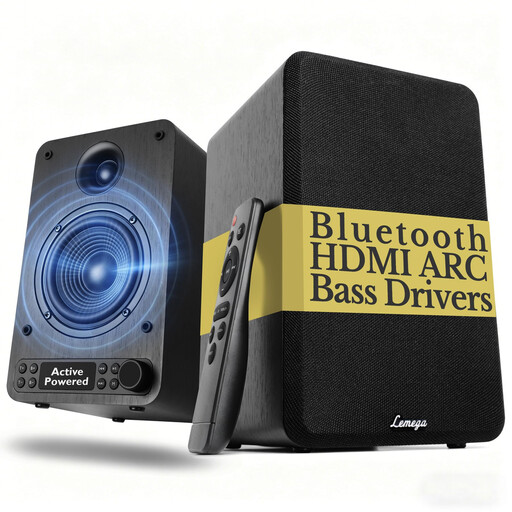
Lemega active bookshelf speakers, 40 W pair
This active pair is worth considering if you want to connect a source using one of the listed inputs.
The title describes a 40 W pair with Bluetooth and HDMI ARC. Optical, RCA, AUX and USB inputs, bass and treble controls, and a remote control are also listed.
The stated dimensions are 15,9 × 14,6 × 23,1 cm per speaker, in depth × width × height order.
View at Joybuy
 No image available
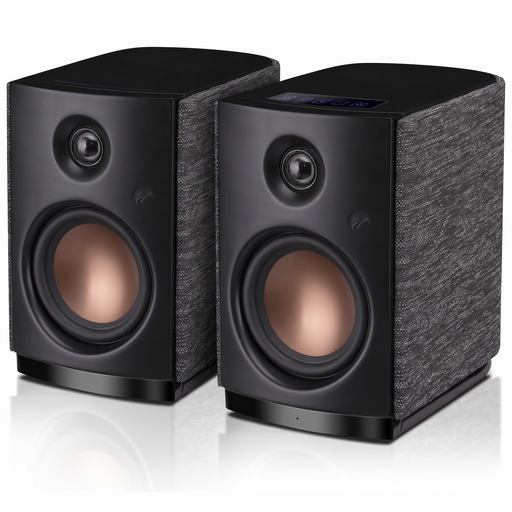
HiVi-Swans OS-10 active Hi-Fi stereo bookshelf speakers
This active model is an option if Bluetooth or an AUX input is compatible with your source and there’s enough airflow around the ventilation openings where you plan to place it.
The title lists a 4-inch woofer and 62 W RMS, as well as Bluetooth 5.0 and AUX.
The official EU/UK manual warns against placing the speakers somewhere that blocks airflow around the ventilation openings, such as a shelf that’s too enclosed.
View at Joybuy
 No image available
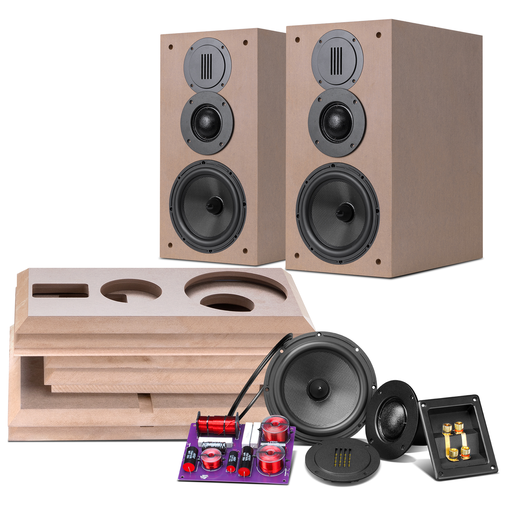
HiVi-Swans DIY3.1 passive bookshelf speakers, pair
This passive pair is suited to a system with a compatible external amplifier.
The product details list a 6.5-inch driver, a 26 mm dome tweeter and a rear bass reflex port.
View at Joybuy
 No image available
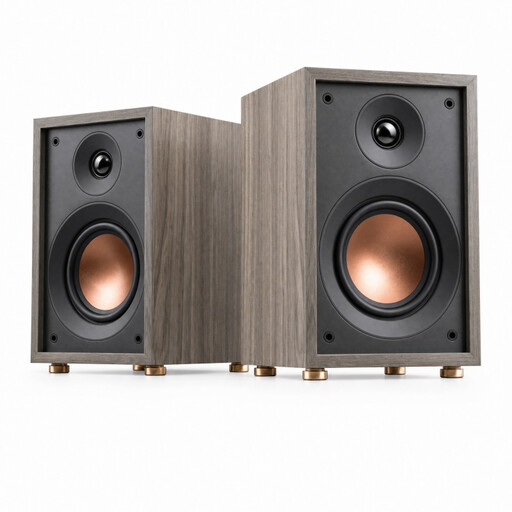
HiVi-Swans Oasis passive bookshelf speaker
This passive model is worth considering if its cabinet size and amplifier specifications suit your planned setup.
Listed features include a 2-way bass reflex system, a 4-inch woofer, a 20 mm dome tweeter and a frequency range of 60 Hz–20 kHz.
The specifications list 4 Ω and a recommended amplifier power of 10–50 W; check that these figures match your amplifier.
View at Joybuy
 No image available
HiVi D3.1MKII passive Hi-Fi stereo bookshelf speakers
This passive model is designed for a system with a suitable external amplifier.
The product details list a 6.5-inch driver, a 28 mm soft-dome tweeter and a rear bass reflex port.
The stated impedance is 8 Ω, with a recommended amplifier power of 10–120 W; check that your amplifier is compatible.
View at Joybuy
Frequently asked questions
Do I need an amplifier for passive bookshelf speakers?
Yes, passive speakers need a suitable external amplifier. Check that it’s compatible with the exact model: KEF lists a nominal impedance of 4 Ω and a minimum of 3.2 Ω for the Q1 Meta, while ELAC lists 6 Ω for the DB53.
Can I put active speakers inside an enclosed bookcase?
Check the manual for the specific model first. The official EU/UK manual for the HiVi-Swans OS-10 requires adequate ventilation and warns against placing it in a bookcase if this blocks airflow around the ventilation openings. This guidance applies to the OS-10.
How should I position speakers for opera recordings?
Position the tweeters at ear height from your usual listening position and angle them slightly towards your ears. Kali Audio recommends this orientation in its speaker placement guide. Then listen to familiar recordings to check that voices and sound placement work well from your seat.
What’s the difference between active and passive speakers when choosing?
An active pair can make getting started easier without a separate amplifier, provided its inputs match your source. Passive speakers need a suitable external amplifier, so check that the amplifier specifications match the specific model.


