Which speakers are right for you?

Piano listeners with a regular listening spot

You want to position a stereo pair around your preferred seat and judge piano recordings for yourself at a consistent volume. The room and speaker position affect what you hear; Genelec explains how placing both studio monitors similarly helps create a convincing stereo image.

Considerate users of a shared room

You share the living room and need to agree on volume and listening times with others. The German Environment Agency notes that rules on noise caused by people’s behaviour can vary between federal states and local authorities, and may also be set out in house rules.

Listeners who know what equipment they want

You may want to keep using a suitable amplifier you already own, or play music through compatible inputs without adding a separate Hi-Fi amplifier. What matters is whether the connections on your chosen speakers work with your source and the rest of your system.

What should you look for when buying?

Passive bookshelf speakers

A good fit if: You already have a suitable stereo amplifier or want to choose your amplifier and speakers separately.

Bear in mind: Your amplifier and source need to work with the specific speakers. Make sure you have space for both, too.

Active stereo pair with direct inputs

A good fit if: You don’t want a separate amplifier and the speaker pair’s inputs are compatible with your source.

Bear in mind: Bluetooth and analogue or digital inputs aren’t the same as Wi-Fi streaming, so check the features of the specific model.

Networked active stereo system

A good fit if: You want network streaming and extra digital inputs such as USB-C or HDMI ARC.

Bear in mind: The KEF LSX II LT uses a C-Link cable to connect the speakers, so network features don’t remove the need to plan the cable route.

What to consider What to check before buying Who it matters most to
Piano sound at your listening spot If possible, compare familiar recordings at a similar volume and with the speakers positioned the same way. Manufacturer claims don’t prove how they’ll sound in your room. If I want to listen to piano sonatas from my regular seat, what I hear there matters more to me than a description of the sound. Around 25% of consumers put judging piano recordings from their listening spot first.
Being considerate in a shared space Agree volume and listening times with the others using the room, and check the rules that apply to your specific space. If other people use the same room, I want to agree on volume and times in a way that takes everyone into account. Around 25% of consumers prioritise consideration for others sharing the space.
Space and stereo positioning Measure the space for both speakers, their cabinet depth and the cable route. Check the dimensions of the specific model. If space and furniture are limited, I want to position both speakers sensibly without losing sight of where I’ll be listening. Around 20% of consumers first consider whether the layout will work in their space.
Connections and amplifier Check your source’s outputs against the inputs on the specific model. If you’re using an amplifier, also check its specifications against the manufacturer’s recommendations. If I want to keep using my existing equipment, I want to know in advance whether my source and speakers will work together. Around 15% of consumers prioritise connecting their amplifier or source equipment.
Total system cost Consider the complete system that works with your source, including an amplifier if one is needed. If I’m putting together a complete stereo system, I don’t want to compare the price of the speaker pairs alone. Around 15% of consumers focus on the cost of a fully usable system.

Avoid common buying mistakes

  • Assuming “wireless” means the speakers connect to each other wirelessly

    The KEF LSX II LT supports wireless playback, but the speakers are connected to each other by a C-Link cable.

    Measure the cable route between the intended speaker positions before you buy.

  • Comparing speaker prices alone

    Passive speakers need a suitable amplifier. A comparison with an active system is more useful if you consider the complete system and its connections in each case.

    Check which equipment you already own and what else you’ll need for the specific speaker pair.

  • Assuming adverts or individual specifications tell you how the speakers will sound from your seat

    The room, reflections and speaker position all affect playback. Manufacturers’ claims about detail or clarity aren’t an independent assessment of how the speakers will sound in your living room.

    Check the positioning and, if possible, compare familiar piano recordings at a similar volume.

  • Assuming there’s one standard quiet period or that you can listen without disturbing anyone

    The German Environment Agency notes that rules set by federal states, local authorities and house rules may apply to noise caused by people’s behaviour.

    Agree on volume and times with others using the space, and check the rules that apply to your room.

A guide to relevant brands

Wharfedale

The passive Diamond 12.1 is an option for a two-channel Hi-Fi system with a suitable amplifier.

  • Wharfedale lists a 130-mm mid/bass driver and a 25-mm tweeter for the Diamond 12.1.
  • Manufacturer claims about bass and detail don’t prove how the speakers will sound in your room. The Diamond 12i range is a separate, revised model range.

ELAC

The passive Debut 3.0 DB63 suits a system with a suitable amplifier and enough space for two cabinets.

  • ELAC lists a nominal impedance of 6 Ω, recommended amplifier power of 20–140 W and cabinet dimensions of 195 × 339 × 298 mm for the DB63.
  • The manufacturer’s description of clear, room-filling sound isn’t an independent test in a shared space.

Edifier

The active R1280DBs offers direct analogue and digital inputs without a separate Hi-Fi amplifier; the smaller M60 is described as a desktop system.

  • Edifier lists Bluetooth, line-in, optical and coaxial inputs, as well as a sub-out, for the R1280DBs.
  • For the M60, the manufacturer lists Bluetooth, USB-C and AUX. The two models differ in both features and intended use.

KEF

The active LSX II LT is worth considering if you’re looking for a compact stereo system with network streaming and several digital inputs.

  • KEF’s German product page lists USB-C, HDMI ARC and Bluetooth among the LSX II LT’s features.
  • The speakers are connected by a C-Link cable. KEF’s sound quality claims don’t guarantee how the system will perform in your room.

Speakers at Joybuy

This selection includes active stereo pairs with direct inputs and passive bookshelf speakers for a stereo system with a suitable amplifier.

Lemega active bookshelf speakers, 40 W, pair, black

Lemega active bookshelf speakers, 40 W, pair, black

This active pair is an option if you don’t want to use a separate Hi-Fi amplifier.

Connections listed in the product name: Bluetooth, HDMI ARC, optical, USB, AUX and RCA.

Joybuy
HiVi-Swans OS-10 active Hi-Fi stereo speakers, black

HiVi-Swans OS-10 active Hi-Fi stereo speakers, black

This active stereo pair is described as suitable for a compatible Bluetooth source and a compact listening space.

Specifications listed in the product name: Bluetooth 5.0, 4-inch mid/bass driver and 62 W RMS.

The listing describes this model as a computer and desk speaker. Check that it’s suited to your listening position.

Joybuy
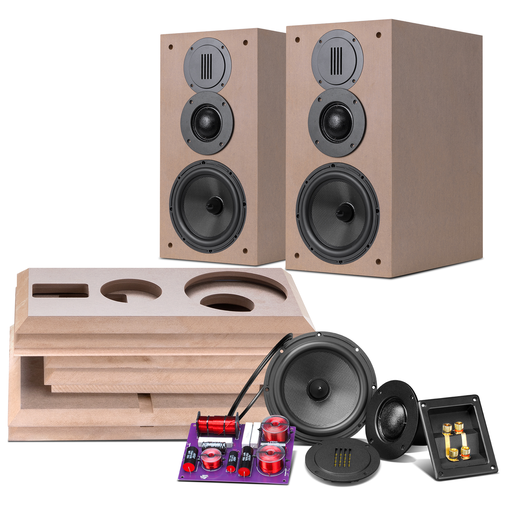
HiVi-Swans DIY3.1 passive bookshelf speakers, pair

HiVi-Swans DIY3.1 passive bookshelf speakers, pair

This passive pair suits a stereo system if you’re planning to use a suitable external amplifier.

Specifications listed in the product name: 6.5-inch mid/bass driver and 26-mm tweeter.

Joybuy
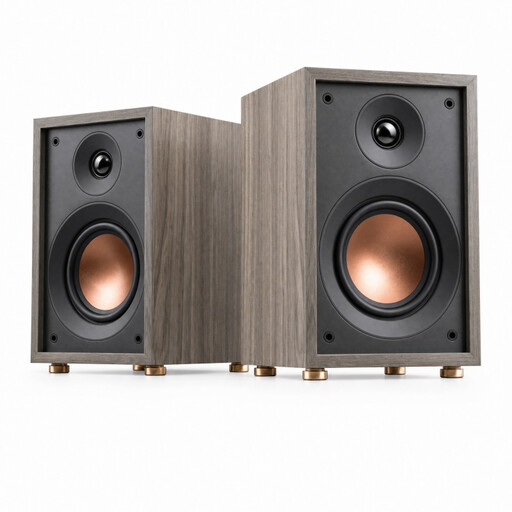
HiVi-Swans Oasis passive two-way bookshelf speaker

HiVi-Swans Oasis passive two-way bookshelf speaker

As a passive model, this speaker is suited to a system with a suitable external amplifier.

Specifications listed in the product name: 4-inch woofer, 20-mm dome tweeter, 4 Ω and recommended amplifier power of 10–50 W.

Joybuy

HiVi D3.1MKII passive two-way Hi-Fi stereo speakers

HiVi D3.1MKII passive two-way Hi-Fi stereo speakers

This passive stereo pair is worth considering if you already have, or are planning to buy, a suitable external amplifier.

Specifications listed in the product name: 6.5-inch mid/bass driver, 28-mm dome tweeter, 8 Ω and 10–120 W.

Joybuy

Frequently asked questions

Do I need an amplifier for passive bookshelf speakers?

Yes. The passive ELAC DB63 needs a suitable amplifier. ELAC lists a nominal impedance of 6 Ω and recommended amplifier power of 20–140 W for this model; check these figures against your specific amplifier. Active models such as the Edifier R1280DBs, on the other hand, have built-in amplification and their own inputs.

How should I position speakers for my preferred listening spot?

Start by positioning the two speakers as similarly as possible and pointing them towards your preferred listening spot. Genelec’s studio monitor guide covers symmetry, reflections and placing speakers close to walls, but its specific positioning measurements aren’t a requirement for every living room. Follow the instructions for your model and see how it sounds from your own seat.

How can I make a shared-room system easier to use?

Agree on an easy-to-reach volume control and a clear way to select the source. For the Edifier R1280DBs, the manufacturer lists controls on the speaker and a remote control. If there’s no sound, Edifier recommends checking the power supply, cables, selected input and source signal, among other things.

What are my rights if my speakers are faulty?

When you buy from a business seller, EU consumer information states that covered goods come with a legal guarantee of at least two years from the date you receive them. This guarantee applies against the seller and is separate from any additional manufacturer’s warranty.

Can I play music as loudly as I like at any time in a shared living room?

Using speakers at home doesn’t give you blanket permission to play music at any volume or time. The German Environment Agency notes that rules set by federal states, local authorities and house rules may apply to noise caused by people’s behaviour. The rules for your living room depend on its location and the requirements that apply there.