Who should consider bookshelf speakers?

Piano listeners sitting further away

If you mainly listen from a sofa further away, listening distance and your preferred volume are more important than floor area alone when it comes to the headroom you need. The Teufel Editorial Team makes the same point.

Listeners with a dedicated stereo listening spot

If you want to assess the attack and decay of the notes, as well as the piano’s position in the soundstage, you should position both speakers to suit your listening spot. The room and speaker placement affect what you hear; Genelec also emphasises the importance of positioning.

Listeners with an existing hi-fi system

If you want to keep using your amplifier and source components, a pair of passive speakers could be a good option, provided they’re electrically compatible with your amplifier. The Teufel Editorial Team describes matching the room and speakers as part of the selection process.

What should you look for when buying?

What matters What to check when buying Who this matters most to
Piano sound and headroom Note your listening distance and preferred volume, then compare familiar recordings from your intended listening spot. If you’re considering passive speakers, check the amplifier requirements too. If I want to hear both quiet and powerful passages clearly from the sofa, I compare the options from my listening spot; around 33% of consumers focus above all on piano sound and headroom.
Placement and stereo imaging Identify two possible speaker positions and your main listening spot, then follow the placement guidance for the specific model. If I want to assess the piano’s position in the soundstage from my usual listening spot, I check that both speakers can be positioned sensibly; around 27% of consumers prioritise placement and stereo imaging.
Amplifier and source components For passive speakers, compare their amplifier requirements with the specifications of your existing amplifier. For active models, check that they have the inputs you need for your sources. If I want to keep using my existing system, I check the speakers and sources against the available connections; around 20% of consumers focus above all on system compatibility.
Space and complete system Check whether the offer includes a pair or a single speaker. Allow for the space they’ll take up, as well as any extra equipment and stands you’ll need. If I want to fit two speakers into the living room and put together a complete stereo system, I measure the available space and check which components I’ll need; around 20% of consumers prioritise space and the total cost.

Which buying mistakes can you avoid?

  • Assuming a large room automatically calls for speakers above a certain size

    Listening distance and preferred volume can matter more than floor area alone. A large room, by itself, doesn’t tell you which speakers will suit your listening spot.

    Measure the distance to your main listening spot and assess suitable options from there.

  • Judging piano sound by wattage or frequency response

    Individual specifications don’t prove how a sonata will sound in your room. With passive speakers, it’s also important to check that they’re a good match for your amplifier.

    Compare the specific models using the same recording at a similar volume, and check the amplifier requirements.

  • Confusing the price of the speakers with the cost of a complete, ready-to-play system

    Passive speakers and active systems offer different features. Depending on your set-up, you may also need an amplifier, source components, cables or stands. HIFI.DE, for example, lists suitable stands as an extra cost for the DALI Rubikore 2.

    List all the components you still need before comparing prices, and check what’s included in the offer.

Brands to consider

Wharfedale

The passive DIAMOND 12.2 is a larger compact speaker that the manufacturer describes as suitable for larger rooms and two-channel hi-fi systems.

  • Wharfedale lists a 150-mm mid/bass driver for this model.
  • The manufacturer’s description doesn’t prove that it will deliver enough volume or the right piano sound in your particular listening spot. Check the amplifier match and placement too.

KEF

The passive Q3 Meta is designed for systems with an external amplifier, while the active LSX II LT offers a different solution with amplification built in.

  • KEF lists a nominal impedance of 4 Ω and an amplifier requirement of 15–150 W for the Q3 Meta. The German product page for the LSX II LT lists USB-C and HDMI-ARC.
  • The LSX II LT’s connections don’t apply to the passive Q3 Meta. Manufacturer claims about sound quality are no substitute for comparing speakers from your own listening spot.

ELAC

The Debut 3.0 DB63-BK is a passive bookshelf speaker option for buyers who want to use an external amplifier.

  • ELAC describes the Debut 3.0 as having an aluminium tweeter and an aramid-fibre woofer.
  • The manufacturer’s claims about sound quality aren’t an independent comparison. You’ll need to assess whether the DB63 suits your listening distance as part of your complete system.

DALI

The Rubikore 2 is a compact passive option for a separate stereo system.

  • In its review, HIFI.DE highlights this model’s soundstage and considers it suitable for larger living rooms too.
  • HIFI.DE lists suitable stands as an extra cost. The review’s findings apply to the Rubikore 2, not the entire DALI range.

Canton

The passive GLE 30 S2 is another compact speaker option for the living room.

  • Canton lists a two-way bass-reflex system and dimensions of 19 × 36 × 27 cm for this model.
  • The stated music power handling of 140 watts doesn’t tell you how loud or natural piano sonatas will sound from your listening spot.

Joybuy product options

This selection includes active and passive bookshelf speakers for stereo music. Passive models need suitable external amplification. Whichever option you choose, check that it suits your listening distance and speaker placement.
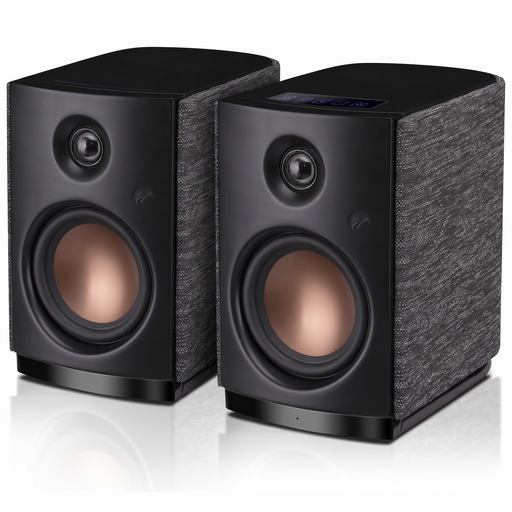
HiVi-Swans OS-10 active hi-fi stereo speakers

HiVi-Swans OS-10

If you’re looking for an active stereo system without a separate amplifier, this model is worth considering. Assess whether it suits your listening distance from your intended listening spot.

The product title lists Bluetooth 5.0, a 4-inch woofer and 62 W RMS.

View at Joybuy
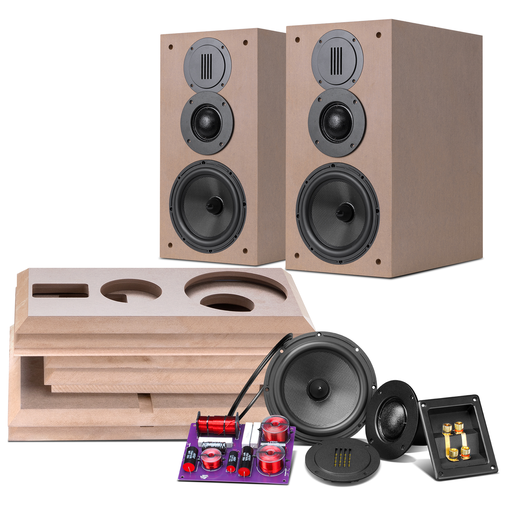
HiVi-Swans DIY3.1 passive pair of speakers

HiVi-Swans DIY3.1, passive pair

This passive pair is worth considering if you want to use a suitable external amplifier. Check that it’s compatible with your system, and assess its sound from your own listening spot.

The product title specifies a pair with 6.5-inch woofers. The model is also listed with 86 dB sensitivity and 8 ohms.

View at Joybuy
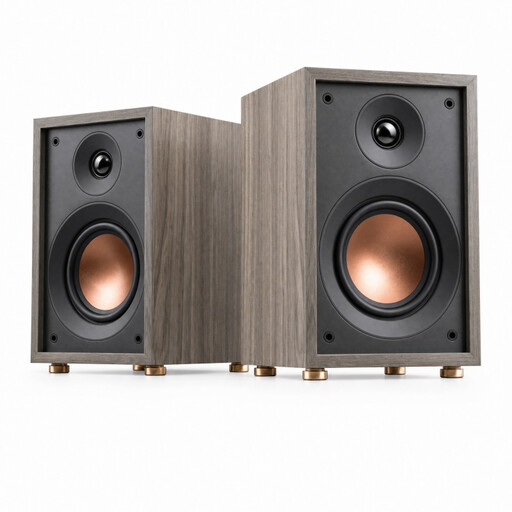
HiVi-Swans Oasis passive bookshelf speaker

HiVi-Swans Oasis

If you’re considering a more compact passive model, check that it works with your amplifier and suits your listening distance. The name alone won’t tell you how it will reproduce piano in a large living room.

The product title lists a two-way bass-reflex system, a 4-inch woofer, a 20-mm dome tweeter, 60 Hz–20 kHz, 4 Ω and 10–50 W.

View at Joybuy

HiVi D3.1MKII passive hi-fi bookshelf speaker

HiVi D3.1MKII

This passive model is worth considering if you use external amplification. Check your amplifier, speaker placement and listening distance before choosing it for piano sonatas.

The product title lists a 6.5-inch mid/bass driver, a 28-mm dome tweeter, rear bass reflex, 8 ohms and 10–120 W.

View at Joybuy

Frequently asked questions

Are small bookshelf speakers enough for a large living room?

You can’t judge this by room size alone. Consider listening distance, preferred volume, the room and speaker placement. Even in a large room, sitting closer changes what you need from your speakers.

How should I position speakers for a piano sonata?

First, decide on your main listening spot and two possible speaker positions. Follow the placement guidance for the specific model and compare familiar recordings from your seat, as the room and speaker positions affect what you hear.

Do I need an amplifier for passive bookshelf speakers?

Yes. Passive speakers need suitable external amplification. Match the requirements of your chosen speakers with your amplifier’s specifications. An active model such as the KEF LSX II LT is a different type of system.

What should I check when buying online and returning an item?

Before buying, check whether the offer includes a pair or a single speaker, and what extra equipment you’ll need. For ordinary online consumer purchases in Germany, you generally have a 14-day right to cancel after receiving the goods; you must notify the retailer that you wish to cancel. The Verbraucherzentrale notes that exceptions and the terms of the specific purchase should also be taken into account.

What should I know about active or wireless speakers and disposal?

The Bundesnetzagentur carries out spot checks on electrical and electronic products, including consumer electronics and devices with Wi-Fi or Bluetooth. This isn’t a blanket confirmation that a particular model complies with regulations. According to the German Federal Ministry for the Environment, electrical and electronic waste must not be put in household rubbish.