For listening to brass band music at a low volume, the right bookshelf speaker setup depends mainly on whether you already have an amplifier, which sources you want to connect and how much space you have. Passive speakers need an external amplifier, while active systems have amplification built in. For streaming and digital sources, you’ll also need the right connections. Compare a familiar recording at your usual listening volume. A loudness function can adjust the perceived bass and treble at low levels, but it’s no substitute for suitable positioning or listening tests.
Which setup is right for you?
Quiet listeners with an existing hi-fi system
If you want to keep using your existing system and choose your speakers and electronics separately, check out passive speakers and the features of your current amplifier. This includes whether it has loudness or tone controls.
Listeners with limited space
For a desk or a smaller living room, you’ll need to find a practical place for two speakers. As well as checking their dimensions, consider whether you can position both speakers suitably for your listening spot.
Listeners with digital music sources
If you play music from a computer, TV or streaming service, check that the speakers have the connections you need. An active system combines amplification and speakers in one solution; compatibility with your sources depends on the model.
What should you look for when buying?
| Buying consideration |
What to check before buying |
Who is most concerned about it? |
| Distinguishing instruments at low volume |
Listen to a familiar recording at your usual volume. Check whether your amplifier has loudness or tone controls; Yamaha describes loudness as a way to adjust the listening experience at low volumes. |
If I want to hear the brass and accompaniment clearly, even at low volume, the sound at my usual listening level is what matters most. Around 31 % of consumers put being able to distinguish instruments first. |
| Stereo imaging and space |
Measure the space available for both speakers and plan a listening position where they can be placed as symmetrically as possible. |
If space is limited, you’ll want to position the speakers so you get a clear stereo image from your listening spot. Around 25 % of consumers focus mainly on speaker placement and spacious sound. |
| Sources and system setup |
Check that the inputs you need match your devices. Passive speakers need an external amplifier; with active models, check which connections they actually have. |
If I want to connect my existing devices without making the setup unnecessarily complicated, the right inputs and amplification are essential. Around 25 % of consumers prioritise source connections and system setup. |
| Bass at low listening levels |
Compare the sound at your actual listening position rather than relying on a loudness function, a frequency response figure or a subwoofer output to predict how it will sound. |
If you want enough low-end presence when listening quietly, you shouldn’t have to turn the volume up. Around 19 % of consumers pay particular attention to bass at low volumes. |
Common misconceptions
-
High power or frequency response figures don’t guarantee good sound at low volumes
These figures are no substitute for listening at the volume you actually use. The sound can change depending on the volume level.
Compare familiar recordings at a low volume and check whether your system has adjustable loudness or tone controls.
-
Passive and active speakers need different setups
Passive speakers need an external amplifier to work. Active speakers have amplification built in, but the connections and cables still need to suit your source and system.
Before buying, make a note of your source, the connections you need, any existing amplification and how the speakers connect to each other.
-
Don’t leave planning your speaker placement until after you buy
The position and spacing of the two speakers can affect the stereo image from your listening spot.
Plan where both speakers will go, as well as your listening position, then check the setup with familiar recordings.
Brands to consider
ELAC
The passive Debut 3.0 DB63 is an option for listeners who already have an amplifier.
- ELAC lists an aluminium tweeter and an aramid-fibre woofer for the DB63.
- An external amplifier is required; these components don’t prove that it’s especially suited to listening to brass band music at low volume.
Edifier
The active R1700BTs stereo system is an option for analogue sources or Bluetooth, without a separate amplifier.
- The R1700BTs is listed with two RCA inputs, Bluetooth, a remote control and a subwoofer output.
- These connections don’t mean it has a dedicated loudness function. Check that they suit your sources.
KEF
The active LSX II LT is an option for streaming and digital connections; the passive R3 Meta needs an external amplifier.
- KEF lists USB-C and HDMI ARC for the LSX II LT, along with a cable connecting the speakers.
- KEF describes the R3 Meta as a passive three-way speaker. Its features don’t apply to the active LSX II LT.
Genelec
The 8020D is described as a compact nearfield monitor for a dedicated listening position.
- Genelec describes the 8020D as a nearfield monitor and lists its dimensions.
- The stated package contents include one monitor. For stereo, you’ll also need to plan the setup, sources and volume control.
Canton
The passive Reference 9 is a larger, placement-sensitive bookshelf speaker option for a system with an external amplifier.
- Canton lists the Reference 9’s dimensions as 26 × 46 × 39 cm and a treble level adjustment in 1,5-dB steps.
- Treble adjustment is not the same as a loudness function that varies with volume.
Joybuy products
The following Joybuy models include active and passive bookshelf speakers for different sources and system setups.
 No image available
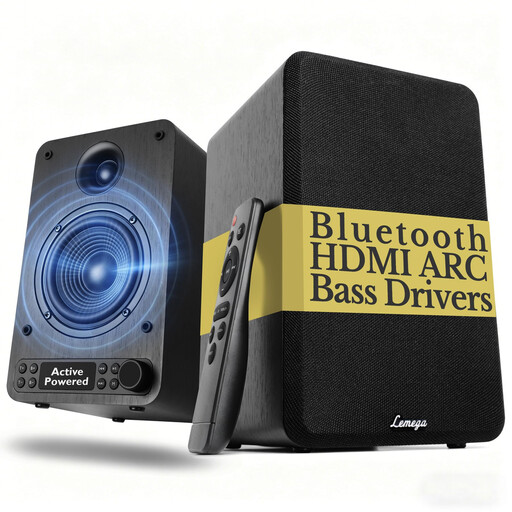
Lemega active bookshelf speakers, 40 W, pair
This active pair is worth considering if you’re looking for a system with built-in amplification and several source connections.
Listed in the product title: 40 W, Bluetooth, HDMI ARC, optical input, USB, AUX and RCA.
View at Joybuy
 No image available
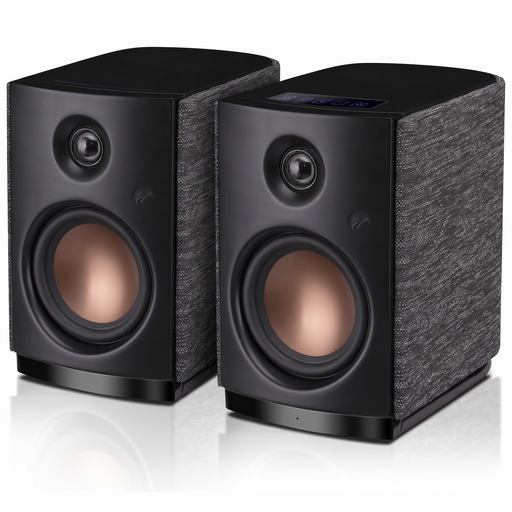
HiVi-Swans OS-10 active hi-fi bookshelf speakers
This active system suits a setup where you want to play music from a computer or via Bluetooth.
Listed in the product title: Bluetooth 5.0, 4-inch woofer, 62 W RMS and touch controls.
View at Joybuy
 No image available
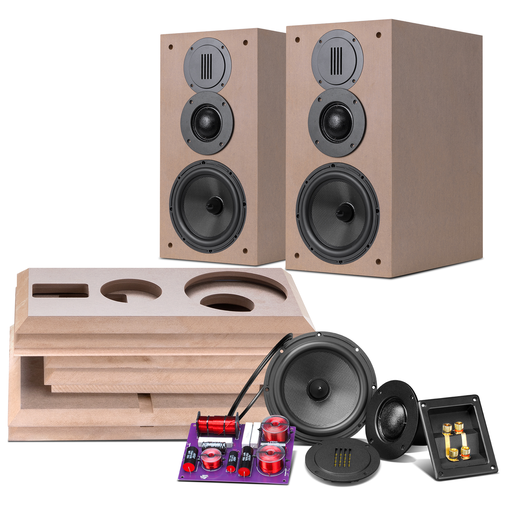
HiVi-Swans DIY3.1 passive bookshelf speakers, pair
This passive pair is worth considering if you want to use a suitable external amplifier.
Listed in the product title: 6.5-inch model and a pair of passive speakers.
View at Joybuy
 No image available
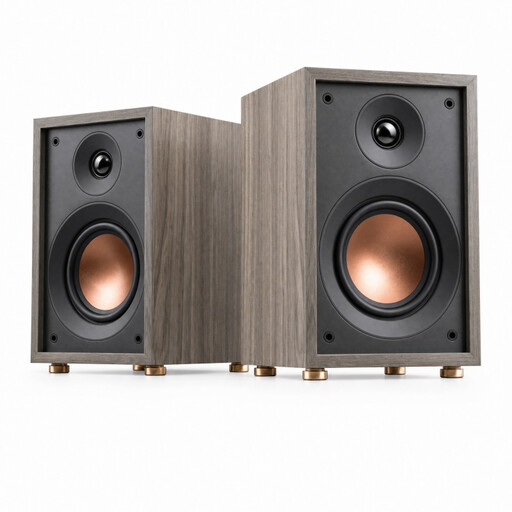
HiVi-Swans Oasis passive 2-way bookshelf speakers
This passive model suits a setup with an external amplifier; check that the amplifier is compatible with the speaker.
Listed in the product title: 4-inch woofer, 20-mm dome tweeter, 4 Ω and bass-reflex enclosure.
View at Joybuy
 No image available
HiVi D3.1MKII passive 2-way hi-fi bookshelf speakers
This passive model is worth considering for an existing system with a suitable external amplifier.
Listed in the product title: 6.5-inch mid-bass driver, 28-mm dome tweeter and 8 Ω.
View at Joybuy
Frequently asked questions
Do I need an amplifier for passive bookshelf speakers?
Yes, passive speakers need an external amplifier. Active systems have amplification built in; then check that the connections suit your source devices.
How should I position two speakers for a fixed listening spot?
Start by placing them at the same height and, as far as possible, at similar distances from nearby walls. Check the sound from your listening spot, as reflections and room resonances can affect playback.
Are music quiet hours the same everywhere in Germany?
No, there isn’t one set time that applies everywhere. According to the German Environment Agency, rules on noise from neighbours can be based on state law, local regulations or house rules; check what applies where you live.
Can old speakers go in household rubbish in Germany?
No, old electrical equipment must not go in household rubbish. The German Environment Agency lists municipal collection points, among other options, for returning it.


