For listening to live jazz at low volume, a stereo pair that’s easy to position is a good place to start. If you don’t have a suitable amplifier, an active pair is often the better choice; if you already have an amplifier, passive bookshelf speakers are also an option. Connected speakers offer more ways to play music, but may require app set-up, an adapter or a cable between the speakers. What matters is the connections, the positioning and how they sound at the volume you actually listen at – a high wattage rating alone won’t tell you that.
Who this speaker question matters to
Jazz fans who listen at low volume
If you usually listen to live recordings quietly, you’ll want to assess the instruments and sense of space from your listening position, rather than relying solely on maximum output power. Genelec’s guidance on monitor placement and Yamaha’s explanations of low-volume listening offer different points of reference.
Listeners with an existing hi-fi system
If you already have an amplifier, you could consider passive bookshelf speakers. Check that your amplifier is suitable for the specific speaker model, and think about where you can position both speakers. ELAC lists the Debut 3.0 DB63 as a passive bookshelf speaker.
Listeners without an amplifier
If you want to play music directly from a computer, television or streaming device, compare active speakers and connected systems by checking which inputs your source actually offers. Edifier and KEF list different direct connection options for their respective models.
What to look for when buying
First, check whether you have a suitable amplifier and where you can position both speakers. Then compare the connections and sound at the low volume you usually listen at.
| Buying priority |
What to check |
Who it matters most to |
| Sound at low listening levels |
Listen to familiar live recordings at your usual volume and compare the sound settings, if your device has a suitable feature. Yamaha describes YPAO Volume for the RX-V6A after a YPAO measurement. |
When I listen quietly, I want to assess the instruments and sense of space from my own listening position. For around 36% of consumers, this sound comparison is the top priority. |
| Connections and amplification |
Compare your source’s outputs with the inputs on the specific active model. For passive speakers, check that your amplifier is suitable. |
Whether I want to play music without an additional amplifier or keep using my existing system, having the right signal path matters. For around 29% of consumers, connecting to the source and the amplification required are the main considerations. |
| Space and positioning |
Check the dimensions and cable routes for both speakers at your listening position. Similar conditions on the left and right can help with stereo imaging, as Genelec explains in its placement guidance. |
If I need to fit both speakers in and position them sensibly, space and cable management are crucial. Around 21% of consumers put this positioning question first. |
| Overall cost and purchase terms |
Check whether a listing is for a pair or a single speaker, and which additional items your system will need. Read the terms for the specific purchase. |
If I want to put together a usable system, I need to take any additional items and the terms after purchase into account. For around 14% of consumers, the overall cost and effort are the main priority. |
Common buying misconceptions
-
A higher wattage rating automatically means better sound at low volume
A power rating doesn’t tell you how the instruments and sense of space will sound at the low volume you usually listen at.
Compare suitable systems in your intended listening position, using familiar live recordings at a similar volume. Only treat sound settings as a deciding factor if they’re available on your amplifier or playback device.
-
“Wireless” means the two speakers are connected without a cable too
According to KEF, the two speakers in the LSX II LT are connected to each other by a speaker cable. Wireless playback options don’t change that.
Before buying, plan the cable route and check that the cable supplied for the model will reach your listening position.
-
Passive speakers can be used directly without additional amplification
Passive speakers need a suitable external amplifier; ELAC lists the Debut 3.0 DB63 as a passive bookshelf speaker.
Compare complete system set-ups and check whether the specific listing includes a pair or a single speaker.
Relevant brands and model ranges
Edifier
The active R1280DBs stereo pair is worth considering if you want several direct playback options without a separate amplifier.
- Edifier lists Bluetooth, line-in, optical and coaxial inputs, a remote control and a subwoofer output.
- The manufacturer’s specifications for features and RMS power don’t prove superior live jazz playback at low volume.
ELAC
The Debut 3.0 DB63 is a passive alternative to consider for a system with a suitable amplifier.
- ELAC describes the speaker drivers and how the speakers can be connected to amplifiers and receivers.
- An external amplifier is required. The manufacturer’s claims about clarity or full-bodied sound aren’t independent listening evidence for quiet jazz.
Teufel
The ULTIMA 25 AKTIV could be a good fit if you want built-in amplification and several direct inputs.
- Teufel lists HDMI, Bluetooth, an optical input, AUX and USB-C, among other connections.
- The ULTIMA 25 AKTIV 2 is a different generation, with a revised package contents and different cable lengths. The two model versions shouldn’t be treated as the same.
KEF
The LSX II LT is a connected stereo system with separate speakers, for listeners who value streaming and digital inputs.
- KEF lists HDMI-ARC, USB-C and streaming features.
- The two speakers need a connecting cable. The manufacturer’s sound claims aren’t independent evidence of performance at low volume.
Sonos
The Era 100 is an option for a connected listening set-up or a stereo system made up of two units.
- Sonos lists Wi-Fi and Bluetooth, as well as the option to pair two Era 100 speakers for a wider stereo soundstage.
- A single unit isn’t a stereo pair with separately positioned speakers. Sonos lists an input adapter for analogue playback.
Related products at Joybuy
This selection includes active speakers for direct playback, as well as passive bookshelf speakers that need a suitable amplifier.
 No image available
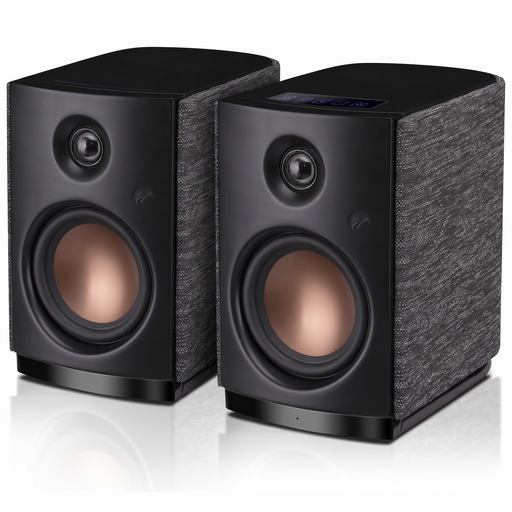
HiVi-Swans OS-10, active hi-fi stereo speakers
Active speakers for playing music directly, if you don’t want to use a separate amplifier.
Bluetooth 5.0 and AUX; 4-inch woofer; 62W RMS according to the product name. The power rating alone doesn’t tell you how the model will sound at your listening volume.
View at Joybuy
 No image available
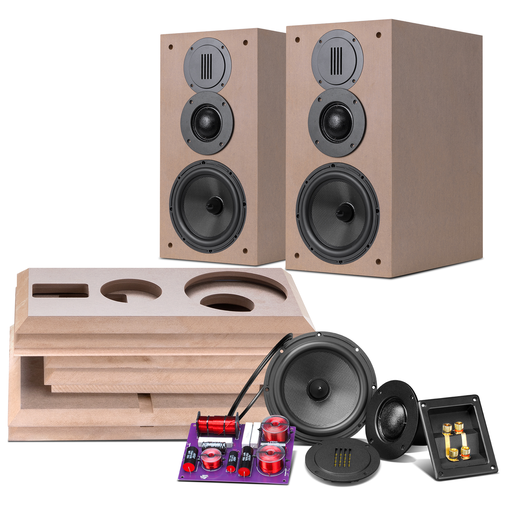
HiVi-Swans DIY3.1, pair of passive bookshelf speakers
A passive pair for a system with a suitable amplifier, if you want to choose your speakers and amplification separately.
6.5-inch woofer, 26-mm tweeter and 8 Ω according to the product specifications. Passive speakers need a suitable external amplifier.
View at Joybuy
 No image available
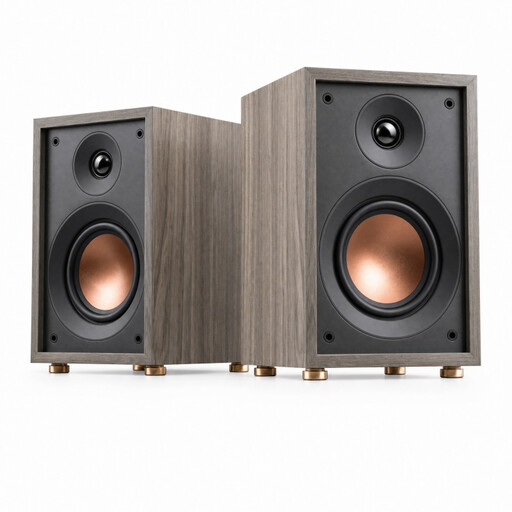
HiVi-Swans Oasis, passive 2-way bookshelf speaker
A passive speaker for a system with a suitable amplifier. For stereo, check before buying whether you’ll need another one.
4-inch woofer, 20-mm dome tweeter, 4 Ω and bass-reflex design according to the product specifications. Stated frequency range: 60Hz–20kHz; power rating: 10W–50W.
View at Joybuy
 No image available
HiVi D3.1MKII, passive hi-fi stereo bookshelf speakers
Passive speakers for a system with a suitable amplifier, and for listeners who want to choose their speakers separately from their amplification.
6.5-inch woofer, 28-mm dome tweeter, rear bass-reflex port and 8 Ω according to the product name. Stated power rating: 10–120W. Check whether the specific listing includes a pair or a single speaker.
View at Joybuy
Frequently asked questions
Is a single connected speaker enough for live jazz?
If you want a spacious stereo image from a fixed listening position, compare it with a pair of separately positioned speakers. Sonos describes pairing two Era 100 speakers for a wider stereo soundstage; this is a manufacturer’s claim, not a listening test for jazz.
How should you position two speakers for relaxed listening?
Angle both speakers towards your listening position and, where possible, aim for similar distances and reflective conditions on the left and right. Genelec’s guidance is based on studio monitor placement and is intended as a point of reference, not a strict rule for every living room.
Can a loudness setting help at low volume?
A suitable feature can adjust high and low frequencies at low volume. Yamaha describes this for YPAO Volume on the RX-V6A after a YPAO measurement; that doesn’t mean every speaker has this feature.
What additional items might you need?
Passive speakers need a suitable external amplifier. Sonos lists an input adapter for connecting the Era 100 to an analogue source; you’ll also need to allow for a cable between the speakers with the KEF LSX II LT.
Can you return speakers bought online in Germany, and who is responsible if they’re faulty?
For a standard distance sale from a business seller, you generally have a 14-day right to cancel from the date of delivery; exceptions and the terms for return postage should be taken into account. According to the European Union’s Your Europe website, if goods are faulty, you have a legal guarantee against the seller of at least two years from receipt. This is separate from a voluntary manufacturer’s warranty; these rules don’t apply in the same way to purchases from private individuals.


