What should you look for when buying?
Start by working out which devices you want to connect and whether you already have a suitable amplifier. Then check the space you have, speaker placement and any network features you might need.
| Consideration |
What to check before buying |
Who should pay particular attention? |
| Stereo positioning and being considerate |
Check you have space for both speakers, along with their dimensions, orientation and the position of the bass reflex port. Follow local noise and usage rules. |
If I want to set up a preferred listening area in a communal room while being considerate of others, I need space for both speakers. Around 36% of consumers prioritise speaker placement and consideration for others. |
| Compatible connections |
Note the output on each source and the input it needs; don’t assume a phono connection is the same as a line-in. |
Anyone planning to use a mobile phone, CD player or turntable for their blues collection should check the signal chain in advance. Around 29% of consumers put compatible connections first. |
| Existing amplifier |
Check the amplifier’s model and connections, and make sure it’s suitable for the speakers. Also confirm whether the speakers are sold individually or as a pair. |
If I want to keep using a suitable amplifier, passive speakers could be a good addition. Around 21% of consumers prioritise using their existing system. |
| Network streaming |
Check that the streaming options you want are supported by the specific speaker model and users’ devices. Also decide who will manage playback. |
Anyone who wants several people to choose music using compatible network devices should check the services required and the local network setup. Around 14% of consumers prioritise shared streaming over a network. |
Joybuy products
The models below include active speakers for Bluetooth and several audio sources, as well as passive pairs for use with a suitable amplifier.
 No image available
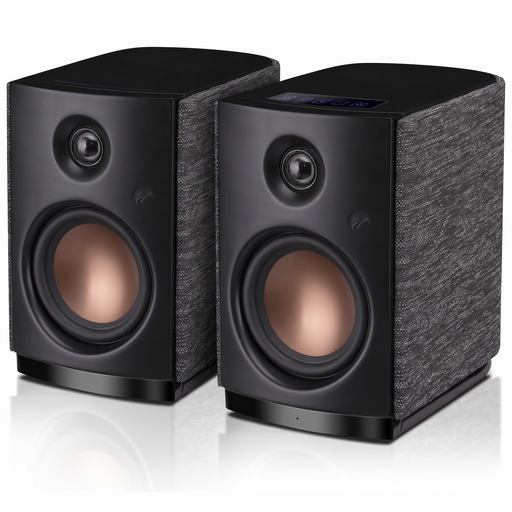
HiVi-Swans OS-10, active
Described as active stereo speakers with Bluetooth for music and computer playback.
Bluetooth 5.0; 4-inch woofer; 62 W RMS according to the product name.
View on Joybuy
 No image available
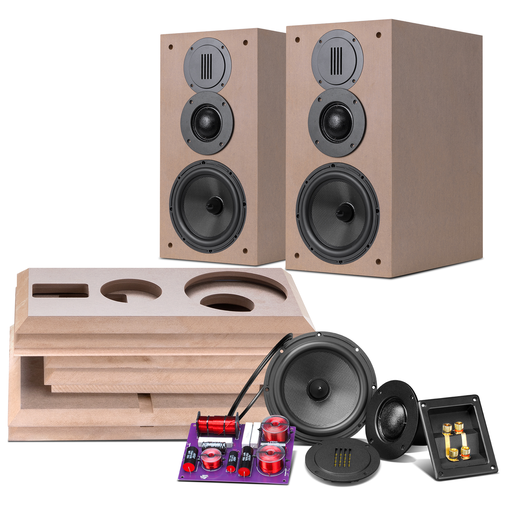
HiVi-Swans DIY3.1, passive pair
For listening to music with a suitable existing amplifier. Take the rear bass reflex port into account when positioning the speakers near a wall.
6.5-inch drivers according to the product details. An external amplifier is required.
View on Joybuy
 No image available
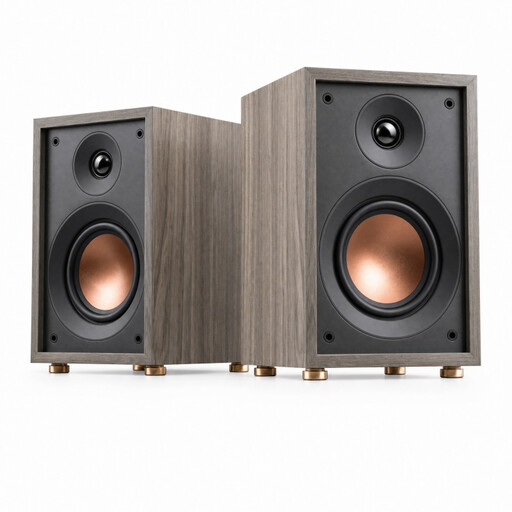
HiVi-Swans Oasis, passive
Described as suitable for music in smaller rooms; designed to connect to a compatible amplifier.
4-inch woofer; 20-mm dome tweeter; frequency range 60 Hz to 20 kHz; 4 Ω; 10 W–50 W according to the product details.
A suitable external amplifier is required.
View on Joybuy
 No image available
Lemega, active 40 W pair
Described as an active pair with Bluetooth and several wired inputs for different audio sources.
40 W according to the product name; HDMI ARC, optical input, USB, AUX and RCA according to the product details.
View on Joybuy
Frequently asked questions
Can I connect a turntable directly to bookshelf speakers?
Only if the signal chain provides the necessary phono preamp. A turntable without a built-in preamp needs a suitable phono input or an external preamp before the line input. ELAC lists an analogue/phono input for the DCB41; check that it’s compatible with your specific turntable.
How should I position two speakers when there are several seats?
Start with a reasonably symmetrical stereo setup aimed at your preferred listening area, then check how it sounds from the other seats. The stereo triangle described by Teufel is a guide for one preferred listening position, not a guarantee of the same stereo image throughout the room. If the speakers have rear bass reflex ports, take particular care with how close they are to the wall.
Do passive bookshelf speakers need an amplifier?
Yes. Passive speakers need a suitable external amplifier or receiver. If you already have compatible equipment, check its connections and make sure it’s suitable for the speaker model. If you don’t have an amplifier, you’ll need to choose a complete system.
Can you simply play music in a shared communal room?
It depends on who uses the room and what kind of space it is. GEMA explains that background music in residents’ and dining rooms at a care home reserved exclusively for residents and their relatives is exempt from registration. This doesn’t apply as a blanket rule to publicly accessible areas or events. For noise, the German Environment Agency refers to regulations set by the federal states, local authority requirements and house rules.
Is the CE mark an independent seal of sound quality?
No. CE marking isn’t an independent sound quality test. According to the European Union, it’s only required for products explicitly covered by harmonised EU rules. Whether this applies to a specific device variant needs to be checked for that product.


