What should you consider when choosing?
Active stereo speaker pair
A good fit if: you don’t have a separate amplifier and the active pair’s inputs match your playback source.
The trade-off: amplification is built in, but the connections and space required depend on the specific model.
Passive stereo speaker pair
A good fit if: you already own a compatible amplifier or want to choose your electronics separately.
The trade-off: you’ll need a compatible amplifier to complete the set-up; check that it works with the specific model.
For a stereo set-up, the speakers, source and available space all need to work together. The points below will help you check what suits your room and listening habits.
| What matters |
What to check before buying |
Who will find this especially important? |
| Spatial presentation |
Check whether you can place both speakers at a similar height and at similar distances from nearby side surfaces. |
If I want to follow the instruments in a quartet around the room from my preferred listening spot, getting the left and right speaker positions right is especially important. Around 31% of consumers prioritise the spatial placement of instruments. |
| Room placement |
Measure the available space and cabinet depth, and take your listening spot and cable runs into account. |
If my open-plan living area offers little symmetrical space, I want to position the two speakers so they can be angled in a similar way. Around 25% of consumers prioritise placement and the room. |
| Source and connections |
Check that your source’s outputs match the inputs on the active system or amplifier. |
If I want to connect my existing playback source without unnecessary extra equipment, compatible inputs are essential. Around 19% of consumers prioritise a straightforward source connection. |
| What’s included in the stereo system |
Check whether the listing is for one speaker or a pair, and whether you’ll need an amplifier. |
If I’m planning a complete, ready-to-use stereo set-up, I want to know from the outset which components I still need. Around 13% of consumers prioritise what’s included in the overall system. |
| Being considerate of neighbours |
Take into account how easily sound travels through your home, as well as local rules and the building’s regulations. |
If I’m listening in a block of flats, I want to choose a volume that suits my home and the situation. Around 12% of consumers prioritise considerate listening. |
Joybuy products for active and passive set-ups
The Joybuy products below include active stereo speakers and passive models for use with a suitable amplifier.
 No image available
Lemega active bookshelf speakers, 40 W, pair
An option if you’re looking for an active stereo pair with a choice of connections.
The product title describes an active pair with 40 W. Listed features include Bluetooth, HDMI ARC, optical, USB, AUX and RCA inputs, along with bass and treble controls and a remote control.
Joybuy
 No image available
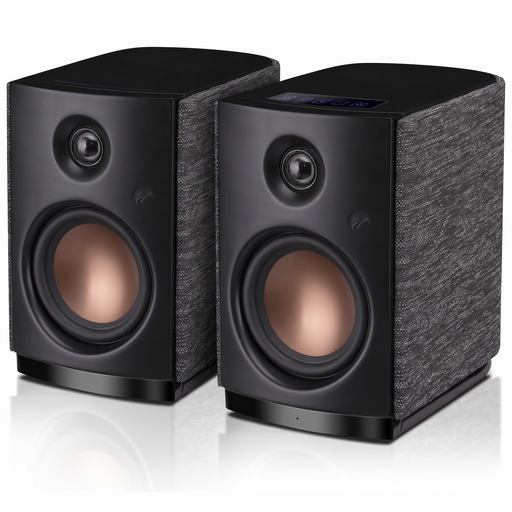
HiVi-Swans OS-10 active hi-fi stereo speakers
An option if you’re looking for active speakers with Bluetooth to connect to a compatible source.
The product title lists Bluetooth 5.0, a 4-inch woofer and 62 W RMS. It also describes the model as suitable for use with a computer or on a desk.
Joybuy
 No image available
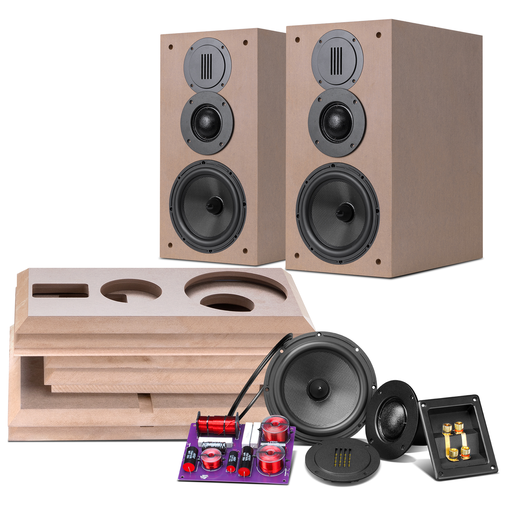
HiVi-Swans DIY3.1 passive bookshelf speakers, pair
An option if you want to use a passive speaker pair with a compatible amplifier.
The product title describes a passive pair and lists a 6.5-inch driver. A suitable amplifier is required to use the speakers.
Joybuy
 No image available
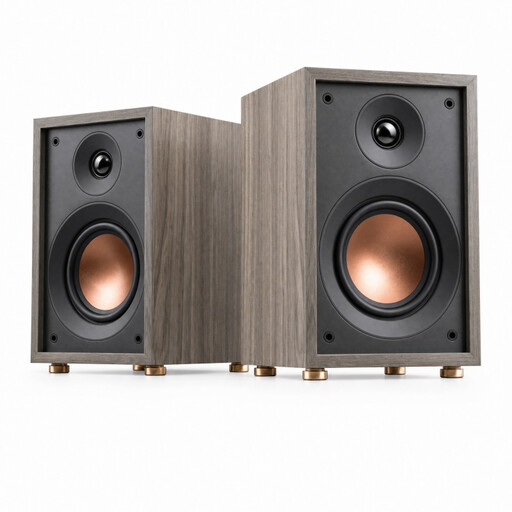
HiVi-Swans Oasis passive two-way bookshelf speaker
An option for a passive set-up if you have a compatible amplifier.
The product title lists a 4-inch woofer, a 20 mm dome tweeter, 60 Hz–20 kHz, 4 Ω and 10–50 W. A suitable amplifier is required to use the speaker.
Joybuy
 No image available
HiVi D3.1MKII passive bookshelf speaker
An option if you want to pair passive bookshelf speakers with a suitable amplifier.
The product title lists a 6.5-inch woofer, a 28 mm dome tweeter, 8 Ω and 10–120 W. A suitable amplifier is required to use the speaker.
Joybuy
Frequently asked questions
Where should I place speakers for a dedicated listening spot?
Start with similar distances and heights for the left and right speakers, and angle them towards your listening spot. Adjust the speaker or listening positions if reflections or excessive bass are an issue; there’s no single position that works for every open-plan layout. Genelec explains how similar reflective conditions can affect stereo imaging.
Can I connect passive bookshelf speakers directly to my mobile phone?
For the passive models covered here, you’ll need a suitable amplifier between your source and the speakers. With an active pair, check instead that its inputs match your source. Edifier says the R1280DBs offers Bluetooth and analogue inputs, among others.
What makes up a complete stereo system?
Check whether the listing includes one speaker or a pair, and whether you’ll also need an amplifier. Passive speakers require a suitable amplifier; with an active pair, the inputs should match the source you’re using.
Can I return speakers bought online in Germany?
For online orders, the withdrawal period is generally 14 days from the day you receive the goods, and you must notify the retailer that you wish to withdraw from the purchase. The Verbraucherzentrale recommends checking the specific returns information and any possible exceptions before placing your order.
What warranty applies if a product develops a fault after purchase?
When you buy from a commercial seller in the EU, you’re generally entitled to a statutory minimum guarantee of two years from the day you receive the goods. The European Union distinguishes these statutory rights from a voluntary manufacturer’s guarantee.


