
Lieferung heute & morgen

Qualitätsgarantie

Willkommens-Angebote freischalten: KOSTENLOSE Lieferung | Bis zu 80 % RABATT | Kostenlose 30-Tage-JoyPlus-Testphase
App herunterladen
By Joybuy Product Recommendation Officer, August 30, 2026
A high-quality borescope camera is an indispensable diagnostic tool for automotive mechanics, plumbers, and ambitious DIY enthusiasts. It provides a view into inaccessible areas like engine cylinders, drain pipes, or wall cavities without requiring time-consuming disassembly. However, the market is crowded, and many products fail to deliver on their marketing promises. This guide will help you identify the crucial features and avoid common purchasing traps.
Before we dive into the technical details, it's important to understand the most common issues with low-quality devices that lead to frustration and wasted money.
To ensure your inspection camera can reliably handle the task at hand, you should check three core parameters before buying. These determine the device's real-world usability far more than mere megapixel counts.
Choosing the right diameter is application-specific. For inspecting modern engines through spark plug holes, a diameter of under 6 mm is often mandatory. For plumbing or construction inspections, a more robust head of 8 mm or more can be advantageous as it is more durable.
The nature of the probe is just as important:
A clear, bright display with stable viewing angles is crucial for on-site analysis. Look for devices with an IPS (In-Plane Switching) display, as they maintain colour and contrast stability even when viewed from the side. A screen size of 4.5 to 5 inches offers a good compromise between portability and detail visibility.
For professional use, an integrated function for recording photos and videos to an SD card is a must-have. This allows for documenting damage for clients or for later analysis on a computer.
Diagnosis is only the first step. Subsequent repairs, especially in electronics or fine mechanics, require precision tools. A high-quality precision screwdriver set, ideally with an electric drive and adjustable torque, prevents damage to tiny components and screws.
Based on the objective criteria mentioned above, we have identified several models suitable for different user groups and their specific requirements.
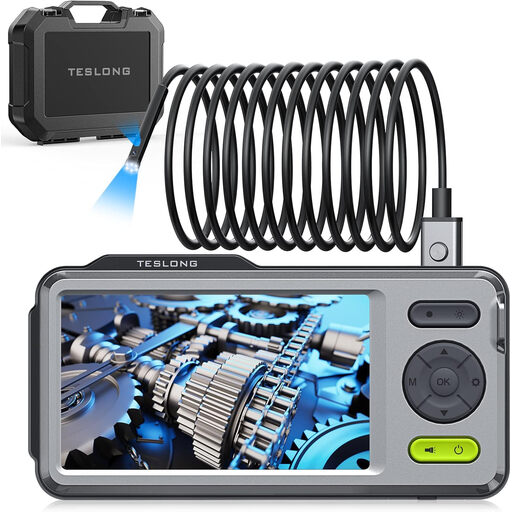
Why This Fits Their Persona: This model offers a balanced combination of functionality and price for a variety of tasks around the house and car. The 5 mm camera head fits into most spark plug openings, and the 5-meter cable can reach remote spots in pipes or walls.
The 5-inch IPS display delivers a clear picture, unlike smaller, lower-quality screens. The semi-rigid probe solves the problem of flimsy cables and allows for targeted guidance.
The dual-lens system allows you to switch between front and side views at the push of a button, without having to move the probe or change an attachment.
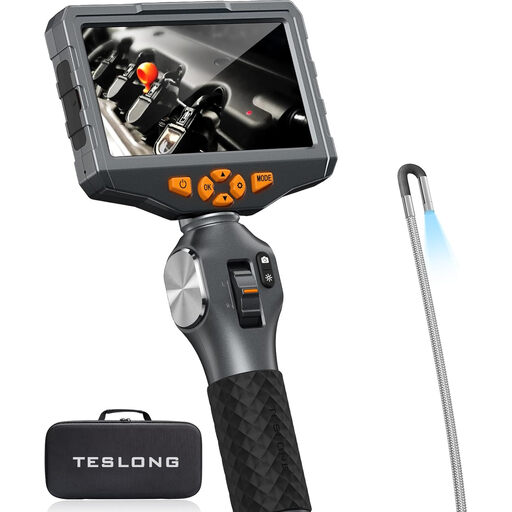
Why This Fits Their Persona: For precise diagnostics in complex mechanical systems, control is everything. The extremely thin 3.9 mm head and steerable tip of this articulating borescope are designed for inspecting valves, cylinder walls, or turbines.
This model is a true industrial borescope with articulation control. It solves the core problem of rigid or semi-rigid probes that don't allow for targeted navigation in tight, complex spaces.
The bidirectional 210-degree articulation allows for precise control of the camera to inspect even hard-to-see angles and edges. The depth of field from 20-100 mm is optimised for detailed shots.
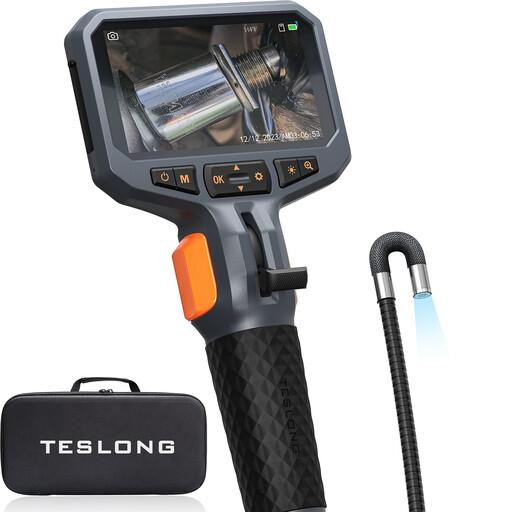
Why This Fits Their Persona: When inspecting drain pipes, ventilation ducts, or wall cavities, durability and a good field of view are essential. This model's 8.5 mm camera head is more resilient, and the articulation function helps navigate around obstacles.
This model combines the necessary articulation for bypassing obstacles with a more robust, larger camera head. It's a practical compromise that overcomes the limitations of simpler probes.
The 210-degree articulation control, combined with the 4.5-inch IPS screen and the robust probe, makes it a reliable tool for daily use on the job site.
We have compiled a complete, up-to-date list of products that fully meet these strict selection criteria.
Battery life varies by model, screen brightness, and LED usage. Most of the models featured here, like those from Teslong, are equipped with lithium batteries with capacities between 3000 mAh and 3500 mAh. This typically allows for 3 to 4 hours of continuous operation, which is sufficient for most inspection jobs.
Not necessarily. A smaller diameter is only advantageous when it's mandatory for the application (e.g., for bores under 6 mm). Larger camera heads (e.g., 8.5 mm) are often more robust and can accommodate more powerful sensors or lighting units, which can be beneficial in less confined spaces like drain pipes.
Yes, most probes and camera heads from quality manufacturers are certified to IP67 or higher. This means they are dust-tight and protected against temporary immersion in water. This allows for the inspection of filled pipes, tanks, or other wet environments. However, the handheld unit with the screen is usually not waterproof and must be kept dry.