
Lieferung heute & morgen

Qualitätsgarantie

Willkommens-Angebote freischalten: KOSTENLOSE Lieferung | Bis zu 80 % RABATT | Kostenlose 30-Tage-JoyPlus-Testphase
App herunterladen
Borosilicate glass drinkware is often marketed as a durable alternative to conventional plastic cups. But not every product is automatically right for every household. Families look for spill resistance and safe handling, coffee drinkers care about temperature resistance, while eco-conscious households should check material specifications and filter costs.
Three typical buying and marketing pitfalls are particularly relevant:
Borosilicate glass has a relatively low coefficient of thermal expansion. This means it can withstand temperature changes better than many conventional types of glass. However, that doesn’t mean every vessel is suitable for boiling water, hobs or the freezer.
Check before you buy:
For coffee and tea, heat-resistant glass cups, borosilicate glass coffee glasses and double-walled tea glasses are all options. With a children’s glass cup, however, safe handling should be the priority. A lid can reduce spills, but it doesn’t automatically make the vessel leak-proof.
The capacity should suit your intended use. Small 250ml to 280ml glasses are ideal for single coffee portions, tea or desserts. A 500ml borosilicate glass cup is more practical for water, milk, juice or smoothies, but takes up more space and can be heavier when full.
With double-walled glass cups, you should also consider the following:
A vessel gets plenty of daily use. Smooth glass surfaces are generally easy to clean, but narrow lid openings, silicone seals and straws can be potential trouble spots. Look for specific guidance on dishwasher use.
With BPA-free drinkware, the claim should ideally apply to all plastic components, not just the glass body. With water filter jugs, filter cartridges and seals come into play too. The key factors here are:
The following selection organises products according to different everyday profiles. Details on material, volume and usage refer to the respective product descriptions.
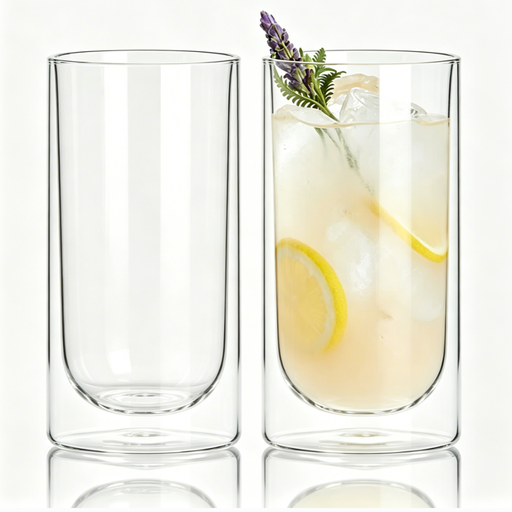
Why this product fits the profile: The two-piece set with 280ml is aimed at households looking for compact glasses for coffee, tea or cold drinks, and who need two vessels.
The product description specifies borosilicate glass, double-wall construction and use for both hot and cold drinks. This provides key information on material and design.
280ml capacity, double-wall insulation and supplied as a 2-pack according to the product description.

Why this product fits the profile: The two double-walled glasses are designed for single portions of coffee, tea and other drinks.
The product name mentions hand-blown borosilicate glass, double-wall construction and dishwasher suitability. Still, check the manufacturer’s care instructions before use.
270ml volume, 2-pack and transparent white finish according to product details.

Why this product fits the profile: The glass water filter jug is designed for households that want to provide filtered tap water and are happy to manage regular cartridge changes.
The details state 2.5 l total volume, 1.5 l filtered water, an LCD replacement indicator and a cartridge life of approximately 160 l. According to the product description, the jug is intended for cold water only.
BPA-free construction, 4-stage filter technology, Brita Maxtra+ compatibility and dishwasher safe up to 60 °C, excluding the Smart Light and silicone seal, according to product details.
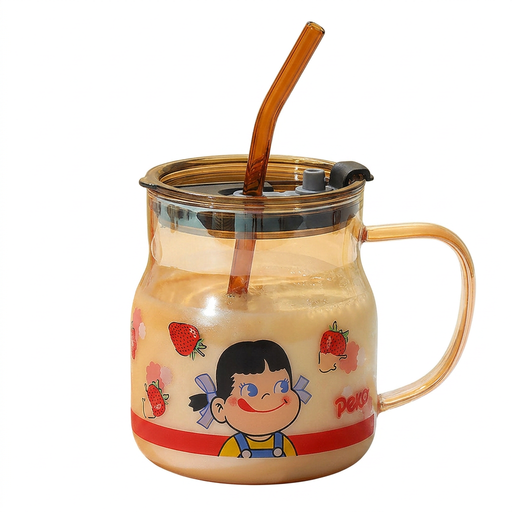
Why this product fits the profile: The 500ml cup with lid and straw is intended for water, milk, juice and smoothies at breakfast or on the go.
The lid and straw address everyday spills. Before buying, parents should check the fit, cleaning and supervision required, as glass can still break despite its borosilicate properties.
500ml capacity, lid, straw and borosilicate glass designed for thermal shock resistance according to the product description.
We’ve put together a complete, regularly updated list of products that fully meet these strict selection criteria and the safety regulations in force in the EU.
That depends on the individual product and the manufacturer’s instructions. Borosilicate glass is designed for thermal shock, but you shouldn’t force extreme changes. For example, don’t pour a boiling drink into a significantly chilled vessel unless this is explicitly permitted. Lids, seals and straws may have different temperature limits.
It’s not possible to give a reliable fixed lifespan. It depends on usage, cleaning, drops and temperature fluctuations. Check the glasses regularly for cracks, chips or leaks. Damaged vessels should not be used.
In addition to the purchase price, there are costs for replacement cartridges. With the Freco model, the product description states approximately 160 l per cartridge; actual consumption depends on water quality, usage and replacement interval. So compare cartridge price, available filter volume and compatible refill products before deciding on a glass water filter jug.