
Lieferung heute & morgen

Qualitätsgarantie

Willkommens-Angebote freischalten: KOSTENLOSE Lieferung | Bis zu 80 % RABATT | Kostenlose 30-Tage-JoyPlus-Testphase
App herunterladen
A reliable cordless drill is the centerpiece of any DIY toolkit. However, the sheer number of models, especially in the 18V segment, can be overwhelming. Those unfamiliar with the options can easily invest in features that are overkill for home use or lock themselves into an inflexible battery ecosystem. This guide will help you identify the crucial features and avoid common buying traps, ensuring you find a tool that truly fits your projects.
Before we dive into the technical details, it's important to understand the most common mistakes that often lead to frustration and unnecessary expenses.
To make an informed decision, you should focus on three core features that determine the practical utility of a cordless drill.
More important than maximum torque is a finely adjustable cordless drill with torque settings. This feature, often called a torque clutch, acts like a clutch in a car. It ensures that the driving process stops automatically when a preset level of resistance is reached. The result: screws are driven flush without damaging the material or the screw head. For DIYers, 15 to 20 settings are typically ideal for precisely handling everything from small screws in softwood to larger screws in hardwood.
A future-proof tool is part of an expandable system. Check whether the 18V battery is compatible with other devices. Systems like the POWER FOR ALL ALLIANCE allow you to use a single battery for a wide range of tools from different brands—from grass trimmers to jigsaws. This not only saves money when purchasing bare tools (without a battery and charger) but also saves space and reduces clutter.
A high-quality cordless drill/driver features a mechanical 2-speed gearbox. Each gear is optimized for a specific application:
This feature turns the device into a versatile drill/driver for wood and metal, saving you from buying a separate drill for simple tasks.
Based on these criteria, we have curated a selection of tools suitable for various DIYer profiles.
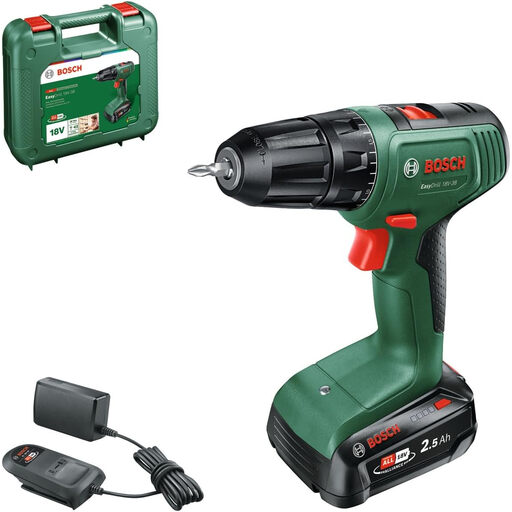
Why This Fits Their Persona: Ideal for all common household tasks, from furniture assembly to hanging pictures. Its lightweight and ergonomic design allows for extended work without fatigue. A classic tool for DIYers who value brand quality and user-friendliness.
With 20 torque settings, it offers precise control and sidesteps the torque trap. As part of the POWER FOR ALL ALLIANCE, it solves the battery dead-end problem and provides maximum flexibility.
Versatile 2-speed gearbox for driving and drilling; integrated LED work light for good visibility; 10 mm keyless chuck for easy bit changes.
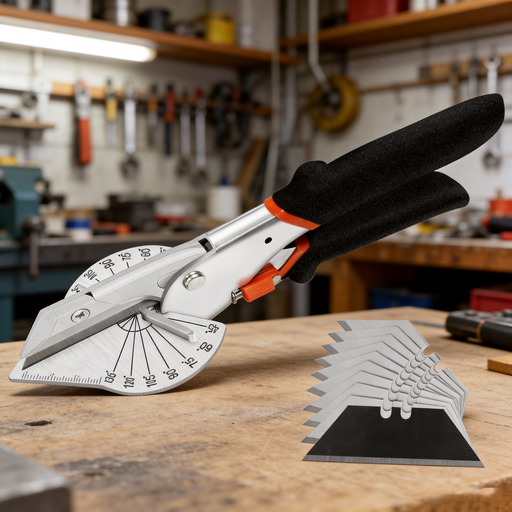
Why This Fits Their Persona: A useful addition for DIYers working on projects involving trim, gaskets, or trunking. This specialty tool enables precise angle cuts that are difficult to achieve with a standard saw.
This tool prevents messy cuts and material waste that occur when trying to cut precise angles with unsuitable tools. It is a targeted investment for clean results.
Adjustable cutting angle from 45° to 135°; sharp SK5 steel blades for clean cuts in softwood and plastic; includes 10 spare blades for long-term use.
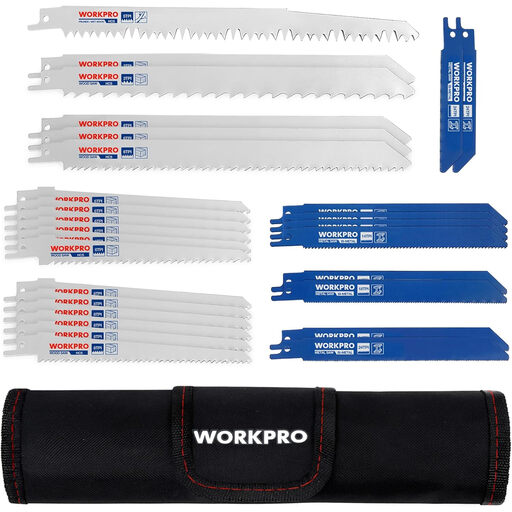
Why This Fits Their Persona: For DIYers who already own a reciprocating saw and want to expand its capabilities. This set is ideal for renovation or garden projects that require cutting various materials like wood (even with nails), metal, and plastic.
Instead of buying expensive individual blades for each application, this set offers a cost-effective solution with a wide selection. The universal compatibility avoids the trap of being tied to a single manufacturer's accessories.
Comprehensive 32-piece set for diverse materials; universal shank fits popular reciprocating saws (e.g., from Bosch, Dewalt, Makita); convenient storage pouch.
Explore our entire range of tools and accessories for your creative projects and find the right equipment that meets our selection criteria.
1. How long does a Bosch 18V battery last? The runtime of an 18V battery depends on its capacity, measured in Amp-hours (Ah), and the specific application. A 2.5 Ah battery will last significantly longer when driving screws than when drilling large-diameter holes in hardwood. For most DIY projects, a 2.0 Ah or 2.5 Ah battery provides sufficient runtime. For longer or more intensive jobs, a second battery can be useful.
2. Can I drill into concrete with a Bosch 18V cordless drill? A standard cordless drill/driver like the Bosch EasyDrill 18V-38 is designed for drilling in wood, metal, and plastic. To drill into masonry or concrete, you need a tool with a hammer function, known as a cordless hammer drill/driver. Its impact mechanism produces short, rapid blows that enable drilling into hard, mineral-based materials.
3. What do the numbers on the torque setting mean? The numbers on the torque collar represent the different levels of torque limitation. A low number (e.g., 1-5) means low torque and is suitable for small screws in soft materials to prevent over-tightening. A high number (e.g., 15-20) provides high torque and is used for large screws in hard materials. The drill setting (often indicated by a drill bit symbol) deactivates the torque limitation and delivers maximum power for drilling.