
Lieferung heute & morgen

Qualitätsgarantie

Willkommens-Angebote freischalten: KOSTENLOSE Lieferung | Bis zu 80 % RABATT | Kostenlose 30-Tage-JoyPlus-Testphase
App herunterladen
Switching from pre-ground powder to freshly ground beans is a crucial step towards more aromatic coffee. An electric coffee grinder from a brand like Bosch promises a simple and reliable entry point. However, not every model lives up to its promise, and the entry-level segment has several pitfalls that can sour the coffee experience. This guide will help you understand the essential features and make an informed decision.
Many budget-friendly coffee grinders lead to more frustration than enjoyment. Watch out for these three typical weaknesses to avoid a bad purchase:
To avoid these mistakes, you should be guided not by marketing promises, but by objective technical specifications. For a starter coffee grinder, three points are particularly crucial.
Most electric coffee grinders in the entry-level segment, including many models from Bosch, use a blade grinder. Unlike more expensive conical or flat burr grinders, which mill the beans, rotating stainless steel blades chop the coffee beans.
A Bosch blade grinder is therefore a pragmatic choice for anyone who wants to grind coffee beans without complications and without immediately investing in a professional-grade device.
The power of a blade grinder is measured in watts. Models with 180 watts, as is common with Bosch, offer enough power to chop coffee beans quickly and efficiently. A lower wattage can lead to longer grinding times and more heat buildup in the grounds, which can harm the aroma.
The capacity of the bean hopper, usually specified in grams (g), determines how much coffee you can grind at once. A capacity of 75 g is a good standard. It is easily enough to prepare a full pot of filter coffee (approx. 8-10 cups).
An essential feature is the safety lock. This ensures that the motor only starts when the lid is correctly in place, preventing accidents and a mess of coffee powder in the kitchen. Models like the Bosch TSM6A013B include this feature as standard. Additionally, the push-button operation, which must be held down during the grinding process, is a simple and safe method for controlling the grind time.
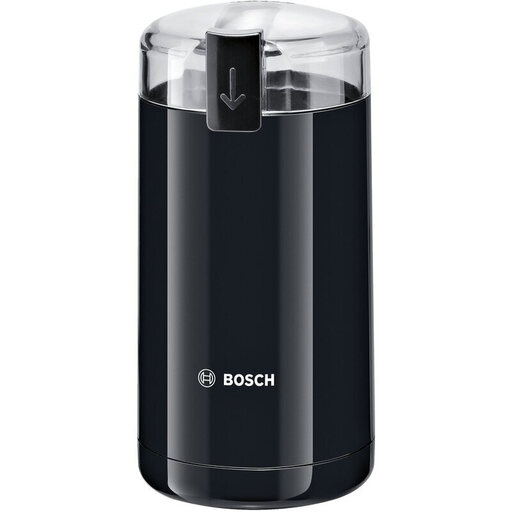
Why This Fits Their Persona: Ideal for coffee drinkers taking their first step towards freshly ground coffee, who want a straightforward, durable device from a trusted brand without a large investment.
The integrated safety lock prevents operation with the lid open. The powerful 180W motor ensures a quick grinding process, reducing the risk of an inconsistent grind from over-processing.
Simple one-button operation and a 75 g capacity, enough for a full pot of coffee. The stainless steel blade is also suitable for spices or nuts.
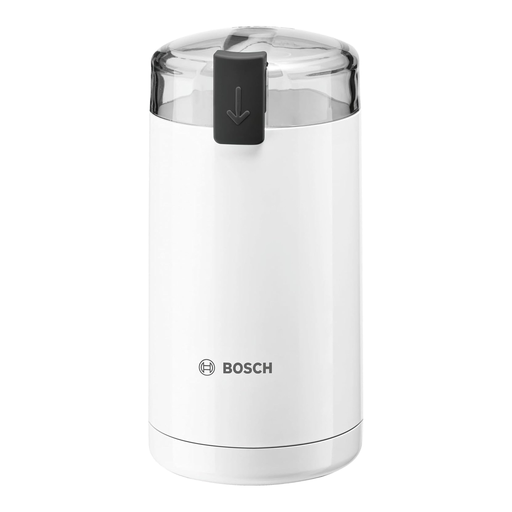
Why This Fits Their Persona: For users who value a bright, modern kitchen aesthetic and want a functional device that blends seamlessly into the design without compromising on reliability.
Offers the same proven Bosch technology and safety features as the black model. The smooth plastic housing is easy to clean, preventing the buildup of old, oily coffee residue.
Combines reliable functionality and simple handling with an elegant, white design. Its compact size (17 cm height) ensures space-saving storage.
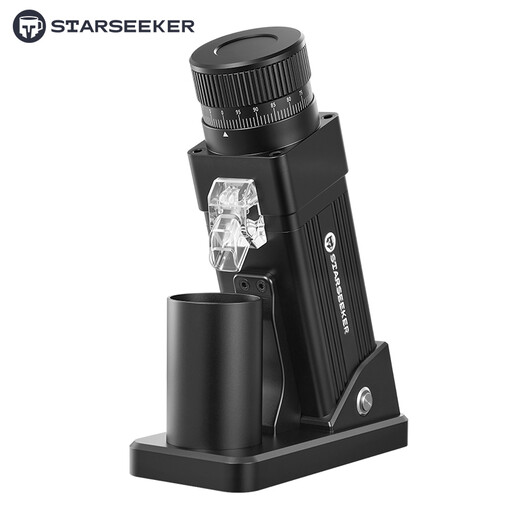
Why This Fits Their Persona: For coffee lovers who want to take the next step and desire precise control over the grind size for more demanding methods like espresso or pour-over, and are willing to invest in higher quality.
Completely solves the problem of inconsistent grinds with a 55mm titanium alloy conical burr. The stepless grind adjustment allows for precise customisation for any brewing method.
Professional-grade grind quality thanks to the conical burr and stepless adjustment. The metal housing and anti-static technology ensure durability and clean handling.
A coffee grinder can also be used for spices. We've compiled a list of products suitable for various applications that meet our strict selection criteria.
Yes, the Bosch TSM series models, with their robust stainless steel blades, are also suitable as an electric coffee and spice grinder. You can use it to chop hard spices like peppercorns, coriander seeds, or cumin. However, it is recommended to clean the grinder thoroughly afterwards to avoid flavour transfer to your coffee. A simple trick is to grind a small amount of dry rice to bind oils and odours, then discard the rice flour.
The grinding time depends on the desired fineness. As a general guide: