
Lieferung heute & morgen

Qualitätsgarantie

Willkommens-Angebote freischalten: KOSTENLOSE Lieferung | Bis zu 80 % RABATT | Kostenlose 30-Tage-JoyPlus-Testphase
App herunterladen
A bottle warmer can make preparing breast milk, infant formula and baby food much simpler. However, there are clear differences between models when it comes to temperature control, vessel size, extra features and where you can use them. A high number of programmes alone doesn't tell you much about how practical it will be in daily life.
Claims like "in just a few minutes" depend on factors including starting temperature, fill volume, bottle material and bottle shape. A programme for 60 ml of milk in a particular wide-neck bottle can't simply be applied to a full jar or a chilled glass bottle. So check the conditions under which the manufacturer's claim applies.
A baby food warmer with defrost, steam and keep-warm functions may seem versatile. What really matters, though, is whether the settings are easy to use and whether the device holds your bottle securely. A long keep-warm function is also not a licence for unlimited storage. Milk and food should be used according to the manufacturer's recommendations or the relevant guidance on infant feeding.
Wide-neck bottles, breast milk bags or tall jars need enough space and a stable position. Pay attention to the maximum vessel diameter, the height of the heating chamber and whether a basket is included for smaller containers. With a car bottle warmer, you also need to check that the 12-volt connection and adapter cable are compatible with your vehicle.
Different programmes are useful for warming breast milk, heating powdered milk and defrosting baby food. Models that let you select the starting temperature, food type or bottle material can make operation easier. Even so, you should always check the temperature before each feed. Never heat food unattended, and shake or stir the contents according to the usage instructions.
A water bath heats the contents indirectly. Compared to direct microwave heat, this can offer more even handling, but it doesn't automatically prevent temperature differences. So test the food in a suitable spot before giving it to your baby.
A practical bottle warmer should fit the vessels you already have. For the devices listed here, you'll find details such as:
Measure your widest bottle before buying, and also consider the height. The inner chamber can limit use, especially with milk bags or larger jars.
An automatic shut-off stops the heating process independently on suitable models. A beep or timer can also make use clearer. However, devices must still be supervised while in operation. Hot surfaces, water and cables should be kept out of children's reach.
Also look out for:
A bottle warmer with a steriliser often needs more space than a simple heating device. However, the added steam sterilisation for bottles and small accessories can be useful. Check the stated sterilisation time and the permitted size of items in the instruction manual.
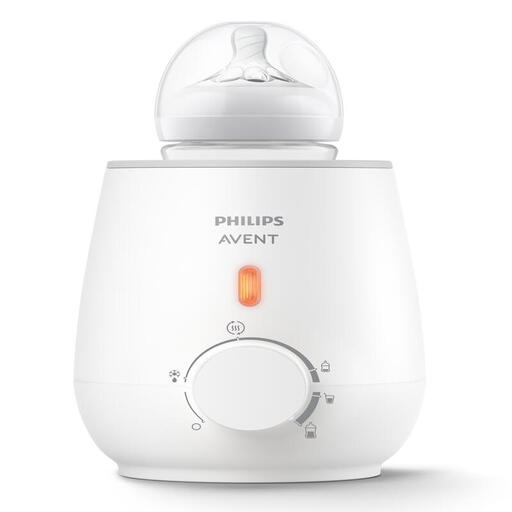
Why this product fits the profile: This device focuses on warming, defrosting and keeping warm, making it suitable for households that don't need a steriliser function.
The product description mentions continuous circulation during warming and compatibility with vessels up to 7 cm in diameter.
Integrated defrost function, keep-warm setting and operation via a rotary dial.
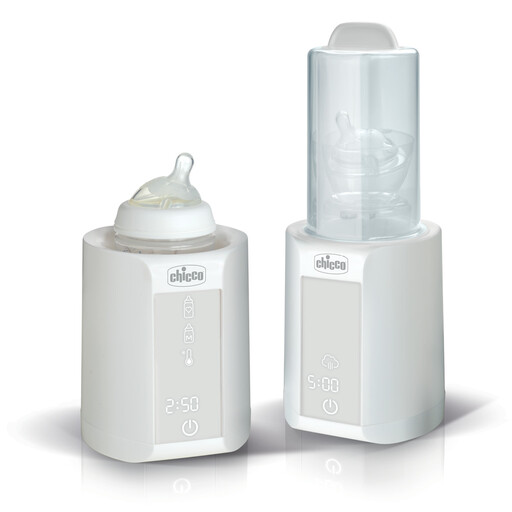
Why this product fits the profile: This 2-in-1 device combines warming with steam sterilisation for bottles and smaller items.
Programmable settings take into account bottle type, size and starting temperature according to the product description, rather than just offering a generic heating time.
Automatic shut-off, audible end signal, descaling reminder and sterilisation programme.
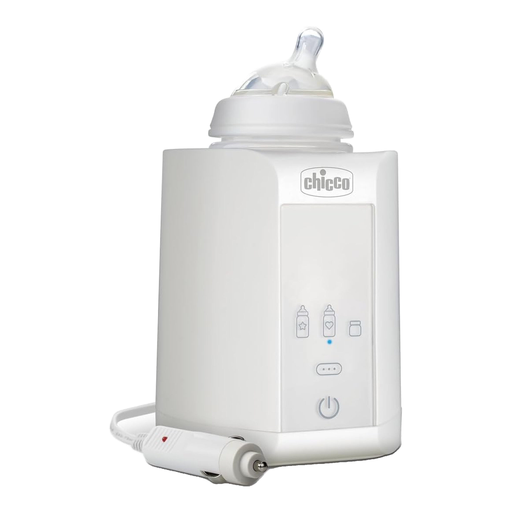
Why this product fits the profile: For families who want a bottle warmer for the car and the house, the power supply via mains connection and 12-volt adapter is a key feature.
The package contents explicitly include an adapter cable for the cigarette lighter. This means mobile use isn't reliant on a makeshift power solution.
Five functions, defrosting of breast milk bags, keep-warm for up to one hour and automatic shut-off.
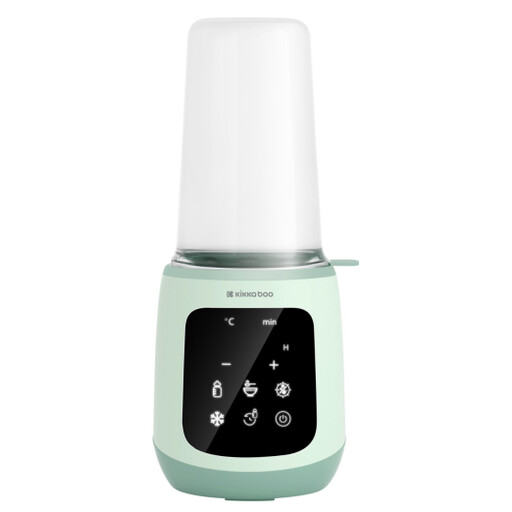
Why this product fits the profile: The 4-in-1 concept is aimed at households that want to manage milk, jars and accessories with one compact device.
The features list specific functions for warming, sterilising, defrosting and keeping warm, plus an automatic shut-off.
Touchscreen, timer with keep-warm function, basket and lid, plus a stated diameter of 7.5 cm.
We've put together a full, regularly updated list of products that fully meet these strict selection criteria and the safety regulations in force in the EU.
Place the device on a stable, dry surface and fill it with only the amount of water specified in the instructions. Position the bottle or jar securely in the container and select the programme and fill volume. After heating, gently move the food and check the temperature before feeding. Remove any leftover water after use and clean the device according to the instructions.
The lifespan depends on how often you use it, water quality, cleaning and build quality. Limescale deposits can affect heating performance. Regular descaling as per the manufacturer's instructions, thorough drying and a visual check of the cable, housing and seals help you spot wear and tear early. If you notice cracks, damaged cables or unusual heating, stop using the device.
The consumption depends on the power rating, heating duration and number of daily cycles. A model with 220 watts uses more power during the active heating phase than a device with a lower rated power, but it may run for a shorter time. To work out the running costs, you can multiply the power consumption by the daily operating time and your electricity tariff. Keep-warm programmes should only be used for as long as needed for the specific application.