
Lieferung heute & morgen

Qualitätsgarantie

Willkommens-Angebote freischalten: KOSTENLOSE Lieferung | Bis zu 80 % RABATT | Kostenlose 30-Tage-JoyPlus-Testphase
App herunterladen
For many families, a bouncy castle with a water slide in their own garden is the epitome of summer fun. But that excitement can quickly fade if the product doesn't live up to its advertising promises. As a Joybuy Product Recommendation Officer, I see daily what features separate a durable product from a short-lived one. This guide will help you navigate the common pitfalls and make an informed decision.
Before you invest, you should be aware of the most common problems that often only become apparent after the purchase.
To avoid a bad purchase, check three crucial technical features. These determine the safety, durability, and long-term play value of your inflatable water park.
The longevity of a water bouncy castle depends directly on its materials. Look for a combination of different fabrics optimised for specific areas.
The blower is the heart of any bouncy castle. It must run continuously to maintain pressure.
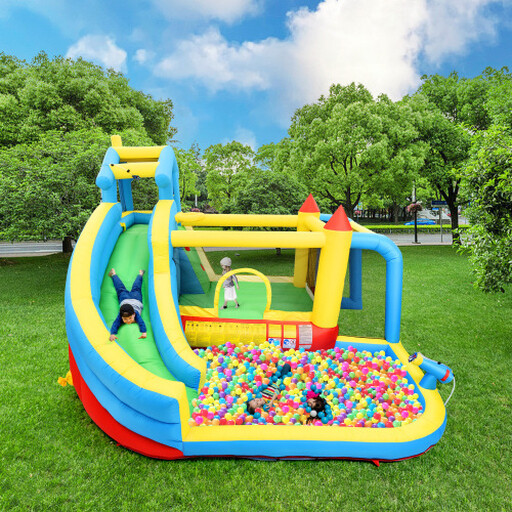
Why it's a good fit: This model combines five play areas (bouncing area, slide, splash pool, climbing wall, football net) on a compact footprint. It's ideal for gardens with limited space and offers varied fun for younger children without being overwhelming.
The product description explicitly mentions tear-resistant PVC Oxford fabric and a safety net, addressing the material and safety pitfalls. The blower is included in the package.
The 5-in-1 functionality offers high play variety on a relatively small footprint and can be used both wet and dry.
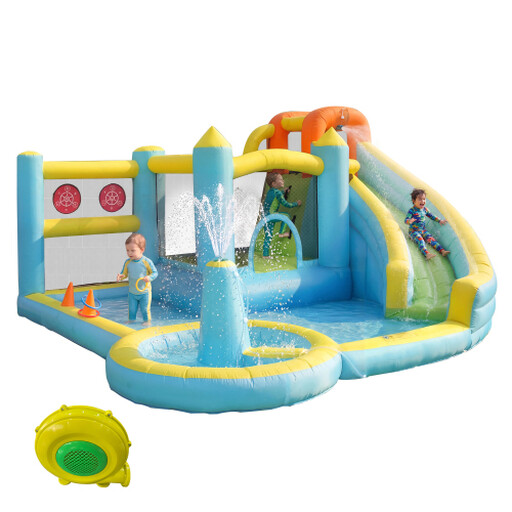
Why it's a good fit: Measuring 430x390 cm, this is a full-fledged inflatable water park. It's suitable for families with larger gardens who want a comprehensive water experience with fountains, a large splash pool, and a climbing area.
The product is made from thick, tear-resistant Oxford fabric. A suitable 450W blower is included, ensuring stable and safe operation.
The combination of an integrated fountain, water cannon, and large splash pool creates a true water park feel in your own garden.
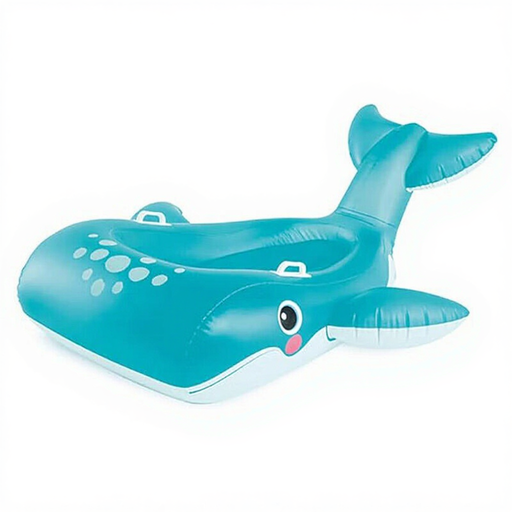
Why it's a good fit: For families who already own a pool or are looking for a flexible, portable water attraction for their holiday. This inflatable ride-on offers simple fun, is easy to transport, and is a budget-friendly addition to other inflatable pool toys.
As a product from a well-known brand (Intex), it is made of tested vinyl. It avoids the common pitfalls of complex bouncy castles (blower, seams). The heavy-duty grab handles provide stability.
High portability and simple setup. The included repair patch kit allows for quick fixes for small punctures.
We've compiled a complete, up-to-date list of products that meet these strict selection criteria and safety regulations.
The lifespan heavily depends on the material, usage, and care. A model made of high-quality, coated Oxford fabric with reinforced seams can last for several summers with proper handling. The key is to let the bouncy castle dry completely after each use before folding it up and storing it in a dry, sun-protected place. Residual moisture leads to mould and material fatigue.
The electricity costs are manageable. A typical 600-watt (0.6 kW) blower consumes 0.6 kWh for every hour it runs. To calculate the cost, simply multiply this by your local electricity rate. For example, if your rate is 30 cents per kWh, it would cost 18 cents per hour to operate (0.6 kW * €0.30/kWh). For an afternoon of four hours of use, the cost would be less than a dollar or euro.
Setup is generally straightforward. You unroll the bouncy castle, connect the blower, and turn it on. Within a few minutes, the structure is fully inflated and just needs to be anchored to the ground with the included stakes. Takedown requires more care: after deflating, the bouncy castle must dry completely, which can take several hours depending on the weather. This is the most important step to ensure its longevity.