
Lieferung heute & morgen

Qualitätsgarantie

Willkommens-Angebote freischalten: KOSTENLOSE Lieferung | Bis zu 80 % RABATT | Kostenlose 30-Tage-JoyPlus-Testphase
App herunterladen
By Joybuy Product Recommendation Officer, Joybuy
Finding the right brain game for a child can be a challenge. The market is flooded with products that promise both fun and cognitive development. However, not every game lives up to the promises on its box. Often, exaggerated marketing claims or unclear product descriptions lead to disappointment—for both the gift-giver and the child.
This guide will help you recognise the typical pitfalls and make an informed decision. We'll show you which objective criteria matter most in finding a game that provides long-term engagement and meaningfully supports a child's development.
Before we get to our recommendations, it's important to understand the most common issues that can lead to a poor purchase.
To avoid these traps, you should focus your attention on three central product features. These will help you objectively assess a game's quality and educational value.
A good brain game should encourage you to pick it up again and again. Look for features that ensure variety:
Instead of blindly trusting the printed age range, examine the game's structure. Ideal logic games for kids grow with the child's abilities. Look for systems with clearly defined levels, for example, from "Beginner" to "Expert." This ensures the child is neither underwhelmed nor overwhelmed and experiences a continuous sense of achievement. Especially for puzzles for kids aged 8 and up, a gradual increase in complexity is a sign of a well-designed game concept.
A game's longevity is directly tied to the quality of its components.
Based on the criteria above, we have selected a few products that are well-suited for different interests and use cases.
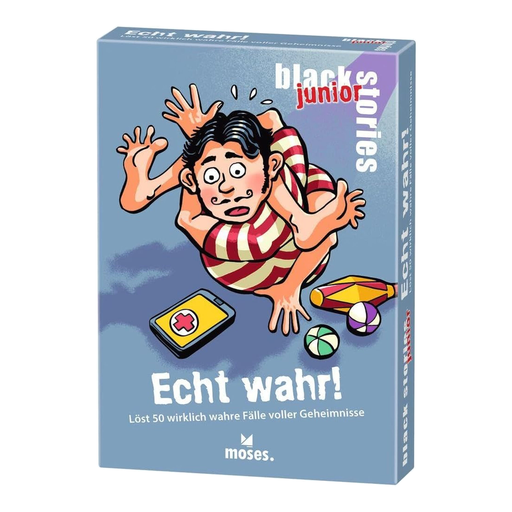
Why it's a great fit: Ideal for kids who love stories and enjoy unravelling mysteries. The question-and-answer format (only "Yes" or "No" is allowed) promotes communication, logical thinking, and the ability to work together to find a solution. It's an excellent game for family nights or kids' birthday parties.
It avoids the "one-and-done" trap because the fun lies in the group dynamic of solving the mystery. Every round is different because players ask different questions and follow different lines of thought.
Includes 50 riddles based on real-life cases; fosters cooperative and creative thinking within a group.
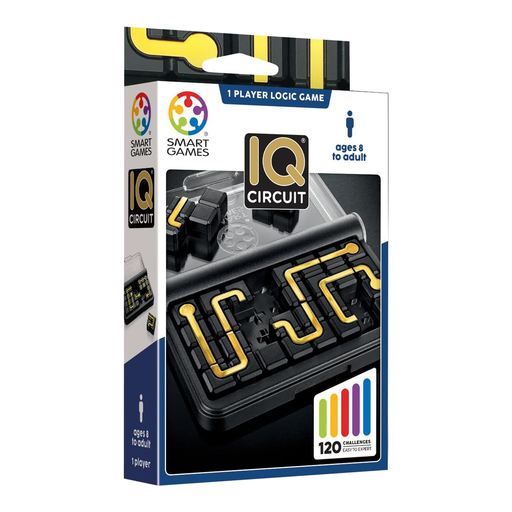
Why it's a great fit: This **IQ puzzle** is designed for solo play and its extremely compact format makes it an ideal **travel game for kids**. It provides a quiet, focused, screen-free activity, perfect for waiting rooms or long journeys.
It counters the "vague age-range" trap with 120 challenges across increasing difficulty levels. It also solves the "poor-quality materials" trap with sturdy plastic parts and an integrated game board with a lid.
120 challenges for long-lasting puzzle fun; very compact design where all pieces are stored securely.

Why it's a great fit: This object is less of a game and more of a tool for creative discovery. It appeals to children who enjoy working with their hands, building, and thinking spatially. The magnetic connections provide satisfying tactile feedback and invite experimentation. An ideal **gift for 8-year-olds** and older kids.
It completely avoids the "one-and-done" trap, as there is no fixed goal or single solution. With over 70 transformable shapes, the focus is on the creative process and the endless discovery of new forms.
Promotes spatial reasoning and creativity; the 36 internal magnets allow multiple cubes to be combined into larger structures.
We've compiled a complete, up-to-date list of products that fully meet these strict selection criteria and all applicable safety regulations.
Learning games designed to boost concentration should have clear, simple rules and a manageable playtime. Start with short play sessions and slowly increase the duration. Games with progressive difficulty levels are ideal, as they challenge the child without overwhelming them, thus gradually building their ability to focus.
Although many IQ puzzles are recommended for children aged 8 and up, the child's individual development is the deciding factor. A good indicator is not age, but the child's interest in brain teasers. Look for games that explicitly offer "Starter" or "Junior" levels. The goal should be a solvable challenge that motivates, not an unsolvable problem that frustrates.
A good travel game is defined by three features: a compact size that fits into any carry-on luggage; few to no loose parts (or packaging that keeps them secure); and a game mechanic that doesn't require a large playing surface. Magnetic game boards or self-contained systems are particularly well-suited for this.