
Lieferung heute & morgen

Qualitätsgarantie

Willkommens-Angebote freischalten: KOSTENLOSE Lieferung | Bis zu 80 % RABATT | Kostenlose 30-Tage-JoyPlus-Testphase
App herunterladen
Brain-teaser games and puzzles vary considerably in difficulty, materials, the space they require and their recommended age range. An eye-catching design or a label such as ‘expert’ alone tells you little about whether a product is right for family life, travelling or regular use.
If you’re looking to buy brain-teaser games and puzzles, there are three common buying pitfalls to avoid:
For a children’s puzzle for ages 4 and up, a manageable number of pieces, easy-to-recognise designs and simple handling are all useful. For example, the Schmidt Spiele ‘Vehicles’ puzzle contains four designs, with 2 × 26 and 2 × 48 pieces, and is recommended for ages 4 and up. The metal case also helps prevent individual pieces from being left lying around.
Check the warnings on products with small parts. Many cube, logic and construction games are not suitable for children under 3 due to the risk of choking. It may be sensible to supervise younger children, even if the product is approved for their age group.
A classic puzzle for adults is usually chosen based on the number of pieces, the level of detail in the design and the space available. A Ravensburger puzzle with 1000 pieces can offer a different kind of challenge from a logic game with a single solution.
For a brain-teaser or Smart Games product, these details are important:
The term 3D puzzle can refer either to a three-dimensional construction model or to a logic game with 3D challenges. Checking the product description can help you avoid buying the wrong thing.
On a Rubik’s Cube, a stickerless plastic surface is less prone to the wear and tear associated with peeling stickers. For regular use, smooth turning, layer alignment and the stability of the internal mechanism also matter. A speed cube is designed for people who want to practise algorithms and prefer short turning distances.
A 7x7 cube has seven layers, offering significantly more possible combinations than a classic 3x3 cube. This can appeal to experienced speedcubers, but it also means more weight, a larger size and more to learn. For travelling, compact logic games in a closable box are more practical.
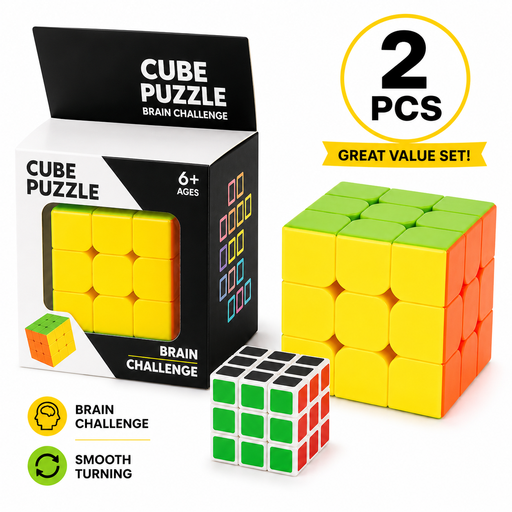
Why this product suits this type of user: This two-piece set offers an easy introduction to cube puzzles and can be enjoyed as a family or during indoor play.
The product description clearly states what’s included and how the set is intended to be used. Even so, check the age and safety guidance on the product page before buying.
Two-piece set, smooth turning and a compact design for playing together.
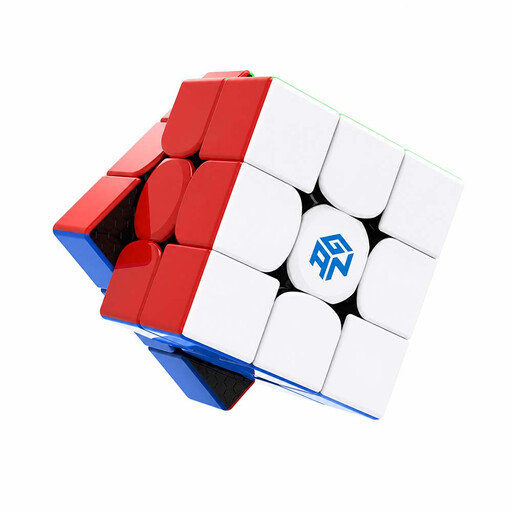
Why this product suits this type of user: This 3x3 cube is designed for people looking for a stickerless finish and a smooth mechanism for regular practice.
The stickerless design avoids a common issue with sticker wear. Before buying, check that the details about the mechanism and what’s included meet your needs.
3x3 format, stickerless surface and a design intended for speedcubing.
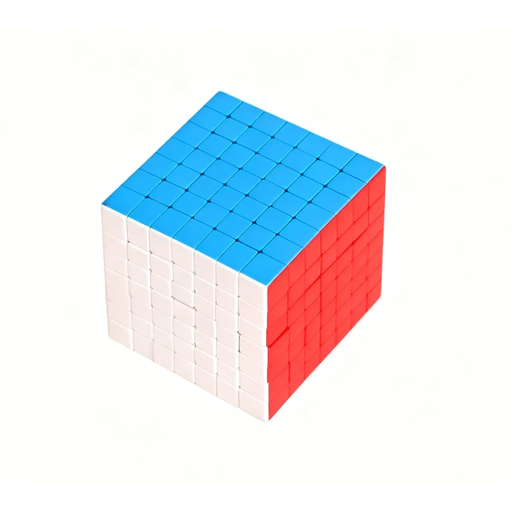
Why this product suits this type of user: Seven layers are best suited to experienced cube enthusiasts looking for complex algorithms and spatial challenges.
The product details specify its dimensions (7.5 × 7.5 × 7.5 cm), ABS plastic construction and recommended age of 8 and up. A warning about small parts is also given for children under 3.
7x7 design, stickerless plastic and a construction built for repeated turning.
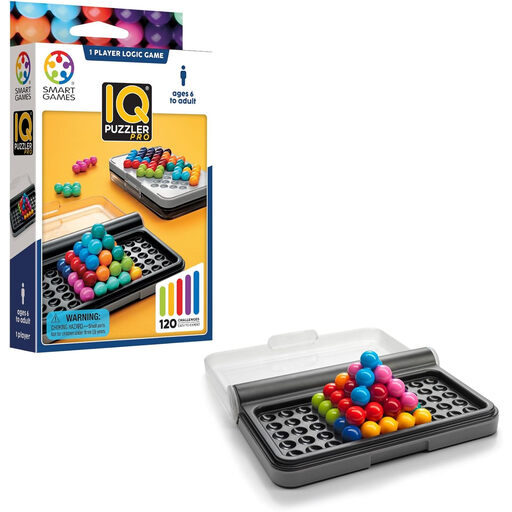
Why this product suits this type of user: This compact travel game offers 120 challenges in three game modes and, according to the product details, is suitable for single players aged 6 and up.
The number of challenges, three game modes and compact dimensions are all clearly specified. This makes it easier to decide whether the game is suitable for car, train or plane journeys.
120 challenges, 2D and 3D puzzles, and a compact single-player format.
Classic puzzle fans can also choose from designs by Ravensburger and Schmidt Spiele. The Schmidt Spiele Hogwarts Castle puzzle has 1000 pieces and is aimed at people aged 12 and up. The Ravensburger ‘Eilean Donan Castle’ design also has 1000 pieces, measures around 70 × 50 cm when complete and is recommended for ages 14 and up. If you’re a Harry Potter fan, remember to consider the table space you’ll need as well as the design.
We’ve put together a complete, regularly updated list of products that fully meet these strict selection criteria and the safety regulations in force in the EU.
500 pieces are usually a manageable starting point. A 1000-piece puzzle offers more detail and needs a larger surface. The design, contrast and time you have available also matter. You should also take the manufacturer’s recommended age into account.
‘Rubik’s Cube’ is a general term for a twisty cube. A speed cube is usually designed for smoother turns, stable alignment and fast solving using algorithms. A clearly designed 3x3 cube is enough for beginners; a 7x7 model is better suited to people with more experience.
Yes, if the game is compact, has few loose pieces and can be stored securely. Models such as IQ-Puzzler PRO and IQ Stars are designed for single players and include several challenges. Before buying, check the recommended age and the size of the packaging.