
Lieferung heute & morgen

Qualitätsgarantie

Willkommens-Angebote freischalten: KOSTENLOSE Lieferung | Bis zu 80 % RABATT | Kostenlose 30-Tage-JoyPlus-Testphase
App herunterladen
Brain teasers for children should be entertaining, encourage independent thinking and remain interesting for as long as possible. In practice, however, unclear age recommendations, missing information about what is included or an incorrect assessment of the difficulty level can quickly lead to disappointing purchases. A game may be well made and still not suit the child, the family situation or the intended use.
The label “from 6 years” initially describes the intended age group and safety considerations. It does not automatically indicate whether a child can solve the tasks without help. When choosing logic games for children, parents should also check:
A thinking game from age 6 with an increasing level of challenge can be used for longer than a game with just a few similar tasks.
A large number of pieces or particularly complex shapes often look impressive in product descriptions. What matters, however, is the variety of challenges, how easy the instructions are to understand and whether the game can be used repeatedly. When buying IQ puzzles and 3D puzzles, shoppers should therefore look for specific details about game modes, the number of challenges and the solution methods.
Travel puzzle games need secure storage for all their pieces. Loose elements can easily get lost in the car, train or aeroplane. Compact games with a lid, a fixed game board or a well-organised box are more practical. Just as important: Small parts pose a choking hazard and are generally not suitable for children under 3 years of age. Check the warnings on the packaging and product page before buying.
The recommended age is a useful first filter, but it should be considered alongside the child’s stage of development. Younger children benefit from challenges with clear rules and visible solution paths. Older children and teenagers may enjoy multi-step tasks, spatial challenges or more demanding strategy games.
The number of players also affects your choice:
The term brain training for children is often used. In practical terms, these games may include tasks involving logical thinking, concentration, spatial awareness or problem-solving. This does not in itself establish any guaranteed educational or medical benefit.
For plastic games, sturdy, neatly finished pieces and a suitable fastening mechanism are useful signs of quality. Products with small parts are not suitable for children under 3 years of age. For older children, age-appropriate use is also recommended, with adult supervision where necessary.
When choosing Rubik’s cubes and speedcubes, you should also consider the level of complexity. A 3x3 cube is usually easier for beginners to understand than a 6x6 or 7x7 model. More layers mean additional move possibilities and a greater learning curve. For children who only want to use the cube occasionally, a larger model can quickly become too challenging.
For travel, the dimensions, weight and security of the pieces are crucial. A game with 120 challenges can offer more variety on the go than a product with just a few variations. At the same time, the packaging should not take up more space than necessary. Before buying, check whether the game board, pieces and instructions can all be stored together after play.
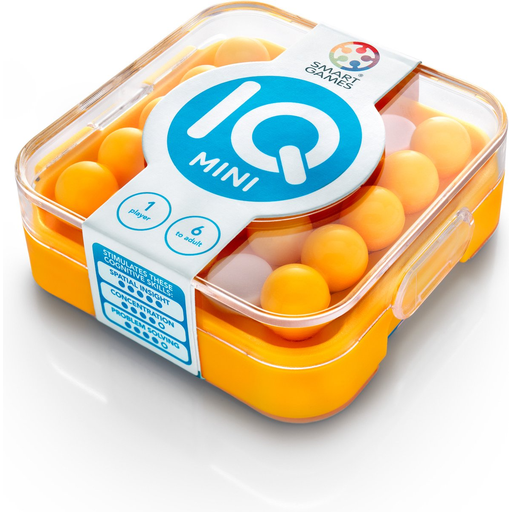
Why this product suits the profile: This compact solo game is designed for children from age 6 and can be used at home, while travelling or during waiting times. According to the product description, the colour is supplied at random.
Rather than relying on a large number of pieces, the game uses movable blockers and lets players create their own challenges. This means the difficulty can be adjusted to suit the individual player.
Pocket-sized design, no batteries required and a QR code with additional challenges, hints and solutions, according to the product details.
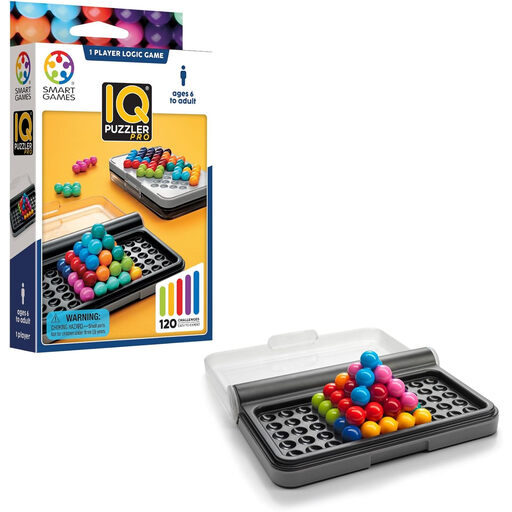
Why this product suits the profile: Designed for children from age 6, this solo game offers 120 challenges in three game modes. It combines 2D and 3D challenges, making it suitable for different levels of practice.
The clearly stated 120 challenges and three modes make it easy to understand exactly what the game includes. Its compact format also reduces the risk of carrying loose pieces while travelling.
13 pieces, manual play without batteries and a compact design for solo play and travel, according to the product details.
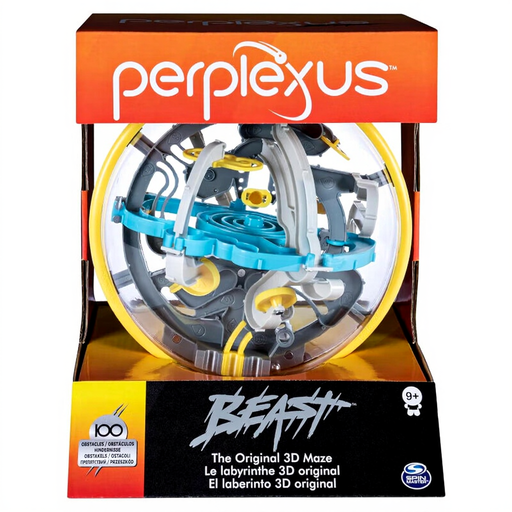
Why this product suits the profile: According to the product details, this 3D maze ball is aimed at children from age 9 and features a set route with 100 challenges. It is suitable for users who enjoy spatial challenges.
The specific mention of 100 levels or challenges helps you assess the scope before buying. The 3D format is also clearly different from flat assembly puzzles.
A spatial game concept and clearly defined route; the manufacturer highlights the small parts and age limit.
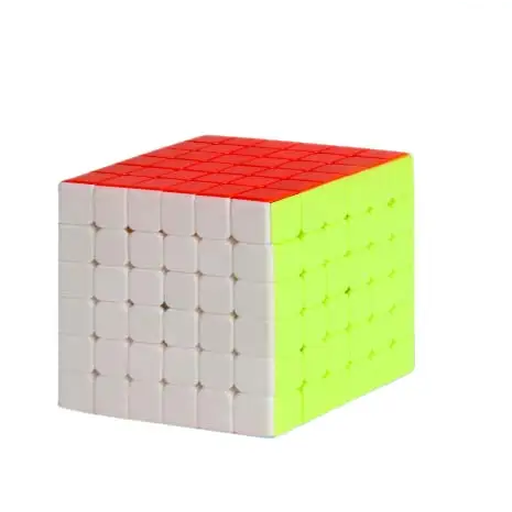
Why this product suits the profile: According to the description, this 6x6 cube is aimed at experienced users. It is intended for older children, teenagers and adults interested in Rubik’s cubes and speedcubes.
The six-layer construction makes the high level of challenge clear before you buy. This helps you avoid choosing a complex model for a beginner.
Stickerless ABS plastic design and a multi-layer cube mechanism, according to the product description; no batteries required.
When choosing a gift, parents and relatives should also take the everyday situation into account. A solo game is well suited to quiet periods of activity, while family games are better for shared evenings. For younger children, short and easy-to-understand instructions are helpful. Teenagers may be more interested in challenging IQ puzzles, 3D puzzles or cubes with several layers.
You should also consider:
We have put together a complete, regularly updated list of products that fully meet these strict selection criteria and the safety regulations applicable in the EU.
Games with clear rules, a manageable number of pieces and several levels of challenge are suitable. Models such as IQ Mini and IQ-Puzzler PRO are designed for children from age 6, according to the product details. The best choice depends on whether the child enjoys working independently and how much support they need.
Their lifespan depends on the materials, storage and how they are used. Games with robust plastic pieces can be used for a long time if stored carefully. With cubes, falls and moisture should be avoided. A challenge booklet with lots of variations can increase replay value, but it cannot replace a suitable difficulty level.
Yes, provided the game board, pieces and instructions stay safely together. Compact solo games with a lid are particularly suitable. Before travelling, parents should check that all the pieces are present and that the child can start the challenges without needing a great deal of additional explanation.